Bristol's 'Green Slum' Crisis: Residents Decry Failed Recycling Experiment
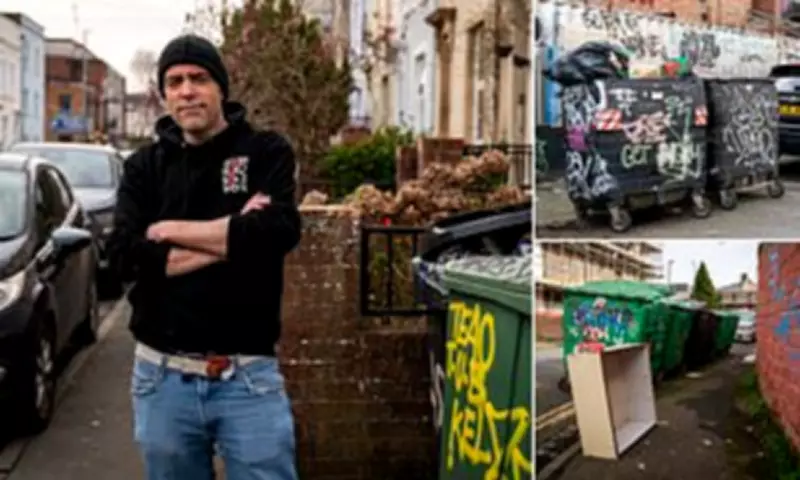
Residents of St Paul's in Bristol have declared they are living in what they describe as the UK's first 'green slum', following a council-led recycling initiative that has spiraled into an environmental and public health disaster. The streets are now regularly clogged with overflowing rubbish, attracting swarms of rats and foxes, while locals point fingers at local authorities for what they call a failed experiment in sustainability.
The Origins of the Communal Bin System
Fifteen years ago, Bristol City Council, then under a Liberal Democrats majority, introduced communal bins or mini-recycling centres in St Paul's. This decision was driven by concerns that the area's narrow pavements could not accommodate traditional household wheelie bins. However, the population in the neighborhood has since surged dramatically, with the number of homes increasing from 2,500 to 4,000 as large properties were converted into flats. This rapid growth has overwhelmed the communal bins, causing rubbish to spill out onto the streets and creating a persistent eyesore.
Voices from the Community
Campaigner Pavlos Kyriacou, 61, who claims to have coined the term green slum, expressed his frustration, stating, We cannot let St Paul's become the UK's first green slum. There are open bins in Bristol for the first time since the 1800s. This area is the land of time forgot! He described the situation as truly grim and completely bonkers, highlighting that while the rest of the country has adapted to recycling, St Paul's is treated differently for the council's convenience.

Under the current policy, the area uses skips instead of individual bins, with collections occurring twice weekly. However, residents report that the bins often lack lids, leading to waste piling up and attracting vermin. Kyriacou explained, Bristol Waste deliberately do not replace the lids of the skips because then people put bin bags on top of the lid. So you're left with a scenario where the bins have no lids in these enormous skips where waste then piles up to the sky!
Political Blame and Council Response
The Green Party gained a majority in Bristol City Council following the 2024 election, with leadership under Councillor Tony Dyer. However, residents have criticized the Greens for worsening the situation. One anonymous resident remarked, Since the Greens have been in charge I can certainly say the bin collection is much worse than before. I've seen poor leadership from all the main parties but the Greens have taken incompetence to a different level. They are destroying our city.
Green Party councillor Izzy Russell, who represents the Ashley ward, apologized for delays in reviewing the communal bin system, stating, I'm really sorry that it hasn't happened sooner. More is happening behind the scenes. Meanwhile, Ken Lawson, the council's head of waste, indicated that a review is expected this month, with long-term recommendations to reduce or eliminate the large communal bins.
Health and Wellbeing Concerns
Residents have raised alarms about the impact on public health and mental wellbeing. Tara Miran, part of The Better Streets Campaign, noted, Communal bins and uncollected waste in St Paul's are contributing to vermin, odour, unsafe pavements and poorer mental health and wellbeing. The campaign has been active for nearly two years, including hosting exhibitions to showcase the dire conditions to council officials.
Edward Siebert, another local, highlighted the inequity, saying, We have fallen into an admin gap but we pay the same council tax as everyone else, even though no one else has the same system. Johnnie Ball added a blunt critique, accusing the council of loving meetings and input but not caring about outcomes, which has led to rubbish becoming ingrained on the streets.
Future Plans and Funding
In response to the crisis, the council is exploring several options, including:

- Using £440,000 in funding from the Department for Environment, Food & Rural Affairs (Defra) to support 2026 recycling legislation and redesign policies.
- Rolling out rubbish bags for flat dwellers with dedicated collection services in areas deemed operationally feasible.
- Investigating whether landlords could be held accountable for placing bins on their properties instead of the street.
A Bristol Waste spokesperson acknowledged community feedback, stating, The information gathered from these sessions will now be used to pull together an effective improvement plan that reflects the needs of St Paul's. All proposals will be presented to councillors in the summer, but residents remain skeptical, with one declaring, It is not a case that it could become a green slum. It is one already. Too late, its happened - St Paul's is a green slum.