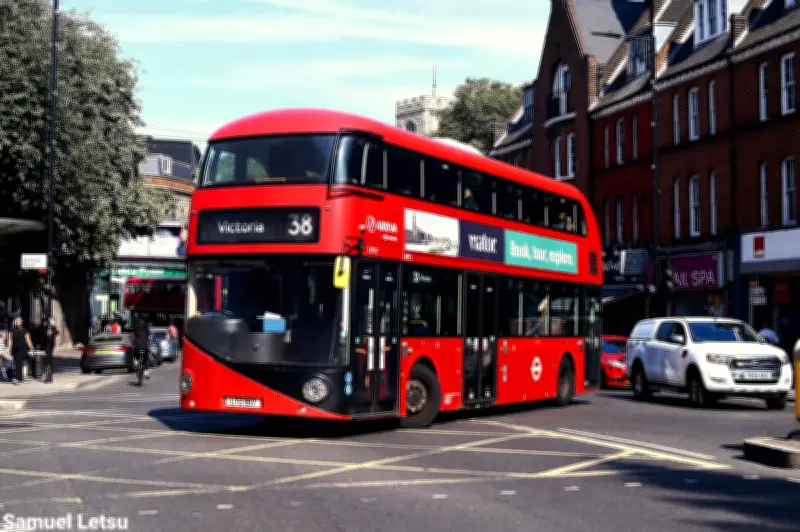
Hackney Council has set out proposals for a £3 million traffic-calming scheme in Dalston, east London, designed to stop drivers using residential roads as rat runs. The plan includes further road restrictions, a bus gate, two new pedestrian crossings and additional “school streets”, aimed at addressing what the council describes as “dangerous” traffic levels.
The scheme, financed by Transport for London and pending further consultation, is intended to improve conditions in an area the Green Party-led council said “suffers from heavy through traffic and unsafe road conditions”. The measures are also meant to boost air quality and make walking and cycling safer.
Planned measures and consultation
Councillor Jacob Cable, cabinet member for climate, clean air, energy and transport, said residential streets in Dalston had “long been affected by dangerous levels of through traffic”. He added: “We’re now moving forward with this long-awaited and much-needed scheme, which will make the area a safer, healthier and more welcoming place.”
The announcement follows a public consultation held in 2025 that gathered responses from more than 1,000 businesses and residents. The planned changes include a 24-hour bus gate at Shacklewell Lane, between Shacklewell Road and Amhurst Road, to reduce through-traffic near Hackney Downs. All vehicles would be banned from entry except buses, emergency services, council refuse trucks, cyclists and residents with specific permits such as Blue Badges.
Cecilia Road, connecting Shacklewell Lane with Dalston Lane, will have new restrictions to stop traffic driving from end-to-end. One proposal includes creating a “school street” there, a policy banning vehicles during the start and end of the school day. Additional school streets will cover Arcola Street outside Halley House School, and Cecilia Road and Downs Park Road adjacent to Excelsior Academy.
Mixed resident feedback
Hackney has one of the highest numbers of Low Traffic Neighbourhoods (LTNs) in the capital. Since 2020, the council has rolled out controls that now cover 70% of “all eligible roads”. Although the latest scheme is dubbed a Liveable Neighbourhood, not an LTN, the latter term was used by respondents throughout the consultation report.
The response divided residents, mostly between those who drive cars and those who do not. Roughly 9 in 10 consultation respondents lived in the borough, with half residing within the scheme area. More than 45% of total respondents reported their main mode of transport as a car or van, while 2021 census data shows a third of Hackney residents own a car.
Plans for the Shacklewell Lane bus gate were backed by nearly half of respondents, driven by strong support from non-car users. The large minority of more than 40% who opposed the measure mainly comprised car users, caregivers, disabled people and renters.
Objections and support
Feedback objecting to the scheme raised concerns about delays and traffic being “funnelled” elsewhere. One commenter said this would cause more pollution as idling cars waited longer at traffic lights. A small takeaway owner said existing traffic controls had already hindered food deliveries in Hackney due to curtailed routes.
However, supporters included cyclists who deemed Shacklewell Lane “extremely dangerous”. Other respondents welcomed moves to curb rat runs and “road rage” on both sides of their narrow road, which “sometimes end[ed] violently in a stand-off”. The school streets proposal received the most support of all measures, with 57% of respondents in favour.
Next steps
Following the consultation, councillors at Hackney Town Hall dropped original plans to make Shacklewell Road a two-way street after residents warned it was too narrow. The updated scheme includes further bans on vehicles turning left from Dalston Lane into Cecilia Road, and for vehicles exiting Ridley Road onto Dalston Lane, to prevent Ridley Road Market becoming a shortcut between the A10 and Pembury Circus.
Local authority reports said Hackney had secured an extra £350,000 in funding for public realm improvements, which could include more benches, rain gardens, trees, cycle hire and parking bays and green spaces. Before any changes are introduced, the council will hold a 21-day statutory consultation, due to run until November 4. Residents can view the proposals on the council website and raise any further objections or comments until the deadline.