
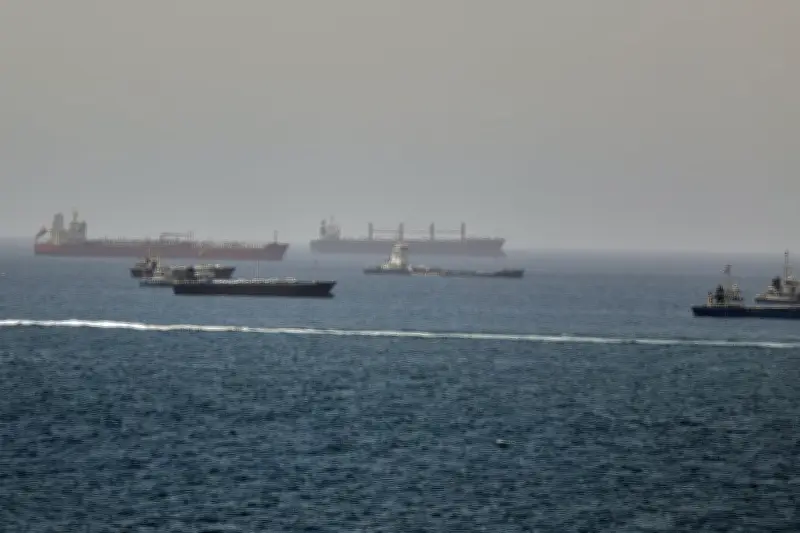
US Secretary of State Marco Rubio has insisted that international law prohibits charging tolls on the Strait of Hormuz, echoing the UK's demand for toll-free passage on the strategic Gulf waterway. The comments come amid ongoing uncertainty over the critical channel, which remains a flashpoint in talks between the US and Iran to end their conflict.
Iran's closure of the strait and global economic shock
Tehran claimed to have again closed the strategic sea route at the weekend, just days after the signing of the interim peace deal, in response to strikes by Israel on Lebanon. Iran's stranglehold on the Strait of Hormuz during the conflict caused a global economic shock, disrupting global oil and gas supplies and driving up fuel and food prices.
Although ships have started transiting the strait, the number remains well below pre-war levels. Operators say it will take time for traffic to recover because of the need to ensure safe passage with the removal of mines.
Interim peace deal and toll-free passage
The initial accord secures toll-free passage of the strait for 60 days, pending the outcome of a final settlement on Tehran's disputed nuclear plans. However, the pact leaves it to Iran and Oman, in conjunction with other Gulf states, to "define the future administration and maritime services in the Strait of Hormuz," although it states this must be "in line with the applicable international law," which upholds freedom of navigation.
Iran has said ships must seek permission to use the channel and raised the spectre of future charges. The Persian Gulf Strait Authority (PGSA), a government agency set up by Tehran during the earlier ceasefire to control the waterway, has demanded vessels submit requests at least 48 hours in advance to pass through the waterway. It also said admin tariffs, including for "related Iranian insurances" would be waived during the 60-day negotiation period, leaving the way open for fees being levied at a later date.
Rubio's stance and US warnings
Rubio, who is in the Gulf to promote Washington's peace deal with Iran, stated: "No country is allowed to charge tolls or fees on an international waterway. That's existing international law. That's the way it is in international waterways all over the world, and that's the way we expect it'll be here. So I don't think we have anybody to convince around here in that regard."
In turn, Donald Trump warned the US could impose its own levies on the Gulf channel if a final agreement with Iran was not reached during the 60-day negotiating period.
UK welcomes IMO evacuation plan
The International Maritime Organisation is now pressing ahead with its plan to evacuate more than 11,000 seafarers still stranded in the region after receiving security guarantees – a move welcomed by UK Foreign Secretary Yvette Cooper. The UK Foreign Office recently made clear that "toll-free freedom of navigation must now be restored in the Strait of Hormuz in line with international law, to begin easing the severe economic impacts that have been felt for several months – on families here in the UK and around the world."
Controversy over interim deal
The interim deal has sparked controversy in Washington, including among some of the US president's Republican allies, in enabling Iran to immediately start selling its oil and the future promise of a 300 billion dollar (£227 billion) reconstruction fund. The settlement also makes no mention of Iran's ballistic missiles, which the White House had originally vowed to destroy, but that Mr Trump now says would be "unfair" to deny Tehran.
Separately, the US president said Iran had agreed to nuclear inspections into "infinity," after Tehran denied it had agreed to allow a UN watchdog to carry out checks. Mr Rubio said: "We know what they agreed to. I don't know why they have to say the things they say. Whatever their internal or domestic politics is, I guess they'll navigate it. But we know what they agreed to do, and now they'll either do it or they won't. And if they do, the process moves forward. And if they don't, the president will have some decisions to make."




