
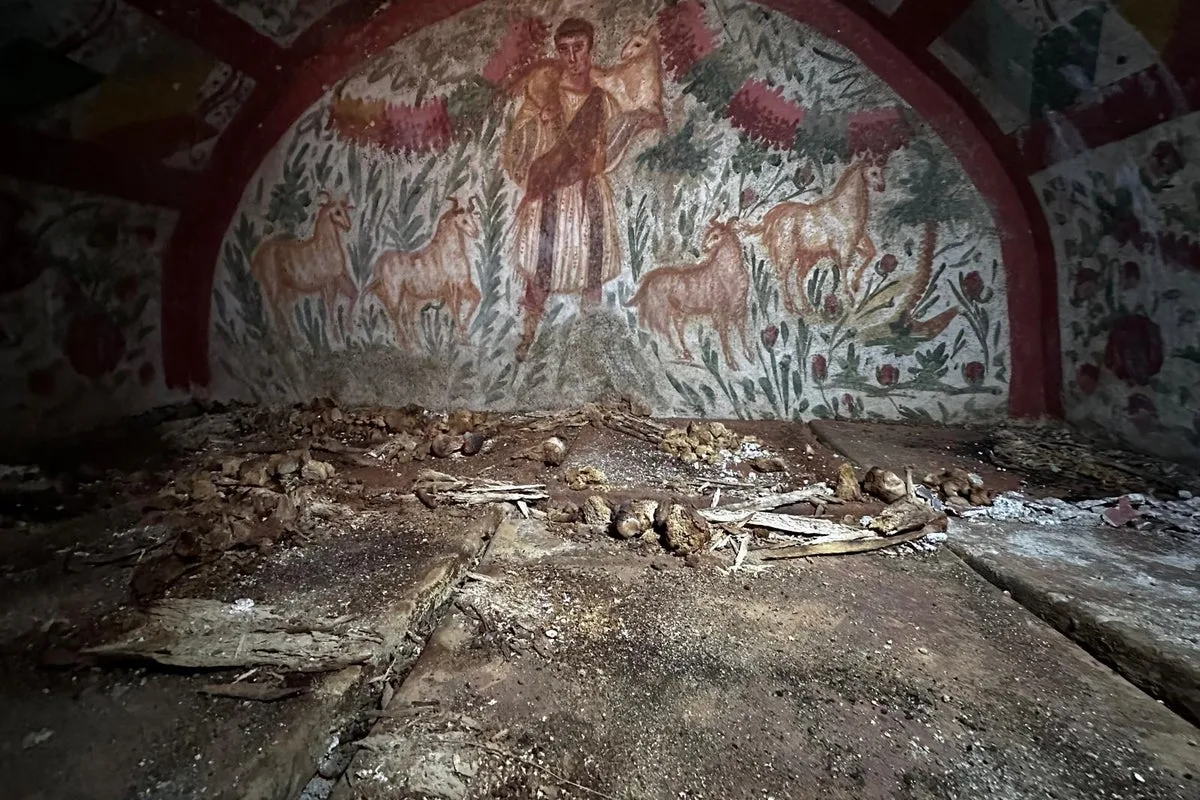
Spectacular archaeological finds across Turkey are shedding new light on the origins of Christianity, including the best-preserved early image of Christ ever discovered. The fresco, portraying Christ as the Good Shepherd, was found last year in Iznik (ancient Nicaea) sealed inside an oxygen-depleted family tomb. Dating from the early-to-mid-third century AD, it is among the five oldest known images of Christ as an adult and is exceptionally well preserved, with pigments virtually intact after 1,800 years.
The image reveals Christ beardless, with short-cropped hair, dressed in upper-class Roman attire. Over the past two years, archaeologists in Anatolia have uncovered at least a dozen previously unknown churches from the fourth and fifth centuries AD. Excavations in Pergamon have also revealed one of the earliest depictions of Saint George, England's future patron saint.
These discoveries underscore Anatolia's pivotal role in early Christian expansion, providing insights into how the region became a cradle of the faith decades after Christ's crucifixion. New historical research is also enhancing understanding of Christianity's rapid growth from a persecuted sect to the official religion of the Roman Empire within three centuries.
Studies have analysed how persecution and martyrdom, though likely on a smaller scale than previously thought, actually aided expansion. Other factors include lower illness-related early death rates among Christians, effective social care systems, and demographic benefits from the absence of female infanticide in Christian communities. The Roman Empire's political and economic problems also contributed to conversion rates.
Archaeologists have found impressive evidence of the imperial cult's growth in Turkey, including a 3.5-metre-tall statue of Emperor Marcus Aurelius in Syedra and a 2.1-metre statue of Aurelius in Bubon. In 2021, the head of a 2.5-metre statue of Hadrian was unearthed in Alabanda, while earlier discoveries in Sagalassos included 4.5-metre sculptures of Hadrian and Marcus Aurelius. The expansion of the imperial cult helped early Christianity evolve from a Jesus movement to an anti-imperial one, attracting broad dissident support and influencing the Book of Revelation.




