The National Trust for Historic Preservation has unveiled its 2026 list of America's 11 most endangered historic places, featuring sites tied to the nation's ongoing fight for equality, including the Stonewall National Monument, the President's House Site, and the Women's Rights National Historical Park.
Theme of Equality for America's 250th Anniversary
The 2026 list, announced Wednesday, coincides with America's 250th anniversary and centers on the foundational principle that all people are created equal, according to Carol Quillen, president and CEO of the nonprofit organization. The 11 sites illustrate how Americans have historically resisted injustice and pursued equality.
"We wanted to think about those ideas, especially this notion that all human beings are created equal and find places, sometimes unsung places ... that not all Americans routinely think about," Quillen told the Associated Press.

Sites Span the Nation
The endangered sites are spread across the United States, from New York and California on the coasts to Alabama and Texas in the South, Michigan in the Midwest, and the Four Corners region of Arizona, Colorado, New Mexico, and Utah in the Rocky Mountain West.
At least three sites have been endangered by actions of the Trump administration: Stonewall National Monument, El Corazon Sagrado de la Iglesia de Jesus in Texas, and Philadelphia's President's House Site.
"We want to save these places," Quillen said, "not just because the bricks and mortar is important but because the stories these places hold are important."
$25,000 Grants for Each Site
For the first time since the list debuted in 1988, each site on the 2026 list will receive a one-time $25,000 grant to help highlight their connections to the principle of equality and address the threats they face.
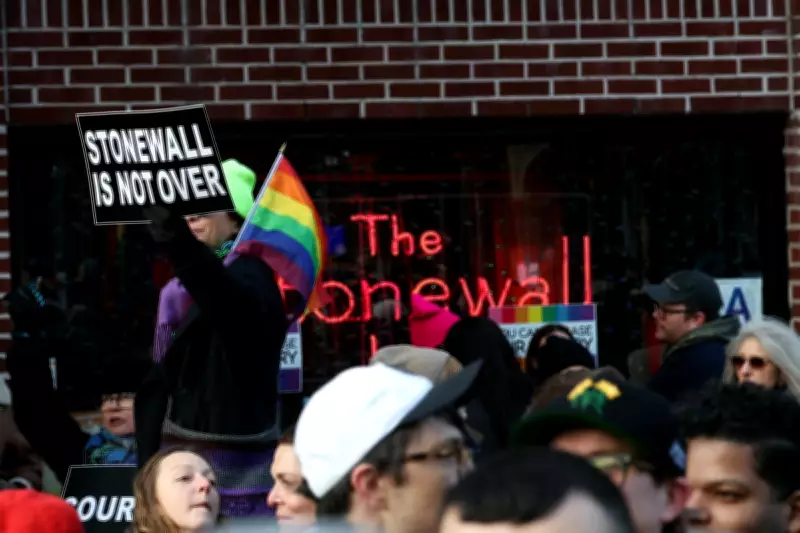
Stonewall National Monument, New York
This first and only U.S. national monument dedicated to LGBTQ+ history faced Trump administration actions, including the removal of the rainbow Pride flag from its flagpole earlier this year before it was restored. The National Park Service removed the flag in February, citing federal guidance limiting flags to the American, Interior Department, and POW/MIA flags. The administration reversed course in April, settling a lawsuit by advocacy and preservation groups. After Trump returned to office, diversity, equity, and inclusion initiatives were ended, and references to transgender people were removed from the monument's website and materials.
Ben Moore Hotel, Montgomery, Alabama
Serving as a refuge for Black individuals during racial segregation, the Ben Moore Hotel now suffers from prolonged vacancy and structural deterioration. Its historic Centennial Hill neighborhood faces development pressure. The hotel housed key Civil Rights Movement figures, including Dr. Martin Luther King, Jr., and Rev. Ralph Abernathy. The Conservation Fund committed in November to help preserve the hotel.
Tule Lake Segregation Center, Modoc County, California
Initially a war relocation center, it later became a segregation center imprisoning Japanese Americans deemed disloyal. Now a national monument managed by the National Park Service, only 37 of its 1,100 acres are protected. Most of the site risks permanent alteration from a proposed nearby construction project.
Angel Island Immigration Station, Tiburon Island, California
From 1910 to 1940, this was the West Coast's largest immigration port, primarily for Asian and Pacific immigrants. Hundreds of thousands were processed, detained, or interrogated due to race. The station faces threats from physical, environmental, political, and economic factors, requiring additional funding for repairs and awareness programs.
Swansea Friends Meeting House, Somerset, Massachusetts
Built in 1701, this is the oldest surviving Quaker meeting house in the state, serving as a refuge for those fleeing religious persecution. The building has been closed for years and needs significant rehabilitation.
Detroit Association of Women's Clubs, Detroit, Michigan
Founded in 1921, the association was one of the first Black organizations in Detroit to own its headquarters, purchased in 1941. The building has been closed since 2024 after water pipes burst, damaging the interior. Funds are needed to reopen the building.

Greater Chaco Cultural Landscape, New Mexico, Colorado, Arizona, Utah
An ancestral homeland sustained for over a millennium by the Pueblo and Hopi people, the landscape is threatened by changes to federal land policy that could open significant portions to oil and gas development. Permanent protections and tribal consultation are needed.
Women's Rights National Historical Park, Seneca Falls, New York
The park tells the story of the first Women's Rights Convention in 1848. It faces a deferred maintenance backlog of over $10 million, requiring additional funding and support for preservation and education.
The President's House Site, Philadelphia, Pennsylvania
The Trump administration abruptly removed exhibits on the lives of nine people enslaved at the site in the 1790s under President George Washington. The exhibits were removed as part of a broader effort to eliminate information deemed "disparaging" to Americans. The matter is currently in litigation between the city and federal government.
Hanging Rock Revolutionary War Battlefield, Heath Springs, South Carolina
The Battle of Hanging Rock was a key Patriot victory in the Southern Campaigns of the Revolutionary War. Only portions of the core battlefield are protected and open to the public, with the area facing population growth and development pressures.
El Corazon Sagrado de la Iglesia de Jesus, Ruidosa, Texas
This more than century-old adobe church served as a refuge and place of worship for Mexican and Mexican American farming communities along the Rio Grande River. Vacant since the 1950s, it has benefited from restoration by the nonprofit Friends of the Ruidosa Church but remains threatened by proposed construction of a U.S. border wall that could come within a few hundred yards of the property.