
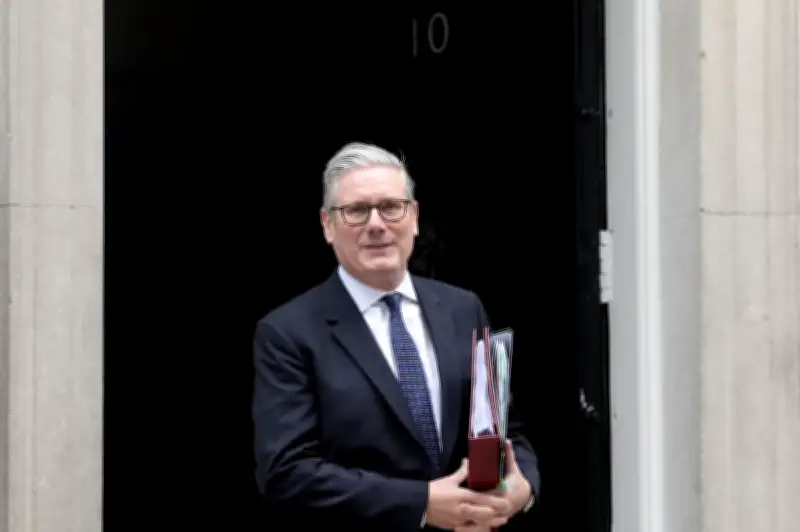
Sir Keir Starmer has admitted he must 'turn things around' if he is to remain Prime Minister and lead Labour into the next general election, following the resignations of defence secretary John Healey and armed forces minister Al Carns over the long-delayed defence investment plan (Dip).
The Prime Minister insisted defence spending was a priority and he had taken the 'difficult decisions' necessary to keep the country safe. However, his authority has suffered a further blow as the resignations, along with two ministerial aides, come at a moment of peril for his premiership, which has looked precarious since May's election results across England, Wales, and Scotland.
Andy Burnham hopes to return to Westminster in next week's Makerfield by-election and has made no secret of his Labour leadership ambitions, while former health secretary Wes Streeting will also run in any contest. Sir Keir said: 'I don't think we should plunge the country into the chaos of a leadership election,' but told the BBC he would fight any challenge.
'I don't think it should happen, but if it does then I will fight,' he said. 'And let me just be clear with you. That's not about personal vanity, it's not about stubbornness. It's out of a very deep sense of duty.' Asked if he would lead Labour into the next general election, expected in 2029, he said: 'Well, that's what I want to do. I recognise that I've got to turn things around. We had a very bad set of elections.'
In his resignation letter on Thursday, Mr Healey said the Prime Minister had been 'unable, and the Treasury has been unwilling' to provide adequate funding for the Dip. Military chiefs have called for around £28 billion over four years, while a figure of around £18 billion had been sought by officials in Whitehall. But the Dip promised just £13.5 billion, of which only £10 billion was extra cash, with defence sources claiming the other £3.5 billion was 'Treasury trickery', likely from expected efficiency savings or cuts.
Mr Healey complained the extra support was also 'backloaded' to later years of the settlement when the need for the money was urgent. Asked about Mr Healey's criticism, the Prime Minister said: 'We have another spending review coming up and before the end of this Parliament, and defence will be a number one priority in that space.' He also denied this was a promise of 'jam tomorrow', saying: 'It's very important that when I make commitments on something as important as defence that I'm able to point to what the funding is. I've tackled it head on and I have taken the decision to reallocate from other departments. That's not easy.'
Former health secretary Mr Streeting was among those who criticised the Prime Minister's decision-making when it came to spending priorities. Writing on social media site X, he said the 'failure to make the right choices on the defence investment plan is just a symptom of the indecision at the heart of this Government'. He added: 'There's not enough money for defence, but today the Government announced £4.5 BILLION for walking and cycling. Make choices. Decide. Lead.'
Mr Carns said the funding plan did not have enough money behind it and was not 'transformational' in the way it responds to the challenges of modern warfare as shown by the Ukraine conflict, where drones have become a key factor on the battlefield. The highly-decorated Royal Marines officer who traded his military career for Westminster insisted Sir Keir should stay in place to 'steady the ship', but did not rule out a future leadership bid. Mr Carns, who was sidelined from the Dip process, said there were problems with both the level of funding and the type of equipment being bought for the military.
'I want to see a higher percentage for uncrewed systems, AI, data – data is the new gunpowder – and we've got to move that forward if we are going to win the next war,' he told GB News. Downing Street said the Dip was still being finalised and new Defence Secretary Dan Jarvis and head of the armed forces Chief of the Defence Staff Air Chief Marshal Sir Richard Knighton met Sir Keir for talks on Friday morning. A No 10 spokeswoman would not be drawn on whether Mr Jarvis had asked for or been offered more funding as a condition of him taking up the role.
The spokeswoman said: 'Work to finalise the defence investment plan continues at pace with the new Defence Secretary, and the Prime Minister has been clear that he is determined to publish it before the Nato summit in July.' The Dip was originally meant to be published in autumn 2025 but the Whitehall battle over funding which ultimately forced Mr Healey out has pushed it back, with a new deadline of July's summit of Nato leaders. While the Government has committed to spending 3.5% of GDP on defence by 2035, Mr Healey said the plan he was presented with on Monday moved too slowly, with defence spending rising to just 2.68% in 2030 after hitting 2.6% next year. Sources said the deal offered by the Treasury did not put a date on increasing spending to 3%, and had tried to force the MoD to plan to only reach that figure in 2034/35.




