
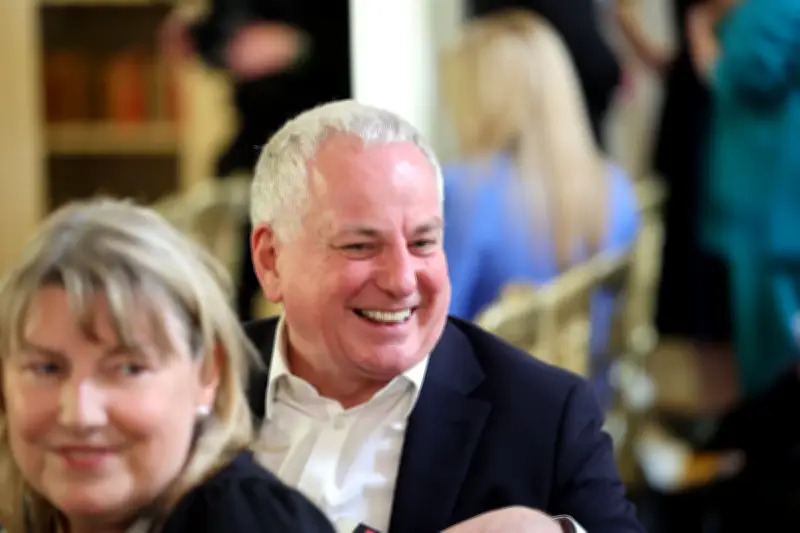
Former first minister Jack McConnell has called on Scottish Labour to allow open debate on different ideas following the party's catastrophic result in May's Holyrood election, where it dropped to just 17 MSPs. Speaking to BBC Radio Scotland on Monday, hours before Andy Burnham was due to become prime minister, Lord McConnell expressed hope that Burnham's rise would enable a radical shake-up in Scotland.
McConnell Urges Leadership to Open Debate
Lord McConnell, the last Labour first minister, said he liked the idea that Burnham would run a different kind of Labour Party, one that debates ideas both within and outside the party. He noted that a small group of Scottish Labour figures, including recent election candidates, have been pushing for change. "Rather than close down that debate, which would have been the case under several leaders in the recent past, I think it's really important that we can have these debates," he stated.
McConnell pointed to Labour's performance in the 1992 general election in Scotland, where a "massive review" led to changes that improved the party's fortunes in 1997. He urged the current Scottish leadership—Douglas Alexander, Anas Sarwar, and Jackie Baillie—to open up debate on policy, ambitions, internal structure, and campaigning style, as well as the purpose of the Scottish Parliament.
Party's Poor Performance Sparks Calls for Rethink
Scottish Labour is the joint second-largest party in Scotland but lost seats in May, prompting internal calls for a rethink. McConnell emphasized the need for a proper debate, not just about the party's relationship with UK Labour, but about its own platform and approach.
He added that Andy Burnham would "create a political mood in the whole country" aimed at decentralizing power. McConnell described Burnham as "much more confident in his skin than a lot of previous prime ministers" and predicted he would push for people to seize opportunities of decentralization and devolution, working with all parties to energize the country for economic growth and social cohesion.




