
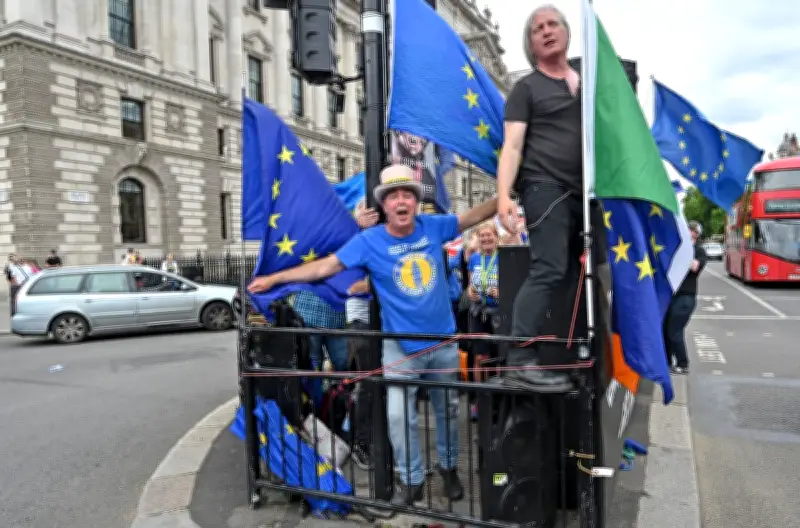
The Metropolitan Police have announced a ban on loudspeakers in the vicinity of Downing Street on Monday, as Andy Burnham prepares to assume the role of Prime Minister. The ban comes after a series of disruptions by activists, most notably pro-EU campaigner Steve Bray, who played loud music during the resignation speeches of former Prime Ministers Boris Johnson and Sir Keir Starmer, as well as Rishi Sunak's 2024 general election announcement.
Police Conditions and Timing
The Met Police posted on X: "Conditions are in place on Whitehall tomorrow (Monday, 20 July). Anyone assembling near the Downing Street gates to observe events linked to the new Prime Minister must not use any amplified noise equipment and must stay within the shaded area. These conditions are in place between 10:30 – 13:30." The restrictions aim to ensure that Burnham's inaugural speech can proceed without acoustic interference.
Steve Bray's Response
Despite the ban, Bray himself took to X to clarify his intentions. He wrote: "To be 100% clear I will not be playing or using amplifiers anywhere near Downing Street tomorrow including the black hole areas not covered in the police map! Andy has always had and still has my full support!" Bray's statement suggests he does not plan to disrupt Burnham's first day, despite his history of protests.
Reactions from Journalists and the Public
The news of the loudspeaker ban prompted strong reactions on social media. The Times political editor Steven Swinford wrote on X: "Huge political moments including Starmer's announcement that he was quitting and Rishi Sunak's election call have been disrupted by noise from protestors. PMs have said that it is so loud it is hard to think and deliver speeches at what are major national moments. The only question is why it has taken this long to implement the ban." Broadcaster Julia Hartley-Brewer added: "Finally some sensible policing outside Downing Street to stop a few protesters like Steve Bray disrupting national occasions. But why on earth couldn't the Met have done this years ago?????"
However, not everyone approved. One X user posted: "Overreach by the police. I don't like the noise that cranks make during Downing Street announcements. But we are meant to live in a free society, so I have to accept them. This reeks of police state." This highlights a tension between maintaining order and preserving free expression.
Burnham's First Day Agenda
Burnham will reportedly promise to restore confidence in government and give people "breathing room" when he becomes prime minister on Monday. The new Labour leader will set out his domestic priorities in his first speech from Downing Street after visiting the Palace to "kiss hands" with the King and formally take over from Sir Keir Starmer. He is expected to characterise the moment as one of "reflection and resolution", arguing Britain must be honest about the challenges it faces and demonstrate it can solve them.
Burnham will also stress the need for more stable and responsible politics, noting that the UK has had seven prime ministers over the last 10 years. Allies of Burnham said he would argue that political stability must deliver "tangible" improvements along with the "breathing room" on the cost of living he has previously promised.
Policy Priorities and Challenges
Having come to the Labour leadership without a contest barely a month after returning to Westminster, Burnham is yet to set out much of his agenda. He has already said he wants to devolve power away from Westminster as one of his key priorities, driving that agenda with a new "No 10 North" in Manchester, which he is expected to visit later in the week.
Promising a "reset of priorities", Burnham has also announced he will scrap Sir Keir's flagship digital ID programme to focus money and attention on the cost of living. In his first week in office, the new prime minister is expected to unveil policies aimed at making people's lives easier. Reports have suggested this could include action on energy bills, including allowing more oil and gas drilling in the North Sea. Environmental campaigners have urged him to stick to Labour's 2024 manifesto, which promised not to issue new licences for North Sea drilling, arguing they would not reduce energy bills.
Burnham could also face a decision on whether to temporarily nationalise Thames Water as the firm struggles with a £20 billion debt pile. He has already expressed support for greater public control of essential services, and Thames Water's main creditors have said they are willing to discuss the issue with his new ministers to agree a rescue deal and avoid the business falling into a so-called "special administration regime."




