
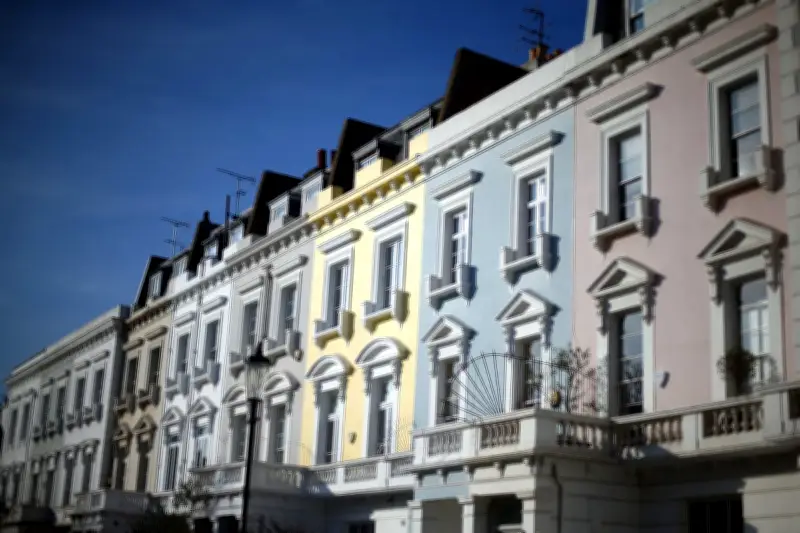
London leaders have today urged the Chancellor to ditch the planned mansion tax as it was revealed that it will cost families across just four London boroughs £270 million a year.
Estimates show that households in Kensington and Chelsea, Wandsworth, Richmond upon Thames and Westminster will pay half of what the Government predicts the tax will raise nationally.
Disproportionate impact on residents
The London councils have argued that their residents will be “disproportionately affected” by the proposals compared to other areas of the UK and it will hit pensioners who have lived in their homes for decades the hardest.
“A home is the centre of family life, not an untapped tax stream”, the leaders of the four boroughs wrote in a letter to Chancellor John Healey. “Our residents have often lived in the same home for decades. “They have raised families there, built communities and lasting connections, and in many cases have seen the value of their homes rise even as their incomes have stayed flat or fallen. It is simply wrong to assume that everyone living in these homes is wealthy. “Many are not, and under this proposal, some will be forced to sell the family home simply to meet the tax.”
Tax details and criticism
Former Chancellor Rachel Reeves announced in her Budget last year that homeowners with properties worth more than £2 million face an annual charge of between £2,500 and £7,500 from 2028. But house prices in the capital are so high that even some flats are set to be caught by the tax, while some castles outside the city will escape being hit.
The Treasury insists it is needed to support funding for local government services and to make the system fairer. But Elizabeth Campbell, the Tory leader of Kensington and Chelsea Council, said: “I have brought together the leaders of four London boroughs that will bear the brunt of this tax because the scale and deeply disproportionate impact of these proposals cannot be ignored. “Our residents alone could be forced to pay more than half of the national bill. “This is not a tax carefully targeted at the very wealthy. It lacks nuance and will hit pensioners, families and long-standing residents whose homes have risen in value while their incomes have not. “People should not be punished simply for staying in the communities they have helped to build. “The Government is calling this a council tax surcharge, but our council will not keep a penny of it for local services. It is a national tax, disproportionately extracted from a handful of London boroughs.”
Gareth Roberts, the Lib Dem leader of Richmond Council, added: “Many Richmond residents have lived in the same homes for decades, raised families, contributed to their communities and grown older locally and, in many cases, the value of their homes has risen dramatically, while their incomes and personal circumstances have stayed largely the same or even declined. “What the government is doing is adopting a quick fix approach to try to solve the broken system of Council Tax. “If the Government is serious about addressing the issue of local government funding they need to reform the whole system; messing around with a blunt approach such as this helps nobody, particularly given that the entirety raised with this new tax will go to the treasury and not a penny will go to fund services here in Richmond.”
Government response
A Government spokesperson said: “This tax is expected to raise around £430 million per year to help fund public services and is addressing a longstanding unfairness in our country, where a Band D home in Darlington or Blackpool pays more in council tax than a £10 million mansion in Mayfair. “Local authorities will be fully compensated for the additional costs of administering this new tax.”
Under Labour's new funding rules for local authorities, some of the boroughs are also expected to have to enforce huge council tax increases. Kensington and Chelsea, Hammersmith and Fulham, Wandsworth, Westminster and the City of London, as well as Windsor and Maidenhead, will see the largest cuts to funding settlements under Labour. The six town halls will be exempt from the cap on raising council tax, set at 5 per cent, from next year, which means bills will likely need to hiked well above the national maximum to make up shortfalls.
Ministers have argued that the six local authorities have had “historically very low bills” and local leaders will be given “flexibility” for two years to increase them above 5 per cent cap.
Westminster has already warned it needs to make significant cuts to services or residents face 200 per cent council tax rises. The central London town hall, along with Wandsworth, currently sets the second lowest council tax in the country, with Band D homes in the boroughs paying just over £1,000-a-year, including the £510 City Hall precept.




