
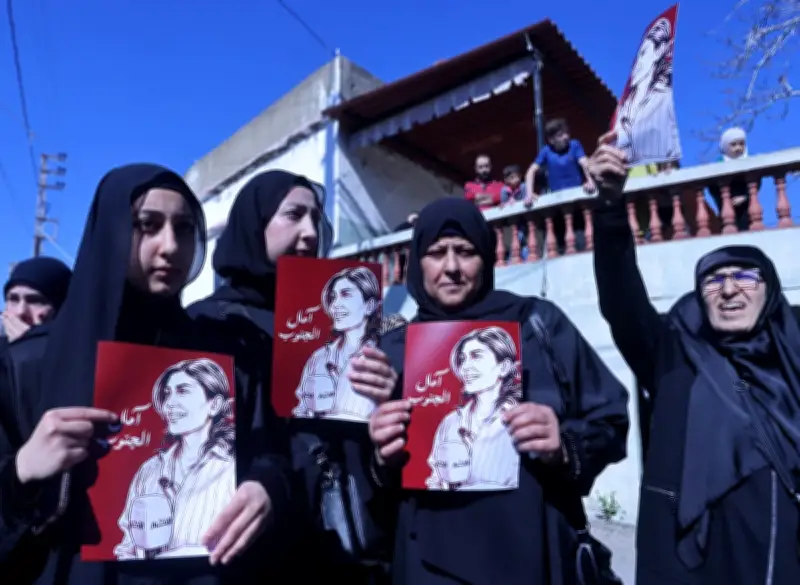
A new agreement between Lebanon and Israel could block victims of Israeli war crimes in Lebanon from pursuing accountability and hinder future efforts to give the International Criminal Court (ICC) jurisdiction in the country, legal experts have warned.
Lebanon and Israel signed a 14-point framework agreement in Washington on Friday designed to work towards an end to fighting between Israel and Hezbollah. Article 13 of the deal states that Israel and Lebanon will “cease all hostile or negative actions in international political or legal forums” to establish good faith between the two sides.
Impact on Accountability and ICC Jurisdiction
The broadly phrased text could prevent victims of Israeli war crimes committed during fighting since 8 October 2023 from seeking justice through international or national courts. Legal experts have interpreted this to mean that Lebanon would not be able to grant the ICC jurisdiction in the country – a move that advocates have pushed for in order to prosecute Israel and its leaders for alleged war crimes committed in Lebanon.
“This will kill any hope of granting the ICC jurisdiction, even any hope of a UN fact finding mission,” said Farouk al-Moghrabi, a former advisor to the ministry of human rights who helped draft the law to give the ICC jurisdiction in Lebanon. He added that the law would kill internal efforts to investigate and document crimes.
Human Rights Concerns and Criticism
“The government is normalising the crime and waiving its rights to ensure any investigation or the prosecution of these crimes, or even to assist the victim in their search for justice,” said Nizar Saghieh, a lawyer and head of Legal Agenda, a Lebanese NGO. A spokesperson for the Lebanese presidency did not reply to a request for comment. The head of Hezbollah, Naim Qassem, rejected the agreement signed in Washington, calling it a “humiliation”. The group has consistently called on the Lebanese government to stop direct negotiations with Israel.
Israel and Hezbollah have been fighting since 2023, after Hezbollah launched rockets at Israel “in solidarity” with Hamas, triggering two Israeli invasions of south Lebanon and widespread bombing campaigns. Israeli strikes in Lebanon have killed more than 8,000 people since 2023, while Hezbollah attacks have killed dozens of Israeli soldiers and at least 49 civilians in Israel. As part of its campaign in Lebanon, Israel has killed more than a dozen journalists, more than 300 emergency responders and hundreds of women and children.
Allegations of War Crimes and Accountability Efforts
Human rights experts have warned that Israel may have committed numerous war crimes in Lebanon, including the targeting of journalists on 13 October 2023, mass forcible displacement of hundreds of thousands of people from south Lebanon, and specific instances of deliberate targeting of civilians. One of the avenues for accountability for victims of alleged Israeli war crimes in Lebanon has been petitioning the government to grant the ICC limited jurisdiction to investigate and prosecute on its territory.
The ICC issued arrest warrants for Israeli prime minister Benjamin Netanyahu and former defense minister Yoav Gallant for alleged war crimes and crimes against humanity committed in Gaza. Israel and the US have undertaken an aggressive campaign against the ICC in response, including the US placing sanctions on ICC judges.
Obstacles to Justice
The Lebanese government has so far not granted the ICC jurisdiction for internal reasons, due to an initial resistance by Hezbollah and potential sanctions by the US. But Friday’s framework agreement would be another obstacle towards accountability in the country. The Lebanese National Human Rights Commission put out a statement commenting on the framework agreement, emphasising that no agreement should prevent victims from seeking justice.
“The Commission emphasises that prosecuting perpetrators of war crimes, crimes against humanity and torture does not constitute an act of hostility or a political stance, but rather a legitimate exercise of the rights to justice,” they said. The vague, broad nature of the framework agreement also made it uncertain what would be considered a “hostile or negative action”. The office of the UN high commissioner for human rights recently arrived in Lebanon for a fact-finding mission around war crimes committed during the last war – it is unclear whether work like this would be prohibited under the new agreement.
“The fact that this is happening after all of these crimes – this is normalisation of the crimes and ensuring some kind of impunity to Israel,” Saghieh said.




