Guyana and Venezuela have returned to the United Nations' highest court to settle a long-standing border dispute over the resource-rich Essequibo region. On Monday, Guyana argued at the International Court of Justice (ICJ) that 70% of its territory is at stake in the historic disagreement with its South American neighbor.
Background of the Dispute
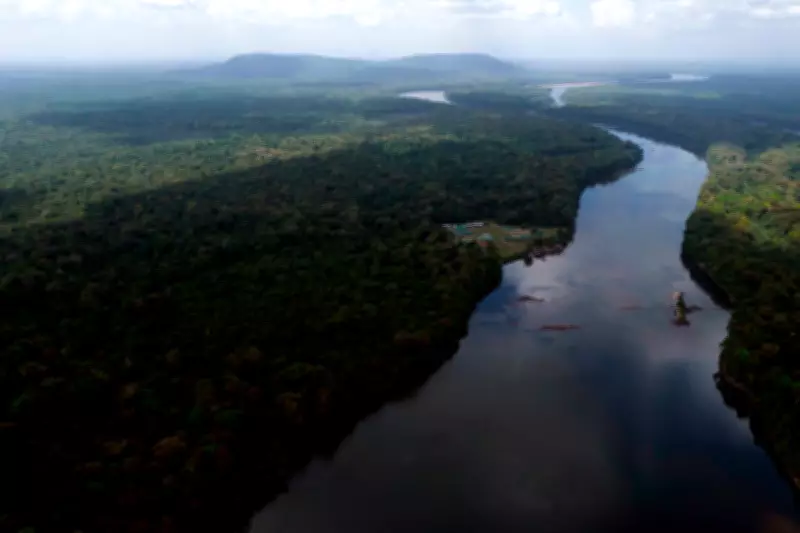
The Essequibo region, a vast jungle area rich in gold, diamonds, timber, and other natural resources, lies near massive offshore oil deposits. The border was drawn in 1899 by arbitrators from Britain, Russia, and the United States, largely favoring Guyana. At the time, the U.S. represented Venezuela because the Venezuelan government had broken off diplomatic relations with Britain.
Venezuela, however, contends that the Americans and Europeans conspired to cheat the country out of its rightful land. Venezuela has considered Essequibo its own since the Spanish colonial period when the region was within its boundaries. The country argues that a 1966 agreement to resolve the dispute effectively nullified the 19th-century arbitration.

Guyana's Position
Guyana Foreign Minister Hugh Hilton Todd told judges at the Great Hall of Justice in The Hague: “This has been a blight on our existence as a sovereign state from the very beginning.” After years of fruitless mediation, Guyana in 2018 asked ICJ judges to affirm the 1899 border decision.
Pierre d’Argent, a member of Guyana's legal team, dismissed Venezuela's arguments as “lengthy, pointlessly controversial and confusing,” adding that they “are not new in any way and have already been rejected by the court.”
Venezuela's Challenge and Court Rulings
The two nations have returned to the court multiple times. Venezuela challenged the ICJ’s jurisdiction by claiming it could not hear the case without the United Kingdom, which was Guyana’s colonial master at the time of the original border decision. The court ruled in 2020 that it had jurisdiction, allowing the case to proceed to this week's hearings.
In 2025, the court ordered Venezuela to refrain from holding elections for officials who would supposedly oversee the region. Venezuela’s acting President Delcy Rodríguez wore a pin in the shape of the Essequibo region during recent state visits to the Caribbean islands of Grenada and Barbados. Rodríguez was on her first official overseas trip following the capture of Nicolás Maduro by the U.S. in early January. The pin has also been increasingly worn by Venezuelan government officials, state television anchors, lawmakers, and ruling party members since Maduro was removed from power in a stunning nighttime raid in Caracas.
Upcoming Proceedings
The weeklong proceedings will continue on Wednesday with opening statements by Venezuela. The ICJ's decision will be closely watched by both nations and the international community, as it could have significant implications for regional stability and resource control.