
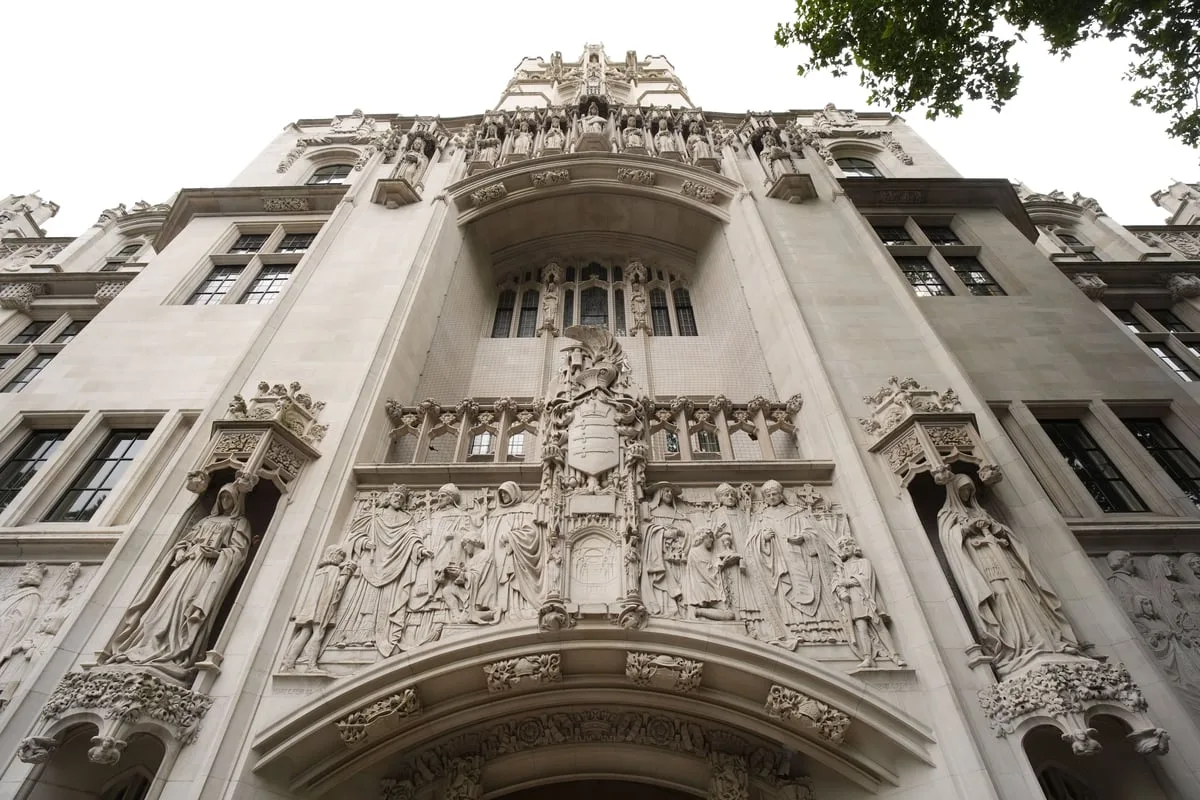
The UK Government has won a Supreme Court appeal preventing a Northern Ireland coroner from disclosing sensitive material in a Troubles inquest. The unanimous decision overturns an earlier ruling by coroner Louisa Fee to release summaries of evidence from a security force file related to the 1994 murder of Liam Paul Thompson in west Belfast.
The Supreme Court found that the coroner had made errors in her decision, including failing to apply the correct test before departing from the Secretary of State's assessment of damage to national security. The court also noted that the coroner did not obtain the Secretary of State's views before deciding to disclose the gist of the information. The judgment emphasised that the Northern Ireland Secretary is best placed to assess risks to national security, rather than the Police Service of Northern Ireland (PSNI) Chief Constable.
The case concerns the killing of 25-year-old Liam Thompson on 27 April 1994, who was shot by loyalists in west Belfast. The Thompson family have alleged that police were aware of a credible threat against the taxi firm he was using. The Ministry of Defence and PSNI held documents relevant to whether security forces received information from a covert human intelligence source before the murder.
The Supreme Court ruling also noted that a statutory deadline from the previous government's Legacy Act means the inquest cannot proceed. Instead, a full investigation could be achieved through a statutory inquiry or review by the Independent Commission for Reconciliation and Information Recovery. The current Labour Government is repealing the Legacy Act and plans to restore Troubles inquests.
Northern Ireland Secretary Hilary Benn described the case as highly complex with wide-ranging implications, stating the Government will take time to consider all aspects. Amnesty International argued that the judgment could allow the Government to conceal state involvement in Troubles killings. Campaigners believe the ruling may affect other cases involving state secrecy.




