
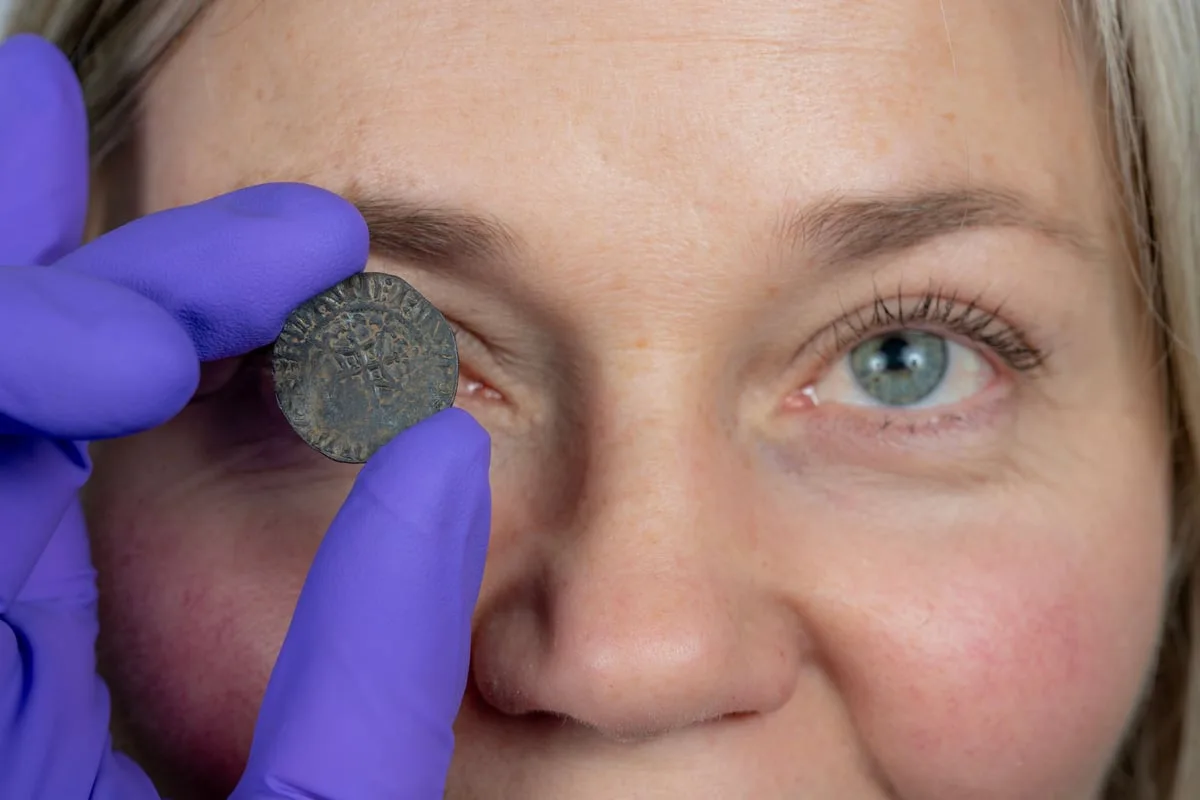
The earliest known coin minted in Scotland, dating back almost 900 years, has been acquired for the nation after being discovered by a metal detectorist. The medieval silver coin, minted under King David I, was found in a wooded area near Penicuik, Midlothian, and has now been allocated to National Museums Scotland (NMS) by the Scottish Archaeological Finds Allocation Panel.
King David I, who reigned from 1124 to 1153, introduced Scotland's first coinage. Until this discovery, it was believed that all of his earliest coins were produced in a mint in Carlisle, Cumbria, which he controlled from the 1130s. However, the newly found coin bears an inscription showing it was minted in Edinburgh, making it the first evidence of coin production in a core part of the Scottish kingdom.
Alice Blackwell, senior curator of medieval archaeology and history at NMS, said: “This coin is really significant because it’s the first of that earliest type, the earliest coins to actually have been minted outside of Carlisle. It was minted in Edinburgh, so it’s the first time that we have Scottish coinage being minted in what was a core part of the Scottish kingdom.”
The coin, dated to the second half of the 1130s, features a portrait of the monarch on one side and a cross-based design on the other. Its inscription includes +E(A?)BALD:E[…]ONESBVRG, with ESBVRG indicating Edinburgh. The discovery will help experts expand their understanding of medieval coin minting, as documentary sources for Scotland are scarce.
The coin was found in 2023 by a metal detectorist who reported it to Treasure Trove. It was allocated to NMS in autumn 2025, valued at £15,000, which was paid to the finder as a reward. The coin will be used for research and is expected to go on public display in the future.




