
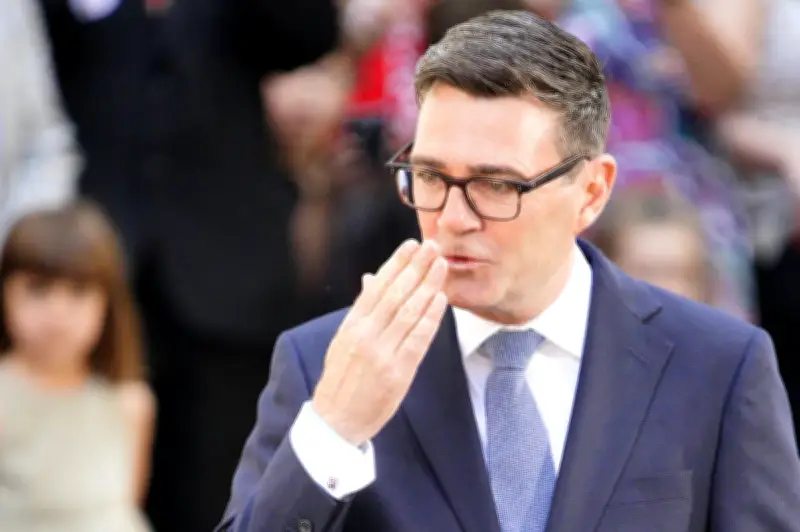
Andy Burnham's first major policy announcement as Prime Minister—an £850 million tax cut on electricity bills—has been criticised as “unfunded” by Darren Jones, a sacked ally of Sir Keir Starmer. From October 1, electricity bills will be VAT free, saving households around £45 per year as part of the government's effort to ease cost-of-living pressures.
Funding Questions Arise
Jones, who lost his Cabinet post as chief secretary to the prime minister when Burnham took office, questioned how the policy would be paid for. The government said the move will be funded in part by scrapping Sir Keir's digital ID project, estimated to cost around £600 million a year over three years. However, that falls short of the £850 million hit to tax revenues from the VAT cut, and funding for digital ID was meant to come from unidentified Whitehall savings.
Jones posted on X: “Good news that VAT will be cut on electricity bills. It’s a simple way for families to save a few quid, and to mechanically help to keep inflation that little bit lower. But the DigitalID program was unfunded. The government will have to set out how it will pay for its new policies at the budget.” His public criticism signals potential friction from Starmer loyalists under Burnham's premiership.
Government Defense and Impact
The government insisted the £1.8 billion cost of the digital ID scheme over three years had been “scored” by the Office for Budget Responsibility, meaning the money would have had to be found. That funding has been reprioritised to support the tax cut. Chancellor John Healey said: “This measure is funded this year from cancelling the digital ID programme, and it will help bring down inflation while supporting households in every postcode.”
Burnham stated: “I said I wanted to give people breathing space, and that’s what I’m announcing on my second day as Prime Minister. We’re taking immediate action to cut taxes on energy bills, put more money in people’s pockets and bring back hope.” However, Tory leader Kemi Badenoch countered: “It’s only one day into Burnham’s Government and already the explanations are falling apart. You can’t use the funding from an unfunded programme to pay for cheaper bills.”
Expert Skepticism
Martin Lewis, founder of MoneySavingExpert, said the VAT cut would have little impact: “This is a good totemic step and very welcomed. Yet in practice people won’t feel much benefit.” Helen Miller, director of the Institute for Fiscal Studies, expressed disappointment, noting the policy creates more complexity in the tax system and will be “hard to undo” after a year. “Government think they have found funding for this year – but only by reallocating savings that haven’t yet been made. If the Government can’t add 5% VAT back onto bills next year, how will they pay for it next year and the year after?”
Policy Details and Broader Context
Energy suppliers are expected to pass the VAT reduction—from 5% to 0%—to all customers, including those on fixed tariffs. Officials estimate the cut will reduce the consumer prices index measure of inflation by around 0.10 percentage points. The policy will cost the Exchequer approximately £850 million in 2026/27. For dual fuel households, the VAT cut applies only to electricity, not gas. Due to Brexit, EU VAT rates apply on electricity bills in Northern Ireland, so the cut will not apply there; instead, the Stormont executive will receive funding to implement equivalent support.
The announcement came before Burnham chaired the first meeting of his new Cabinet on Tuesday, following a purge of Starmer's allies, including Jones. Key appointments include John Healey as Chancellor replacing Rachel Reeves, Ed Miliband as Foreign Secretary, Shabana Mahmood remaining as Home Secretary, Wes Streeting as Defence Secretary, and Angela Rayner as Housing Secretary. Louise Haigh was made First Secretary of State and Chancellor of the Duchy of Lancaster. The Department for Science, Innovation and Technology was scrapped, with its responsibilities reassigned. Jonathan Reynolds became Business Secretary with added science and innovation duties, while Lisa Nandy remained Culture Secretary with an extended digital brief. Kanishka Narayan will attend Cabinet as AI Minister.




