
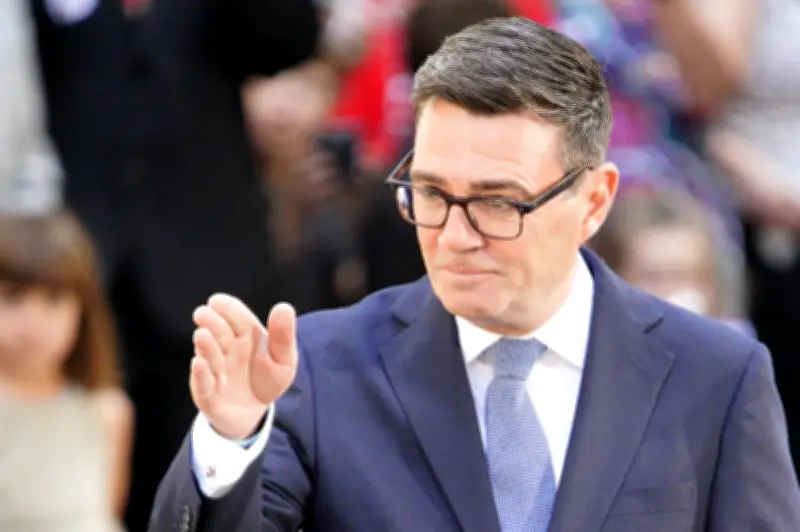
New Prime Minister Andy Burnham has promised to deliver the biggest change to British politics in 40 years, sweeping away key figures from Sir Keir Starmer's government and setting out a new direction for the country. In his first speech outside 10 Downing Street, Burnham vowed to provide early “breathing space” for households struggling with the cost of living, end rough sleeping, and pursue a goal of “reindustrialising Britain”.
New Political and Economic Model
Speaking after meeting the King and accepting his invitation to form a government, Burnham said he would deliver “a new political model and a new economic model” for Britain. He acknowledged the turbulence in British politics, noting he is the seventh prime minister since 2016, and called for “reflection and new resolution”. Burnham stated, “Britain needs to show the world that we can regain our stability once again.”
Burnham’s first actions included sacking Rachel Reeves as chancellor, David Lammy as deputy prime minister, and Peter Kyle as business secretary, clearing the way for his own allies. Starmer loyalist Steve Reed, who lost his Cabinet role at the housing ministry, told Burnham: “I hope those who did not show loyalty to Keir will now show it to you.” Lord Hermer was sacked as attorney general, Liz Kendall lost her technology secretary post, and Jo Stevens left her Welsh secretary role.
Immediate Cost-of-Living Measures
Burnham promised more immediate help for squeezed household finances, saying, “I can do something to give people some breathing space now, some help with the cost of living, and I will set out some of those measures starting tomorrow, including how we pay for them.” He later told reporters he is considering measures such as rent freezes, caps on bus fares, and help with energy bills, though no final decisions have been made.
Burnham also pledged to help more young people into work by changing the education system, build more council homes, and create a more “preventative state” that invests in people’s success rather than paying for failure. He said: “That is the fair and sustainable way to bring the welfare bill down, to meet our fiscal rules, and to honour our commitments on defence to our international partners.”
Constraints and Commitments
Burnham’s ability to move is constrained by his commitment to follow the spending and borrowing rules set by Reeves and to stick to Labour’s manifesto commitment not to hike personal taxes for workers. He told reporters he would use “any flexibility” he can find within the existing rules but “none of this is about taking risks with the economy”.
Burnham said his approach is about putting the “right values and the right standards” at the heart of government. “I will put the care of people at the heart of everything I do,” he said, urging Britons to “pull with me” to “build a new national sense of unity”.
International and Political Reactions
Burnham’s first call as Prime Minister was with US President Donald Trump. Tory leader Kemi Badenoch sent a letter welcoming Burnham and urging him to commit to spending cuts and rule out tax rises. She also urged him to grant licences for the North Sea’s Rosebank and Jackdaw and overturn the ban on new oil and gas licences. Green Party leader Zack Polanski called on Burnham to impose rent controls, take the water industry into public ownership, and introduce wealth taxes.
Burnham swept into Downing Street after being asked to form a government by the King following Sir Keir’s resignation. In his final speech as prime minister, Sir Keir praised the “greatness of Britain” and said: “I go with good grace, I go with a smile, and I go proud of everything that we have achieved.”




