
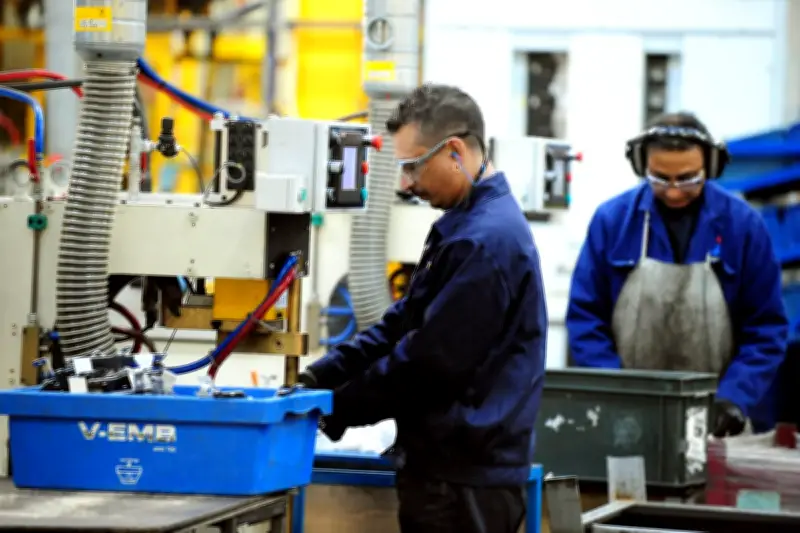
UK factory production has surged to a 21-month high as manufacturers stockpiled goods to hedge against expected price increases and supply chain disruptions stemming from the conflict with Iran, according to a closely watched survey. However, the overall growth rate of the manufacturing sector slowed in June due to a decline in new orders.
PMI Reading Signals Continued Expansion
The S&P Global UK manufacturing PMI survey registered 52.5 in June, down from 53.9 in May. Any reading above 50 indicates expansion, while below 50 signals contraction. This marks the eighth consecutive month of positive growth for the industry, which encompasses automotive, aerospace, chemicals, and food and drink processing.
Factory output expanded at the fastest pace since September 2024, driven largely by strategic stockpiling by businesses. Rob Dobson, director of S&P Global Market Intelligence, attributed this to firms seeking to “safeguard against supply chain disruptions and expected price rises.”
New Work Intakes Slow
Despite the output boost, the rate of growth in new work intakes has decelerated. Dobson noted, “A drop in the rate of growth of new work intakes suggests this boost is already starting to fade.”
Energy prices have risen sharply following the US-Israel war with Iran and the effective closure of the Strait of Hormuz, a critical transit route for global oil shipments. Many companies are bracing for further impacts later this year. Although peace talks between the US and Iran are underway, conflicting reports about the reopening of the strait and existing damage to energy infrastructure mean supply chain disruptions are expected to persist.
Supply Chain Strain and Price Pressures
Manufacturers, which are heavy energy consumers, have reported difficulties including shortages of freight capacity, port disruptions, and customs delays. Dobson added, “Manufacturers’ optimism about the year ahead also remains tepid, with many concerned about geopolitical tensions and uncertain over the future course of government policy.”
On pricing, Dobson described “mixed news.” Severely strained supply chains have led to raw material shortages, enabling suppliers to charge more. However, a recent drop in energy prices has helped moderate the overall rate of inflation in June.




