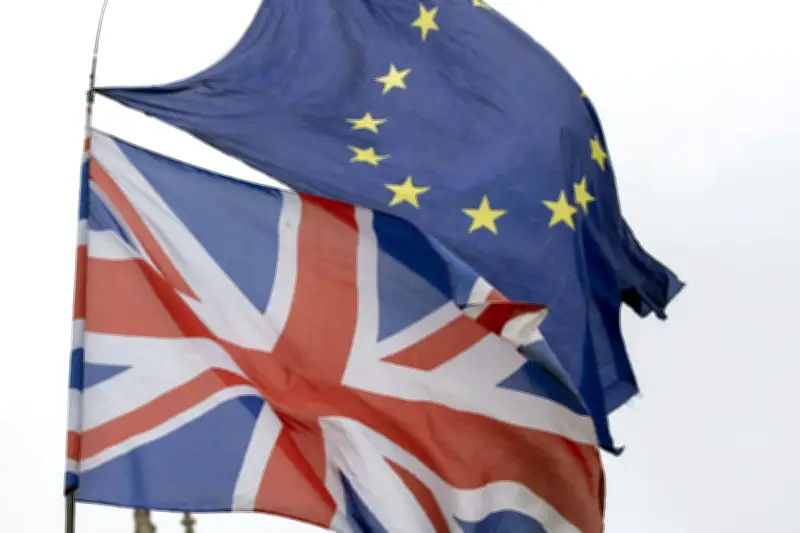
Reaction to an anticipated UK-EU deal on agri-goods has divided down familiar lines in Northern Ireland, as politicians on both sides of the Brexit debate responded to a move that could dismantle part of the “Irish Sea border”.
DUP leader Gavin Robinson said the mooted agreement does not go far enough and demonstrates a “lack of ambition” by the Government. However, Sinn Féin Economy minister Caoimhe Archibald said the agreement was a welcome step towards reducing trade friction.
What the deal would change
Their comments came in response to reports that a draft text has been agreed between London and Brussels that would see Great Britain and the European Union align on trade rules on SPS (sanitary and phytosanitary) goods, such as food and plants.
Under current post-Brexit rules, Northern Ireland already aligns with the bloc on SPS rules – an arrangement that led to the creation of the so-called Irish Sea border, with checks and controls required on goods being transported into Northern Ireland from the rest of the UK. Many of these processes would be scrapped if a deal is finalised that sees Great Britain similarly align with the EU on SPS produce.
DUP criticism
Responding to the prospect of an agreement, Mr Robinson highlighted that in many other aspects of post-Brexit rules, such as customs arrangements, Northern Ireland is still treated differently to the rest of the UK. Northern Ireland operates under EU customs rules, meaning that customs declarations are required on many goods arriving in the region from Great Britain.
“I don’t agree with the Government’s approach to their engagement with the European Union. I take issue with it,” Mr Robinson told BBC Radio Ulster on Tuesday. “But if this is the approach they want to go down, why do it in a whack-a-mole, single-issue, one-off approach, sector by sector, when, in actual fact, what they should and could be doing is ensuring that Northern Ireland is within the entirety of the United Kingdom when it comes to these negotiations? That we’re not in a separate and distinct structure?”
He added: “When I say this Government lacks ambition, my question to them is this: if they are willing to ignore 2016, ignore the referendum and agree alignment in so many areas of life, why do they continue to keep Northern Ireland separate from the rest of the United Kingdom?”
Welcome from other parties
Ms Archibald gave a differing reaction, telling reporters at Stormont: “Brexit was an act of gross economic self-harm, and we have seen the impact of that in the British economy to the point that we have the Labour Government now looking to reverse Brexit and considering how to go about that. Obviously, we have our own arrangements here, which mitigate the impact of Brexit and also give the north a unique competitive advantage, being able to sell into both the British and EU markets.”
Alliance Agriculture minister Andrew Muir described the deal as “positive news”. “I’ve been working hard, engaging with the UK Government on this,” he said. “And whilst full details of the deal will be published at the summit on November 20 in Brussels, I am confident this will be good for consumers, good for businesses, and good for our farmers.”
Ulster Unionist MLA Steve Aiken said reports of a deal on SPS should be “broadly, albeit cautiously, welcomed”, but suggested the agreement could be “just tinkering around the margins” rather than moving to a place where Northern Ireland is no longer treated separately from the rest of the UK. SDLP leader Claire Hanna said: “Brexit put barriers where none needed to exist, and businesses and families have been paying the price ever since. This agreement is a welcome opportunity to start repairing some of that damage.”
Traditional Unionist Voice leader Jim Allister criticised the deal. “This is not a UK-EU deal for the whole UK,” he told Radio Ulster. “This is a deal with the EU for Great Britain. The United Kingdom should, in these negotiations, have taken back sovereignty over SPS matters in Northern Ireland. They chose not to.”