

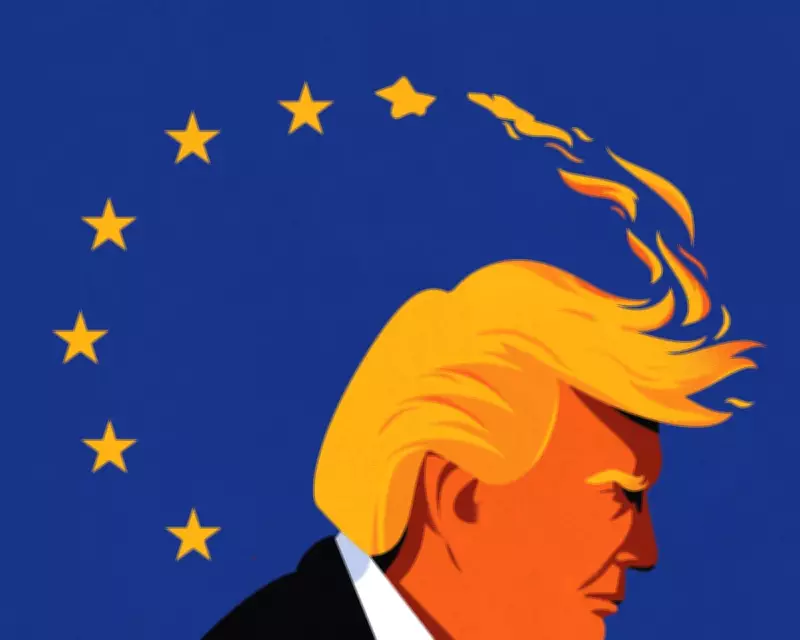
In this turbulent era dominated by Donald Trump, an unexpected silver lining has emerged for Britain: a renewed push towards closer ties with the European Union. As the world grapples with escalating tensions in the Gulf and economic uncertainty, the UK finds itself reassessing its post-Brexit isolation, driven in part by the former US president's confrontational stance.
The Global Context: Instability and Isolation
Recent warnings from airline executives like Ryanair's Michael O'Leary highlight the fragility of global travel, with jet fuel shortages threatening summer plans. Families are reconsidering holidays, opting for domestic destinations like Cornwall as costs soar. This backdrop of instability was underscored when over 40 countries held virtual talks on unblocking the Strait of Hormuz, a stark reminder of the risks in an interconnected world.
Donald Trump's actions have exacerbated these challenges. His reckless foreign policy moves, including taunting allies like Emmanuel Macron and mocking Britain's military capabilities, have strained transatlantic relationships. As Keir Starmer launched a subdued local election campaign, he emphasised that volatile times necessitate a stronger partnership with Europe, framing it as a matter of national interest rather than mere political posturing.

A Decade After Brexit: Shifting Sentiments
June marks ten years since the Brexit referendum, a milestone that feels increasingly distant. While proponents of leaving the EU once championed independence, recent YouGov polling indicates that 63% of Britons would now vote to rejoin. This shift is palpable in urban areas, where support for reintegration is even stronger, influencing political strategies ahead of upcoming elections.
Trump's role in this realignment cannot be overstated. His insults and unilateral actions, such as the attempted annexation of Greenland and threats to withdraw from NATO, have alienated traditional allies. European leaders, including Italy's Giorgia Meloni, are distancing themselves, recognising that the US may no longer be a reliable partner in crises. This has prompted a defensive huddling among European nations, blurring lines between EU and non-EU members.
Economic and Political Realities
In Britain, the Conservative government's struggles with immigration and economic pressures have exposed the limitations of a hard Brexit. Estimates suggest Brexit has reduced GDP by up to 8% and investment by 18%, prompting Labour to explore pragmatic solutions. Negotiations led by figures like Nick Thomas-Symonds are focusing on youth mobility schemes and regulatory alignment, avoiding the polarising issue of freedom of movement.
Public apathy towards once-contentious topics, such as food labelling rules for marmalade, signals a broader fatigue with Brexit divisions. As global threats like resource scarcity loom, the imperative for cooperation grows. While trade rivalries persist, the crisis in the Gulf and potential economic downturns are fostering a spirit of unity across Europe.
Looking Ahead: Challenges and Opportunities
Rejoining the EU remains a distant prospect, given the union's evolution since Britain's departure. However, the political will for a new, closer relationship is gaining momentum. Starmer's advocacy for European partnership reflects a pragmatic approach to safeguarding national interests in an unpredictable world.
The lesson from the past decade is clear: isolationism is a luxury Britain can no longer afford. As Trump's legacy of discord pushes allies together, the UK has a chance to rebuild bridges with Europe. This requires political courage and a recognition that, in times of crisis, unity offers the best defence against global threats.






