

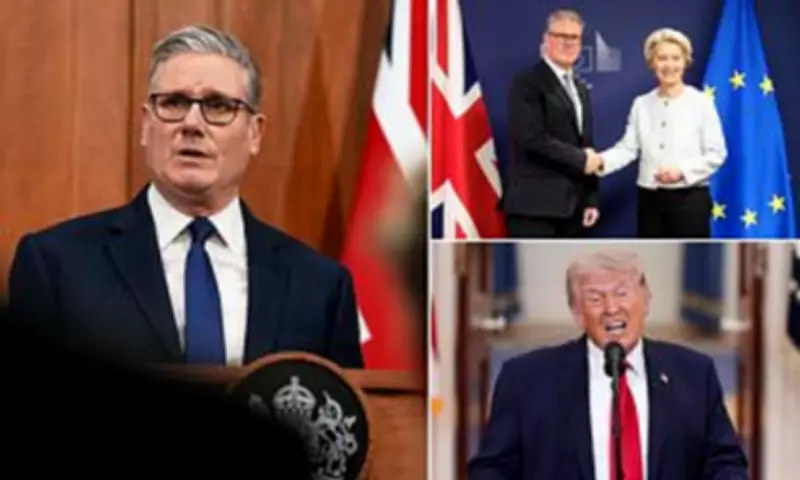
Starmer's EU Reset Sparks Fears Over Brexit Concessions Amid Trump Chaos
Concerns are mounting over the potential concessions Prime Minister Keir Starmer might offer the European Union as he intensifies calls for a diplomatic "reset" in response to the turmoil surrounding Donald Trump's presidency. The Prime Minister unveiled a renewed initiative to unwind Brexit during a Downing Street press conference yesterday, arguing that the ongoing Middle East crisis underscores the urgent necessity for stronger European collaboration.
Ambitious Alignment Package Proposed
Sir Keir announced that an upcoming UK-EU summit this summer will negotiate an "ambitious" package aimed at fostering closer alignment between Britain and the bloc. In a clear demonstration of his commitment, the Prime Minister engaged in overnight discussions with EU Commission President Ursula von der Leyen to assess the progress of ongoing talks.
However, critics have swiftly cautioned that the Prime Minister may have already relinquished significant negotiating leverage. Brussels has reportedly begun making demands, including proposals for a youth "free movement" scheme and insistence that Britain adhere to EU regulations. Furthermore, financial contributions to the EU's budgets are expected to be a pivotal element in the negotiations.

Internal Pressure and External Criticism
Kemi Badenoch launched a sharp critique, suggesting that the recent Chagos Islands agreement exemplifies how "when the PM negotiates Britain loses." Her comments highlight broader apprehensions within certain political circles about the direction of Starmer's EU strategy.
The Prime Minister's intervention comes shortly after Donald Trump renewed his derogatory remarks about the United Kingdom and threatened to withdraw the United States from NATO. This external instability has compounded the internal pressure Sir Keir faces from senior Labour figures advocating for a shift towards Brussels.
Deputy Prime Minister David Lammy and Health Secretary Wes Streeting have both indicated support for rejoining the customs union. Meanwhile, London Mayor Sir Sadiq Khan has urged the Labour Party to make EU re-entry a central component of its next election manifesto.
Negotiation Details and Financial Implications
Cabinet Office Minister Nick Thomas-Symonds, who is leading the discussions with Brussels, reported "very significant progress" in the talks. He expressed confidence that agreements will be reached on youth mobility, emissions trading, and a food and drink accord, with a comprehensive deal anticipated at the 2026 annual summit.
Mr Thomas-Symonds acknowledged that the UK will likely need to make financial contributions to EU coffers but insisted that the government is being "robust" in applying value-for-money tests to protect Britain's economic interests. He emphasized that both sides are currently playing "hardball," particularly regarding EU resistance to UK requests such as an emergency brake on numbers under the youth mobility scheme.
Starmer's Vision and Labour's Stance
At yesterday's press conference, Sir Keir underscored that the volatile global landscape necessitates a closer partnership with European allies. He asserted that Brexit inflicted "deep damage to our economy" and that the opportunities to enhance security and reduce living costs are too substantial to overlook.
The Prime Minister clarified that the upcoming summer summit will not merely ratify existing commitments but will strive for greater ambition in economic and security cooperation. He framed this as a partnership rooted in shared values and interests, essential for navigating a dangerous world while prioritizing the British people's welfare.
Opposition Voices and Broader Implications
Mrs Badenoch reiterated her concerns, questioning what specific concessions the Prime Minister is prepared to make and warning against reverting to past conflicts with the EU. She highlighted core Brexit principles of financial autonomy, legal control, and border management as being at risk.

Former Labour Cabinet Minister David Miliband contributed to the discourse on BBC Radio 4's Today Programme, arguing that a return to the pre-Brexit status quo is unrealistic. He advocated for sustained engagement with the European Union, emphasizing Britain's geographical and strategic ties to Europe while also considering global alliances.
Miliband concluded that proactive measures, such as those outlined by Starmer, are essential rather than adopting a passive waiting approach amidst global uncertainties.





