

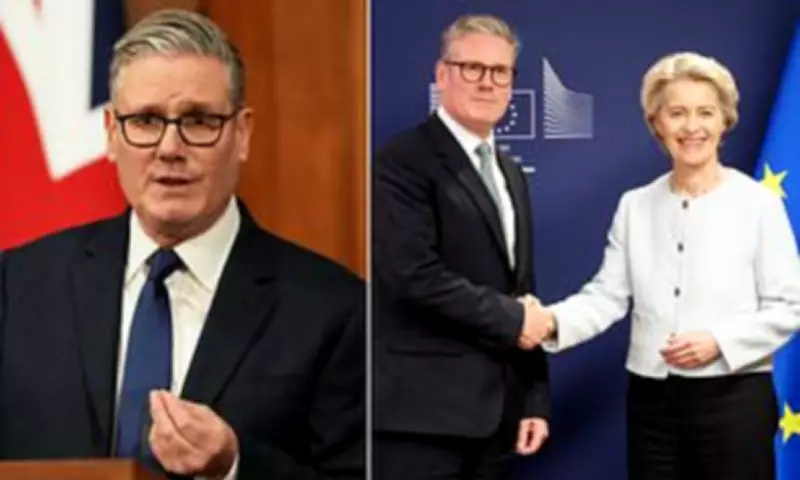
Starmer Faces Backlash Over Brexit Reversal Claims Amid Iran Conflict
Prime Minister Sir Keir Starmer has been accused of shamelessly exploiting the Iran war crisis to effectively reverse Brexit, as he indicated the United Kingdom could move significantly closer to rejoining the European single market. During a Downing Street press conference, Starmer argued that addressing the fallout from Middle East conflicts—which has strained UK-US relations—necessitates closer partnership with our allies in Europe and with the European Union.
Economic and Security Opportunities Highlighted
The Prime Minister emphasised that renewing links with Brussels would unlock substantial economic and security benefits, describing these opportunities as too big to ignore. He asserted that aligning more closely with the single market is hugely in our economic interest, despite having previously pledged to respect the 2016 referendum outcome during the election campaign. Starmer now contends that Brexit did deep damage to our economy.
Opposition Accusations of Distraction Tactics
Shadow Foreign Secretary Dame Priti Patel launched a scathing attack, accusing Starmer of attempting to reopen old Brexit wounds to divert attention from what she termed the economic mess created by Labour. She claimed the Prime Minister is desperate for someone or something to blame for the terrible failings he has overseen, and has his sights set on Brexit.

Former Tory Cabinet minister Sir Simon Clarke echoed these sentiments, alleging Starmer is shamelessly using war in the Gulf to effectively reverse Brexit – just as he always intended. Reform UK's deputy leader Richard Tice dismissed the idea of cosying up to the EU as ludicrous, characterising the bloc as a failing economic bloc that has a long track record of failing to invest in defence.
Conservative Warnings and Labour's Internal Push
Sir Jacob Rees-Mogg, the former minister for Brexit opportunities, urged the Conservative Party to commit to reversing any Labour efforts to drag the UK back into Brussels' orbit. He argued that Labour are fundamentally wrong about this, citing the UK's economic outperformance compared to France, Germany, and Italy in recent years. Rees-Mogg attributed current challenges to high energy prices linked to Net Zero policies rather than Brexit.
Meanwhile, senior Labour figures are advocating for stronger EU alignment. Deputy Prime Minister David Lammy and Health Secretary Wes Streeting have shown support for rejoining the customs union, while London mayor Sir Sadiq Khan pushes for full EU re-entry. Starmer has announced plans for a UK-EU summit this summer, expressing ambition for closer alignment.
Policy Moves and Manifesto Pledges
Despite insisting he will not break Labour's manifesto commitments to remain outside the customs union, single market, and free movement, Starmer hinted at further steps toward the single market. When questioned, he stated, The steps we've taken so far have been in relation to the single market, and I'm ambitious that we could do more.
Concrete actions include:
- An outline food and farming deal requiring permanent alignment with EU rules, without UK control over future legislation.
- Rejoining the EU's Erasmus education scheme at a cost of up to £6 billion over seven years—triple the amount rejected by former Prime Minister Boris Johnson.
- The Cabinet Office reviewing other economic areas for potential alignment with Brussels.
A Labour source defended the approach, stating, We want to remove the Tory Brexit barriers that killed growth and hiked prices, replacing the paperwork tax at the border and their ideological fantasy with common-sense economic reality that benefits the continent's economic resilience.






