

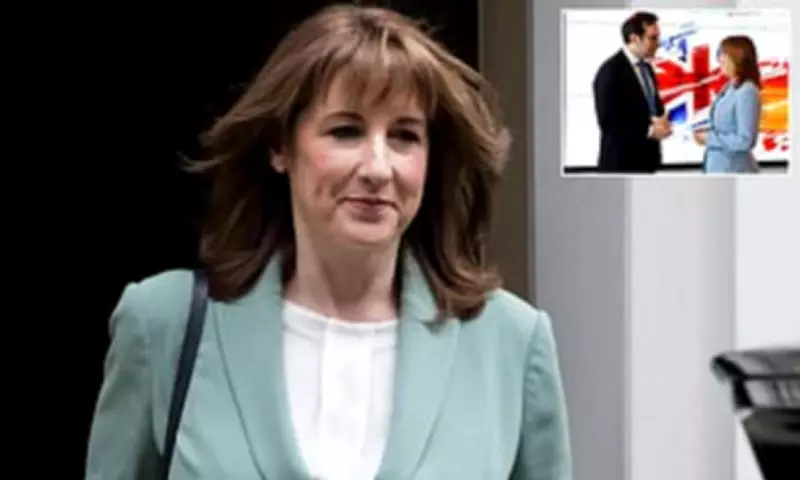
Chancellor Rachel Reeves has once again voiced her profound regret regarding Britain's decision to exit the European Union nearly a decade ago, stating unequivocally: 'I wish we had voted to Remain.' In a candid interview with The Economist following her major Mais lecture at Bayes Business School in London on Tuesday, the Chancellor acknowledged that reversing the 2016 referendum result is impossible, but she emphasised her commitment to forging stronger ties with Brussels.
Advocating for Closer EU Alignment
Ms Reeves argued that maintaining the UK's current trading relationship with the EU would be 'foolish,' warning that Britain risks 'being stranded between powerful trading blocs' such as the EU, US, and China. She stressed the need to determine where the national interest lies, asserting: 'Our fate as a country is inescapably bound with that of Europe.'
Plans to Follow EU Rules
In her Mais lecture, the Chancellor detailed plans to align more closely with EU regulations, contending that this approach would help lower prices and combat inflation. She declared: 'I have today fired the starting gun of where we want to go next, and that is closer alignment.' Ms Reeves highlighted that Europe remains the UK's largest trading partner despite existing barriers, and she advocated for divergence from EU rules to be 'the exception, not the norm.'

Meeting with Spanish Counterpart
On Wednesday, Ms Reeves made her first visit to Spain as Chancellor, meeting with her Spanish counterpart, Carlos Cuerpo, to advance her agenda for closer EU ties. During the trip, the Treasury announced a significant £240 million investment from Spanish liquid storage company Exolum. Additionally, a work visa waiver was introduced for UK services professionals travelling to Spain for fewer than 90 days, aimed at facilitating business exchanges.
Ms Reeves underscored the importance of international partnerships, stating: 'In an uncertain world, we must build growth that is secure and resilient. We do this best through partnerships with those who share our interests, our values, and our ambitions. We count Spain amongst those partners – and the prize for doing more together is considerable.'
Broader Political Context
This push for closer EU relations aligns with Prime Minister Sir Keir Starmer's pre-general election pledge to 'make Brexit work.' Both leaders have insisted that the UK will not rejoin the EU's single market or customs union, and there will be no return to freedom of movement rules. However, Ms Reeves' remarks signal a strategic shift towards greater regulatory harmony with Brussels.
Efforts to Reduce Trade Bureaucracy
In related developments, EU relations minister Nick Thomas-Symonds expressed his goal to finalise a deal with Brussels by the next UK-EU annual summit, expected in May or June. He aims to cut bureaucratic costs that burden businesses trading with the bloc. Using a bundle of documents as an example, he highlighted the cumbersome 'export health certificates' required for EU trade, noting fees such as £200 per certificate and £1,400 for sampling.
Thomas-Symonds told LBC: 'What I want to do is to finalise, by this year's annual summit, the legal text … I want to take away fees. I want to be starting to do that by the middle of next year. That is the work that I'm doing. That's what I'm trying to do, to cut down barriers for business.'
Overall, Rachel Reeves' statements and actions reflect a concerted effort to recalibrate the UK's post-Brexit relationship with the EU, focusing on economic stability, investment, and regulatory alignment to foster growth and resilience in an increasingly complex global landscape.






