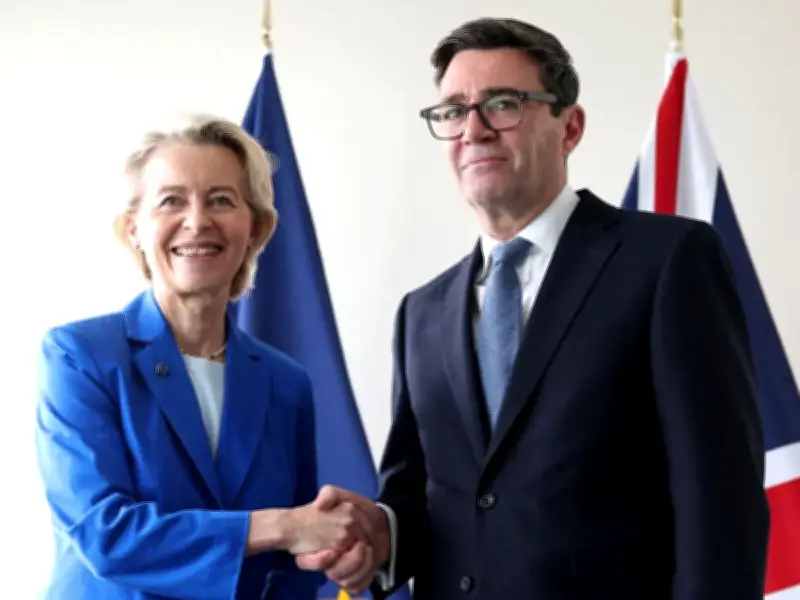
Former Labour leader Neil Kinnock has praised Prime Minister Andy Burnham for opening an honest discussion on the future of the UK-EU relationship, saying he is treating citizens like the adults they are. Lord Kinnock also insisted that freedom of movement, a controversial issue during the 2016 Brexit vote, is essential to boosting the economy and improving public services.
Kinnock backs honest debate
In recent weeks, Burnham has sparked a debate on the UK's relationship with Brussels, including free movement, but has insisted he would not "move ahead of public opinion". He is expected to set out options for the future of the relationship around the time of the major UK-EU summit in Brussels on November 20.
The move has led to criticism from Labour's political opponents, including Reform leader Nigel Farage and some Labour MPs in pro-Leave seats. But Lord Kinnock, a former European Commissioner, told The Mirror: "The PM is showing how an honest discussion can take place in a democracy where vital national decisions involve the whole electorate. He's treating the citizens like the adults they are."
Free movement essential for growth
Lord Kinnock added: "I hope that over the coming years the factual evidence of accumulated Brexit damage and the realistic prospects for UK growth and influence inside a changed EU will influence positive opinion, especially the young."
He continued: "I also hope that the realities of demographic change will be persuasive in our country when, by 2040, there will be just 2.6 people of working age for every 1 over-65. If we want buoyant revenues, quality public services, economic advance, and security it's clear that freedom of movement is essential."
Freedom of movement is considered a cornerstone of the European Union and allows people to travel, work and study within the bloc's member states.
Business uncertainty and political concerns
Lord Kinnock's comments came after Business Secretary Jonathan Reynolds said uncertainty over the UK's relationship with Europe is hammering firms as the government eyes closer ties with Brussels. He told the BBC: "We have to resolve what the long-term relationship will be… every day I'm talking to British business, who have concerns and uncertainty."
Reynolds did not deny reports that officials could discuss a return to freedom of movement, but insisted no assumptions had been made on the future relationship with the bloc. Pressed on whether UK officials are talking to the EU or planning to talk to the EU about freedom of movement, he said: "They will be talking to them about what the future options for our relationship might be. But here and now, the focus should be on the summit and the tangible improvements we're going to make."
However, Labour MP for Leave-voting Grimsby, Melanie Onn, said: "I don't think the scars have healed for many people." In an article for Politics.co.uk she added: "Almost a decade after the referendum, freedom of movement is finding its way back into our national political conversation. Just as the wounds of Brexit begin to heal, there is a risk of pulling out the staples prematurely."
UK to rejoin Erasmus scheme
Meanwhile, the government also confirmed on Tuesday that the UK will rejoin the Erasmus plus student exchange scheme from the start of January. Foreign Office minister Hamish Falconer said applications would open next month for young people who will be able to study, train or get work experience in the EU. Mr Falconer insisted to MPs that the opportunities would be open to "educational institutions of all kinds". Work on the UK joining the Erasmus programme was announced as part of ex-PM Keir Starmer's post-Brexit reset deal with Brussels.