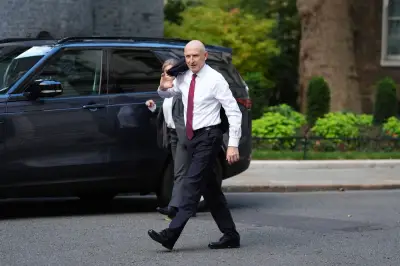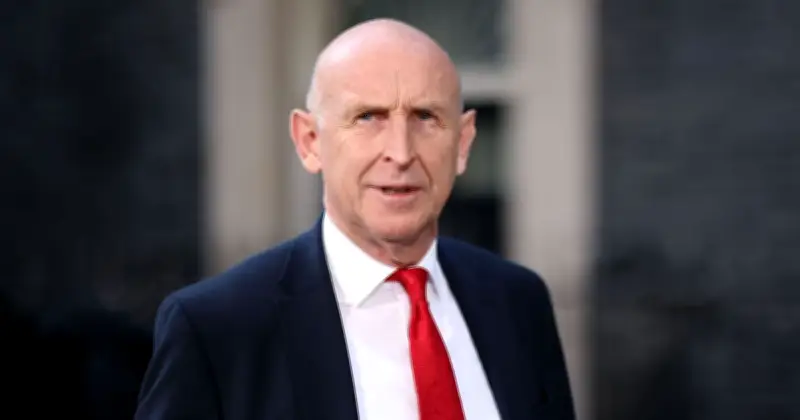
The Labour Government has been accused of "pulling the rug from under" British businesses over reported plans to raid the Boiler Upgrade Scheme (BUS). Chancellor John Healey is expected to slash the amount of money available to subsidise heat pumps to plug holes in the defence budget, sparking panic among independent heating installers who warn thousands of jobs will be put at risk "overnight".
Scheme helps cut upfront costs
The BUS helps property owners reduce the upfront cost of replacing their existing systems with low-carbon alternatives, such as heat pumps or biomass boilers. Homeowners, landlords, and owners of small-business buildings are entitled to up to £9,000 in grant funding.
However, the Government is reportedly planning to cut hundreds of millions of pounds from the scheme's £2.7billion five-year budget to free up over £2billion in savings for defence spending. There are concerns that cutting funding for the scheme could harm the industry and undermine the Government's pledge to tackle the climate crisis.
Installers warn of job losses
Franco Miceli, director of Octopus Trusted Partners Network, said: "Thanks to the Boiler Upgrade Scheme, thousands of households are saving hundreds of pounds on their energy bills this winter. It's also given installers across the country – many running small family businesses – the confidence to hire, train and build careers in the green jobs of the future."
He added: "Cutting the scheme now risks pulling the rug out from under them just as they're gearing up for growth. We should be backing British businesses to seize this massive opportunity for the UK, not putting jobs, hard-earned investment and future growth at risk."
James Lacey, director of JLN Plumbing & Heating in Coventry, said heat pump installations now make up 30% to 40% of their network. The 49-year-old warned that cutting the BUS will put "jobs at risk overnight".
He told Express.co.uk: "We're a local firm that took the Government at its word. We invested lots of time and money in MCS certification, training and equipment because we were told this was the future of home heating. Pulling the grant now would leave businesses like ours carrying the cost of that promise."
He added: "The scheme was only improved in April. It was finally getting easier for customers. Cutting it now throws away that progress just as it started to work. If the Government is serious about net zero and lower energy bills, it should be backing the local installers who actually do the work, not cutting the support that keeps us going."
Businesses face uncertainty
Bill Tuck, director of operations at Sustain Homes in Watford, agreed that cutting the scheme could lead to a "very high chance that a lot of jobs will be lost" and a "considerable amount of revenue would disappear overnight".
"To think that a cut to the grant could put businesses like ours under pressure and put jobs at risk in this industry would be devastating," the 42-year-old explained. "Cutting the grant would be a huge blow to our business. We'd have to reevaluate everything we're doing, absolutely everything from the bottom up."
The scheme offers £7,500 as a basic grant towards an electric heat pump, while some properties off the grid can claim as much as £9,000. It has subsidised nearly 80,000 heat pumps since it began in 2022.
Adam Killa, director at Ask Renewables in Burscough, Lancashire, said his company has invested over £200,000 in heat pumps and cylinders in the last month to keep up with demand. He said cuts to the BUS would be a "blow just as the demand picks up".
"We've taken on more apprentices because of the scheme. Because it was going to run until 2029," the 46-year-old said. "If you haven't got the Boiler Upgrade Scheme, you can't pay the apprentices because you don't get as much work."
He added: "The Government has increased what apprentices get paid, but schemes like the Boiler Upgrade Scheme are driving demand, which helps us pay the wages. So those scenarios all work hand in hand. If you take one of them away from the equation, which isn't our fault, then the whole thing collapses."
A spokesperson for the Department for Energy Security and Net Zero said: "Savings for the defence investment plan (Dip) are a small part of [the department's] overall budget, which saw a significant uplift at spending review. We will set out how we will fund essential investment in our national security this autumn."