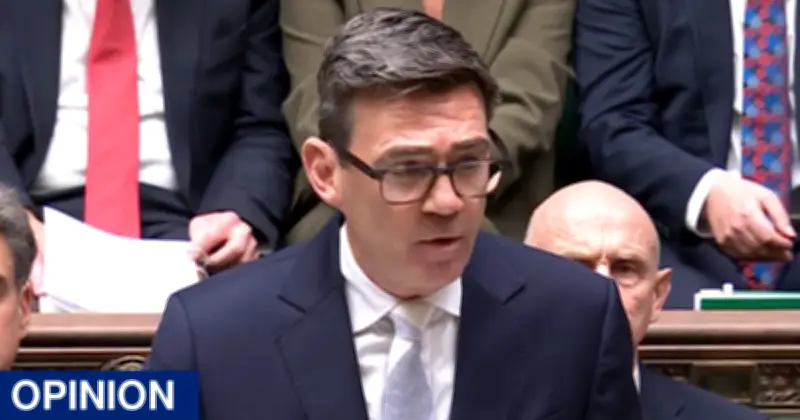
Former Conservative Cabinet minister Lord John Redwood has warned that Andy Burnham's proposed Brexit reset would mean giving the EU more of the UK's money, fish and powers to choose its own laws, with "nothing back in return that is worth having."
Writing in an opinion piece, Lord Redwood criticised Mr Burnham for wanting to "live in the past," citing his campaigns against Margaret Thatcher and his efforts to reopen the 2016 Brexit vote. He described this as "bad politics, bad for democracy and bad for our current economic prospects."
Three routes back to the EU
Lord Redwood outlined three ways Mr Burnham is floating to reverse Brexit: the "slow stealthy way of the reset," the Liberal Democrat approach of joining the customs union, and the "full-throated way of seeking to rejoin." He argued all three would make the UK worse off and undermine the democratic result of the UK's largest ever popular vote.
He also suggested Mr Burnham could instead study the impact of interventions by President Obama, the IMF and the OECD with their "gloomy forecasts and warnings," or accept the result and use Brexit freedoms to promote UK prosperity.
Single market and customs union criticised
Lord Redwood claimed that being in the single market under EU laws would have produced faster growth if it worked, describing the EU's package as "salami slicing" that would send a large and growing bill, raise energy costs and speed deindustrialisation.
He called the customs union "worse than useless," saying it would mean putting tariffs on goods imported from non-EU countries, taxing components and raw materials from non-EU sources, and losing trade deals agreed since leaving the EU. He added it would make people poorer and tax consumers more during a cost of living crisis.
Rejoining would come at an unacceptable price
Lord Redwood argued rejoining the EU would be impossible or come at an unacceptable price, suggesting the EU would not offer the same terms as before. He said membership costs would be much higher, there would be no UK rebate, and the UK would probably have to pledge to join the Euro. An "avalanche" of new EU laws would be imposed, burdening UK companies serving the domestic market with extra compliance costs.
He concluded that all three routes to closer EU ties would damage UK interests and undermine its democracy.