Testing a $1,400 Wellness Mat: Did It Deliver Relaxation or Just Weird Dreams?
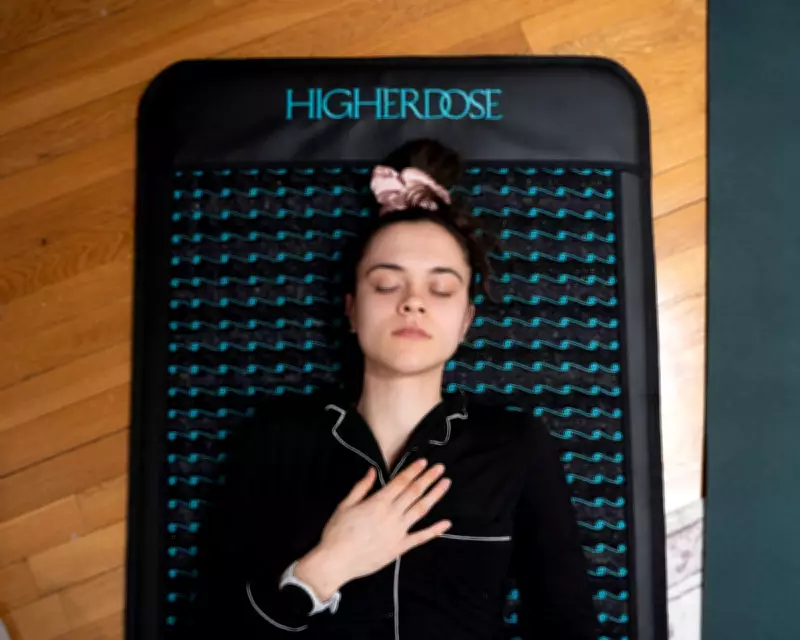
Under a pink velvet couch lies a $1,400 mat, a PEMF and infrared therapy device owned by my roommate. This hefty investment, nearly matching my monthly rent, is the HigherDose Infrared PEMF Pro Mat. Measuring six feet long, crafted from vegan leather, and adorned with bright-blue amethyst and obsidian crystals, it weighs as much as a Siberian husky, making my basic yoga mat seem flimsy in comparison.
The Promise of Biohacking and Celebrity Endorsements
HigherDose positions itself at the forefront of the biohacking trend, offering products like infrared sauna blankets and red light therapy accessories. The mat claims to boost mood, enhance sleep, and accelerate muscle recovery through "total-body relaxation," with a 20-minute session equated to an hour of yoga or meditation. Celebrities such as Julianne Hough and Gwyneth Paltrow have praised it, and it has garnered positive reviews in other outlets.
My roommate, a user for over a year, favors the "focus" setting, reporting increased productivity and relaxation. As a certified yoga instructor and wellness enthusiast, I was intrigued. With constant soreness from running 20 miles weekly and anxiety from a type A personality, I embarked on a week-long test, seeking expert insights on the science behind PEMF therapy.

The Science Behind PEMF and Infrared Heat
Pulsed electromagnetic field (PEMF) therapy, approved by the FDA in 1979, uses electromagnetic vibrations to stimulate cells, potentially promoting healing and reducing pain. It has been adopted by physical therapists and athletes for recovery. The mat also incorporates far infrared heat, commonly used in saunas to address fatigue, low blood pressure, and depression. The embedded crystals are claimed to "amplify benefits," though no scientific studies support physical health effects, possibly relying on the placebo effect.
My Testing Methodology
I compared the HigherDose mat to my standard Manduka rubber yoga mat over seven evenings. Each session involved lying flat for 20 minutes on both mats, alternating the order daily. I limited movement, closing my eyes or reading, and used my Garmin watch to measure heart rate variability (HRV) and stress levels post-session. HRV indicates the body's stress response, with lower values suggesting recovery struggles.
I selected the mat's "sleep" frequency (3Hz) to target sleep improvement and the highest infrared heat setting due to cold weather. The mat's controller, with its bulky, mad-scientist appearance, activated the settings with a high-pitched beep.
A Week of Unsettling Experiences
On the first day, the infrared heat provided warmth and calmness, inducing drowsiness similar to chamomile tea or a hot bath. However, I did not feel the "cellular-level" recharge promised. Over subsequent nights, my sleep worsened, with awakenings around 1 a.m. and vivid, unsettling dreams, prompting silent curses at the mat peeking from under the couch.
Jessica Alcalde, HigherDose's vice-president of product, noted that some users might feel stimulated initially before settling into a parasympathetic rest response, recommending earlier use or shorter sessions. By day three, after a 7-mile run, the mat felt like a glorified heating pad, offering no relief for tight calves or achy feet.
Dr. Robert Dennis, a PEMF researcher, suggested long-term benefits, comparing it to a retirement account with profound effects in later years. In contrast, Gary Housley, a physiology chair, expressed skepticism in Guardian coverage, noting that at-home PEMF mats generate very weak electromagnetic fields compared to medical devices.
Mixed Results and Data Draw
My Garmin recorded a slight HRV increase of about two milliseconds on the HigherDose mat, though HRV naturally fluctuates. Dr. Magda Havas, whose studies link PEMF to pain reduction, explained such changes might not be perceptible. My stress levels were slightly lower on the regular mat, but overall, the data was inconclusive after a week.
Havas emphasized that PEMF effects accumulate over time, energizing cells, organs, and the body gradually. However, the $1,374 price tag equals an annual yoga studio membership, raising questions about value compared to $20 heating pads or 15-minute meditations.

Conclusion: A Luxury with Limited Returns
For my budget-conscious pursuit of better sleep and reduced stress, the HigherDose mat fell short. I experienced weird dreams and minimal tangible benefits, leading me to prefer reading a novel or stretching on my reliable rubber mat. While PEMF and infrared heat have scientific backing, this mat's high cost and subtle results may not justify the investment for most seekers of wellness and relaxation.