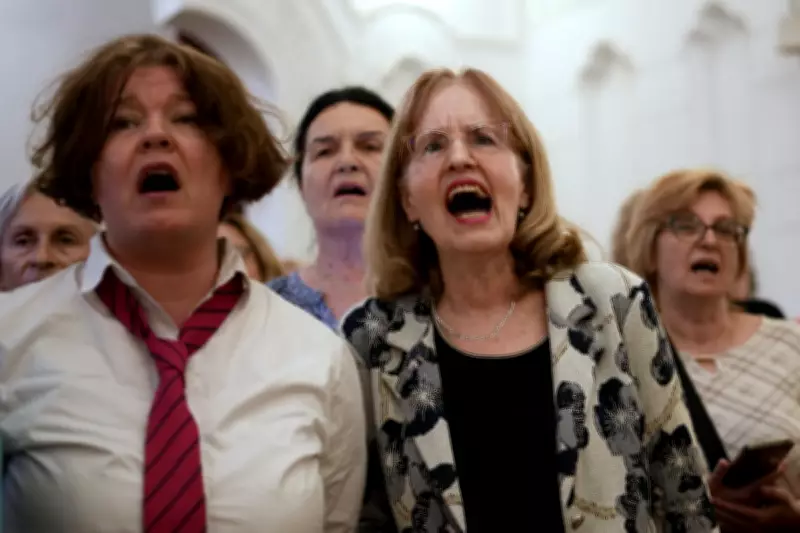
A burgeoning amateur pop choir in Serbia is defying expectations and gaining nationwide popularity. Starting with just a few dozen singers in a small central Serbian town, the choir has blossomed into a movement that now spans ten towns, with ambitions for further growth. Its core philosophy is simple: anyone can sing.
Unique Approach in a Challenging Context
While community choirs are commonplace in many countries, they are a rarity in Serbia. The no-stress, fun-oriented approach of this choir has attracted hundreds of participants, predominantly women of all ages. Inspired by similar projects abroad, the choir invites everyone from the very young to the elderly to join for joy and stress relief.
Pop Hor (Pop Choir) was founded four years ago by Nenad Azanjac, a trained music teacher, and his wife. There are no auditions or voice tests, and newcomers need not know how to read music. “People come as total amateurs, most of them say they have no clue about singing,” Azanjac said.

Psychological and Social Benefits
For many members, the choir offers a much-needed respite from the daily pressures of life in a politically tense and economically struggling country. Nevenka Bila, 72, described the choir as a positive contrast to the political turmoil and pro-democracy protests. “In this madness that we are living, where I spend half of my free time in the streets fighting for basic human rights, I found something that feels so good for me,” she said. “I discovered a new world.”
The group meets weekly to sing popular tunes, mostly in Serbian but also in Croatian and Bosnian. Despite being amateur, the choir frequently performs at festivals and events both in Serbia and abroad. Radmila Kozarac, a 62-year-old economist, said the choir has transformed her life. “I never miss a class,” she stated, adding that she has made wonderful new friends and looks forward to their post-rehearsal coffee chats. “It has had a very positive effect on me, psychologically. It is joyful, it reduces stress.”
Psychologist and Singidunum University professor Aleksandra Djuric explained the science behind the choir's appeal. “Music is known for positive neurobiological and psychological effects. In a group, we release energy together, cortisol levels come down, and positive hormones rise out of union and happiness.” She emphasized the need to disconnect from constant information bombardment. “We need to find a space to calm down, relax and connect.”
From Therapy to Togetherness
Serbia's recent history includes wars, sanctions, and economic crises, and the country remains politically divided. Youth-led protests erupted in 2024 after a train station tragedy linked to corruption. Azanjac noted that many members joined on the recommendation of therapists. “They find a sense of belonging here, they enjoy it,” he said, describing the choir as a place of togetherness. “Singing comes second, socializing comes first.”
Since its inception in Gornji Milanovac in 2022, approximately 2,000 people have sung with Pop Hor. Azanjac has no plans to stop. “The plan is to have the whole region sing,” he declared.