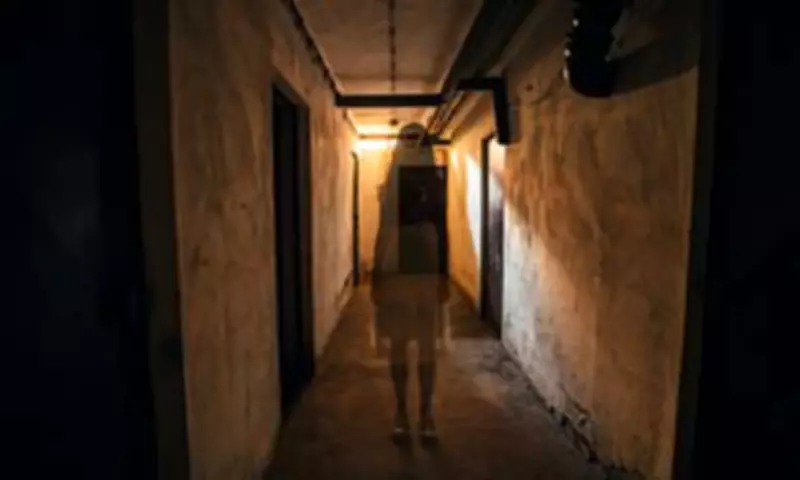
Nearly a third of people in England believe in ghosts, according to recent figures. Now, an expert has identified the key factors that may increase the likelihood of encountering a paranormal phenomenon.
Who Is Most Susceptible?
Professor Melissa Maffeo, a psychology professor at Wake Forest University in North Carolina, argues that some individuals are more prone to paranormal experiences than others. She explains that a combination of environmental stimuli, neurological mix-ups, and certain personality traits can create a perfect storm, leading the brain to misinterpret ordinary sensations as supernatural events.
"As a psychology professor, I often think about the subjectivity people use when interpreting experiences," Professor Maffeo wrote on The Conversation. "I wonder, then, if there are perfectly ordinary explanations for seemingly extraordinary experiences. Maybe a perfect storm of everyday factors can converge and trigger the sensation of a paranormal experience."

Environmental Stimuli
One common tool in ghost hunting is the electromagnetic field (EMF) detector. EMFs are invisible areas of energy created by electrically charged particles. Studies in locations such as the vaults beneath Edinburgh and Hampton Court Palace in England have found that EMFs fluctuate more in areas with reported hauntings. Professor Maffeo suggests that people may sense these natural electromagnetic changes and attribute them to paranormal activity.
"People might unknowingly be detecting changes in environmental stimuli, like electromagnetic fields," she said. "The question then becomes: Did the ghost cause the EMF, or did the EMF cause the ghost?"
Only one research group has attempted to experimentally measure this by creating a "haunted room" with varying EMF frequencies. Participants reported peculiar sensations such as dizziness, detachment from their bodies, and sensing a presence, but these experiences did not correspond to changes in EMF intensity.
Neurological Mix-Ups
Professor Maffeo highlights the role of the temporoparietal junction, a brain region involved in the feeling of embodiment. Misinterpretation of bodily sensations can occur during sleep, particularly during REM sleep when the brain inhibits muscle movement. Some people wake up during this state and experience sleep paralysis, where they cannot move and may have vivid hallucinations.
"Most people respond to the missing sensory information with fear, which makes them more likely to experience the sights and sounds from their dreams as reality," she explained.
Personality Traits
Certain personality traits, such as those associated with schizotypy, make individuals more likely to believe in the paranormal. Schizotypy includes a heightened awareness of "presences," distorted thoughts, and magical beliefs. People with high levels of schizotypy are more prone to believing in ghosts and experiencing disembodiment.
When Factors Combine
Professor Maffeo suggests that belief in the paranormal acts as a glue that binds these factors together. "Consider a person who believes in paranormal phenomena who experiences a natural change in electromagnetic fields or an episode of sleep paralysis," she said. "Those experiences induce unusual sensations that this person cannot explain. Searching for meaning in ambiguity, this person distorts their distinction between internally and externally generated sensations. They settle on the only explanation that makes sense to them – that this strange feeling they experienced was a ghost."
A study published earlier this year proposed that infrasonic vibrations from aging pipes could explain some paranormal experiences. Infrasound, a very low-frequency sound, may shift mood and raise cortisol levels, leading people to attribute agitation to supernatural causes.
Britain's Most Haunted House?
The Cage in St Osyth, Essex, once a medieval prison for witches, is considered one of Britain's most haunted houses. It played a role in the infamous witch hunts of the Elizabethan era, where eight women were executed. The building remained in use as a jail until the early 20th century. One former owner, Vanessa Mitchell, reported encountering 12 ghosts, including a shadowy figure over her infant son's cot and a satanic goat captured on CCTV.