For years, conventional wisdom has dictated that the most effective route to improved fitness and strength involves lifting heavy weights, whether through barbells, dumbbells, or bodyweight exercises. However, emerging research suggests that how we lower those weights may be just as crucial as the lifting itself.
The Science Behind Eccentric Exercise
Eccentric exercise, often described as the 'lowering' phase of a movement, is gaining recognition for its numerous health and fitness benefits. Prof Kazunori Nosaka, in a new paper published in the Journal of Sport and Health Science, highlights that eccentric training offers unique advantages over concentric or isometric exercises, particularly in promoting neuromuscular adaptations. This form of exercise is not only safer but also less physically demanding, making it suitable for a wide range of individuals, from elite athletes to older adults and clinical populations.
Understanding Muscle Contractions
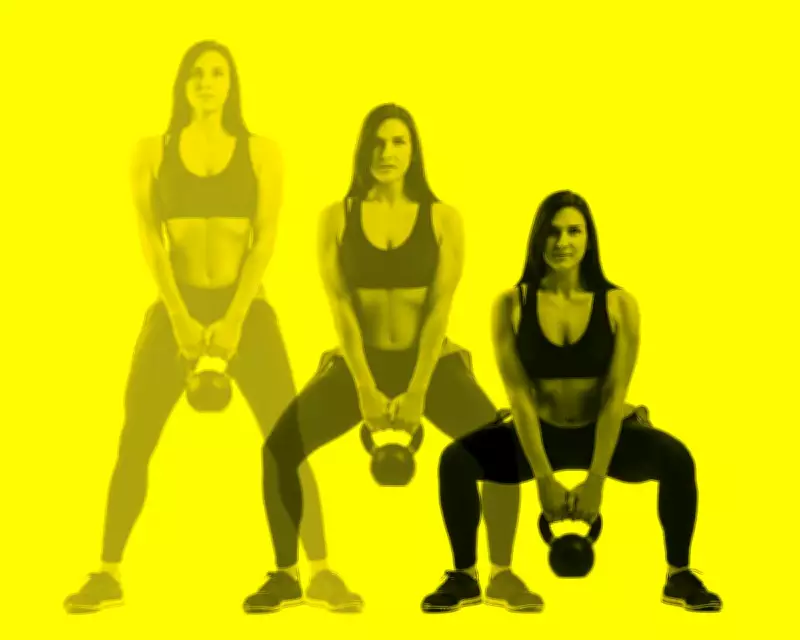
To simplify, any movement involves one or more types of muscle contraction: concentric (shortening), isometric (generating force without movement, like in a plank), or eccentric (lengthening). Practically, the eccentric phase is the 'lowering bit'—in a press-up or squat, it is the descent towards the floor; in an overhead press, it is lowering the weight from the top. While eccentrics may seem less exciting than concentrics, they are increasingly recognised as an excellent option for almost everyone.

Benefits Backed by Research
Callum Roberts, head coach at Results Inc gym, notes that a recent meta-analysis found eccentric training consistently effective for improving strength, power, muscle growth, and flexibility across all populations. He emphasises that slowing down and focusing on the eccentric phase helps reinforce technique and develop better range of motion. For those aiming to perform better, look better, and stay functional long-term, eccentric training should be a staple.
Incorporating Eccentric Focus
The ease of emphasising the eccentric phase depends on the exercise. Explosive moves like kettlebell swings or sled pushes lack a controlled lowering phase. For other exercises, the simplest method is to slow down the lowering part. Kurt Johnson, co-founder of One Body LDN, recommends a three-to-five-second count for the descent. For example, in a biceps curl, curl up normally but lower slowly. The same applies to squats or push-ups.
For tougher movements, eccentric-only reps can be effective. In a pull-up, jump or step to get your chin over the bar, then lower yourself slowly. In a press-up, start at the top and descend with control. For biceps curls, use a 'cheat' curl with momentum or switch to hammer curls, which recruit more muscles.
An advanced option involves eccentric overload, using two limbs to lift and one to lower, such as in a leg press. This is not recommended for beginners but is worth bearing in mind for progression.
Managing Muscle Soreness
The main drawback of eccentric exercise is delayed onset muscle soreness (DOMS), which can be severe if overdone. Johnson advises starting with fewer reps and lower weights, then gradually building up. This approach minimises soreness and allows the body to adapt.
Five Eccentric Exercises to Try
For newcomers, start with two or three eccentric-focused exercises twice a week, with at least three days between sessions. Perform three sets of five to eight reps, focusing on the slow eccentric phase. After three to four weeks, increase frequency or add exercises. These workouts can be completed in 20 to 30 minutes without equipment or getting out of breath.
1. Eccentric-Focused Squats
Squat down slowly over three to five seconds, then stand up at a normal pace. Hold onto a door frame for balance initially or lower to a chair. This builds leg strength without the cardiovascular demand of regular squats.
2. Wall Press-Ups
Place hands on a wall shoulder-width apart, slowly lower your chest towards the wall over three to five seconds, pause, and press back up. Decrease the incline as you get stronger.
3. Push Presses
Using dumbbells, a barbell, or water bottles, bend your knees slightly, then stand up straight, using momentum to push the weight overhead. Lower it slowly. Warm up your shoulders first.

4. Heel Drops
Stand on the edge of a step, rise onto your toes, then lower your heels slowly below the step level before returning to the start. This is excellent for calf or Achilles issues and can be done anywhere.
5. Eccentric Calf Raises
Rise onto your toes with both feet, then lift one foot and slowly lower over three to five seconds. Use both feet to rise again. This enhances calf strength and ankle stability. If balance is an issue, hold onto a wall or table.
6. Slow Descent Step-Downs
Stand on a step or box, slowly lower one foot toward the ground over three to five seconds without stepping down, then bring it back up. This builds single-leg strength and control, aiding balance and injury prevention.
In summary, while eccentric exercise may not be as flashy as explosive movements, prioritising the lowering phase can lead to significant strength gains. It is time to embrace the slow and steady path to fitness.