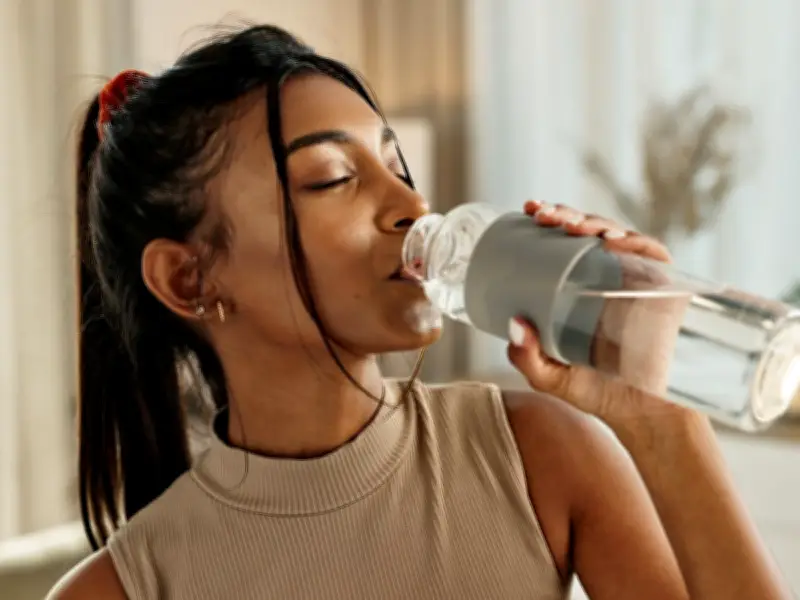
GP Dr Rupy Aujla, founder of thedoctorskitchen.com, has answered key questions about water intake as new research from Our Taap suggests many Brits are not drinking enough. Only 40% of Brits regularly drink their tap water because of the taste, and 30% drink less in summer as warm tap water is less palatable.
Why is water so important?
"Water is involved in virtually every physiological process in the body. It regulates temperature, transports nutrients, supports kidney and digestive function, lubricates joints, and is essential for brain performance."
How many glasses should we drink a day?
"Eight glasses is a useful rule of thumb, but it's not a fixed prescription. Your actual needs depend on body size, activity level, climate and diet. As for tea, yes, it counts. The mild diuretic effect of caffeine doesn't offset the fluid it provides at typical consumption levels. The evidence suggests moderate tea and coffee intake contributes positively to daily hydration."
How much should we drink in a heatwave?
"A practical approach is to increase your intake proactively, so don't wait until you're thirsty. The problem is that 30% of Brits actually drink less water in summer because warm tap water is less palatable, according to Our Taap research. You're losing more fluid and replacing less of it, so drink up."
What are the biggest hydration myths?
"That sports drinks are necessary for everyday hydration. For most people, water is sufficient."
Water-rich foods also help. "Cucumber, lettuce, celery and tomatoes are over 90% water. Watermelon, strawberries and oranges are excellent sources too. Soups, broths and smoothies all contribute."
What are the risks of not drinking enough?
"Mild dehydration impairs concentration, mood and physical performance. As it progresses, you get headaches, dizziness and nausea. In hot weather the risk escalates because heat stress and dehydration compound each other. Your body is working harder to cool down while simultaneously lacking the fluid it needs to do so effectively. For older adults and young children, the risks are more acute and can quickly escalate to become emergency cases."
Early signs of dehydration
"Headache, fatigue, difficulty concentrating and irritability are common early signs. Dry mouth and reduced urine output come next. The issue is that these symptoms are easy to dismiss or misread as hunger, low energy or stress, which is why so many people are chronically mildly dehydrated without realising it."
Thirst is a late signal. "Yes, by the time you feel thirsty, you're typically already mildly dehydrated. Thirst is a lagging indicator, not an early warning system. Urine colour is far more reliable: pale straw yellow means you're well hydrated; dark yellow or amber signals you need to drink more."
What should you do if someone is dangerously dehydrated?
"If someone is confused, unresponsive, not urinating, has sunken eyes or very dry skin, or appears to be in distress, call 999. Severe dehydration is a medical emergency. In the meantime, if they're conscious and able to swallow safely, small sips of water or an oral rehydration solution. Don't try to force fluids into someone who is confused or not fully alert. Get professional help quickly."
Drinking too much can also be risky. "Hyponatraemia, dangerously low blood sodium caused by excessive water intake, is a genuine medical emergency. It's rare in everyday life but has occurred in endurance athletes who over-drink during events."
When should you pay extra attention to hydration?
"When flying. Cabin humidity is very low, typically around 10-20 per cent, which accelerates fluid loss. Many people land dehydrated without realising it."
On alcohol and hangovers: "Alternating does help, and there's good reason for it, alcohol suppresses the hormone that helps your kidneys retain water (ADH), so you urinate more. Spacing drinks with water partially offsets that. Drinking water before bed can help, though by that point the alcohol has already been absorbed. Neither strategy eliminates a hangover."
Long-term consequences of chronic under-hydration
"The evidence links persistent low-fluid intake to increased risk of urinary tract infections and kidney stones. There's also emerging research connecting poor hydration with impaired cognitive function over time."
People can check their local water satisfaction score, hardness and chlorine levels, and what that means for taste, by postcode at the Our Taap Water Confidence Index: www.ourtaap.com/waterconfidence.