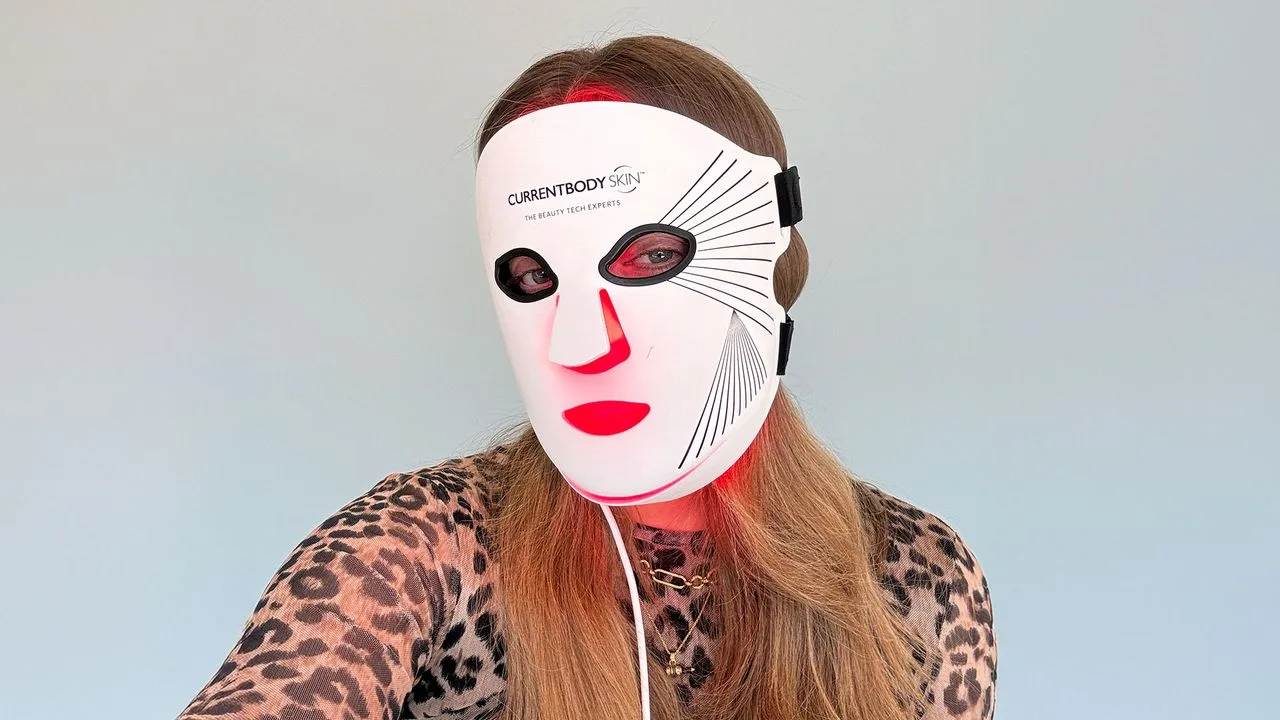
After testing seven different LED face masks over the past two years, none have impressed me more than the Currentbody series 2. With 236 LEDs (104 more than its predecessor) and three different light modes, the mask uses red, near-infrared and deep near-infrared wavelengths to boost collagen production, brighten skin tone and tackle signs of ageing as far down as the deepest layer of skin.
According to the brand’s trials, wearing the mask five times a week increased skin plumpness by more than 50 per cent, reduced wrinkles by 30 per cent and boosted brightness. While I’m unsure how you can tangibly measure the percentage of wrinkle reduction, plumping and brightening, I’ve been impressed by the results.
Expert advice on LED masks
To get the most out of an LED mask, Dr Ahmed El Muntasar, NHS GP and aesthetics clinic owner, recommends “using them daily, or at least five times a week” and practising 10-minute sessions. You can expect to see “improvements to fine lines and wrinkles, and enhanced overall skin texture” after 12 weeks of consistent use.
Fit and design
Currentbody’s series 2 LED mask learned from the quibbles of its predecessor, making improvements across the board. For the design, Currentbody used “hundreds” of different face shapes to help guide the shape of the series 2 and it’s one of the most comfortable LED masks I’ve tried (the Foreo FAQ 201 mask is the only other device that comes close). On first use, you need to attach the straps to the mask yourself – it’s fairly simple to do and it’s easy to secure in place on the face. It’s easy to catch your hair on the large Velcro circle at the back of your scalp, though.
The treatment is just 10 minutes. It’s a portable device, so I’ve taken to doing the dishes, making the bed and tackling a myriad of household tasks mid-treatment. I’d recommend wearing something with pockets or a waistband so you can secure the power unit (which features a handy clip) while you’re on the go.
Without getting too technical, the series 2 mask features 236 LEDs (an increase of 104 compared to its predecessor). According to Dr Muntasar, the less space between LEDs and the skin, the better, to prevent the light from losing effectiveness. By increasing the number of LEDs, the skin is closer to the light, equating to better results. The LED mask also has three light types – with the third wavelength (deep near-infrared) a new addition that’s designed to boost cell renewal at a deeper level by penetrating further into the hypodermis. According to a study from 2024, “Ageing in the hypodermis [...] contributes to skin thinning and sagging,” so it’s reasonable to assume that LED intervention will minimise this loss of fullness and elasticity.
Results after 50 days
The first thing I noticed was how much brighter my skin looked. I saw an improvement in my skin texture and a reduction in redness after just two weeks of consistent use. The plumping followed shortly after and my skin looked more lifted and springy after week three. I’ll caveat that I’m yet to see any deep-set wrinkles on my face, but I noticed that the tension lines across my forehead seemed more filled out as the testing period wore on. The design of the series 2 (compared to the series 1) certainly lends itself to improving the appearance of nasolabial creases, thanks to a shrunken mouth opening and greater chin, upper lip and cheek coverage. And I found these were a lot less harsh.
I found that once I’d consistently worn the mask for seven weeks, I no longer saw any new anti-ageing results. That’s not to say it stopped working; instead, I found it prevents further signs of ageing. For example, from the eight-week mark onwards, I saw no periodical crow’s feet – something I occasionally notice when tired – or fine lines from dehydration.
“It’s not unusual for visible results with LED devices to plateau after the first couple of months, as the initial improvements address more superficial concerns,” explained aesthetics specialist and clinic founder Dr Barbara Kubicka. “Beyond that stage, the technology continues to work on a cellular level, helping to maintain skin quality, support collagen production and prevent new signs of ageing.” In a nutshell: “What may feel like a ‘cap’ is actually a shift from corrective to preventative results, which is equally valuable in so many ways.”
Much like my SPF, I’ve since taken to seeing the Currentbody series 2 as less of an instant fix and more of an investment into skin that holds onto my current 28-year-old firmness for longer.
Is the Currentbody series 2 worth it?
The Currentbody series 2 is, without a doubt, the most impressive LED face mask I’ve tested. It strikes a perfect balance between comfort and visible results. I frequently reach for it when experiencing skin dulling and general sunkenness from dehydration. While £400 is undeniably a big spend, it undercuts many premium rivals while outperforming most I’ve tried. If you’re serious about investing in at-home red light therapy, this is the device I’d recommend without hesitation.
How we tested
Having tested seven LED face masks over two years – from budget buys to clinic-adjacent luxury models – I reviewed the Currentbody series 2 both on its own and against some of the category’s biggest names. I used the mask consistently over 50 days, following the brand’s recommended protocol and tracking changes as the period wore on. As with all IndyBest beauty tests, I considered whether the performance justified the price, not simply whether the technology sounded impressive on paper. Specifically, I considered the following factors:
- Comfort and fit: I assessed how the liquid silicone mask moulded to the face, how secure and realistically wearable it felt during the 10-minute sessions, and whether the added chin strap improved performance without compromising comfort.
- Ease of use: I considered the process of strapping the mask on, charging, treatment length and how easy the mask felt to incorporate into my day-to-day routine.
- Coverage and design: I looked at LED placement and – as much as possible – whether the mask effectively treated key wrinkle-prone zones, including around the eyes, mouth, forehead, jaw and chin.
- Visible skin results: Over the 50-day testing period, I monitored changes in brightness, texture, plumpness and the appearance of fine lines, noting when improvements began to show.
- Long-term performance: I paid attention to whether results continued to build over time or plateaued, and how the mask performed as both a corrective and preventative tool.
- Value for money: Given the £400 price tag, I weighed its performance against both cheaper competitors and more expensive premium masks to judge whether the investment felt justified.
- Overall experience: Beyond results, I considered whether this was a device I’d realistically keep reaching for, which felt important given the impact of consistency on results.
Why you can trust IndyBest reviews
As a senior shopping writer for IndyBest, Lucy Smith heads up the team’s guide to the best LED face masks and, as mentioned, has tested no less than seven devices thus far, with her next review already in the works. She speaks to dermatologists and aestheticians regularly to gather information on the latest industry tech innovations and, recently, sought out the advice of Dr Ahmed El Muntasar to vouch for the effectiveness of LED masks more broadly. Ergo, she’s become somewhat of an expert on the topic herself.