
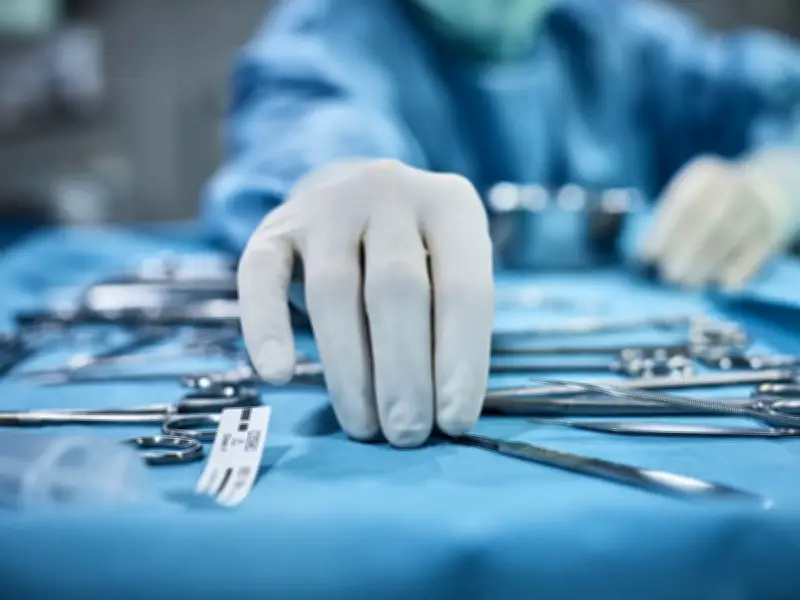
A revolutionary new technique approved for the NHS could save hundreds of organs for lifesaving transplants. Surgeons will now be able to pump the liver with oxygenated blood before removing it from a consenting donor who has just died. The technique, pioneered in Britain, was shown to double the number of usable livers successfully retrieved.
Currently, most donated livers are preserved by immediately flushing them with cold fluid and packing them in an ice box. This can result in the liver being damaged as it has stopped receiving blood and oxygen. The National Institute for Health and Care Excellence (NICE) has approved the technique just as over 8,000 people are on the NHS transplant waiting list, which is at a record high.
How ANRP works
The new process, called Abdominal Normothermic Regional Perfusion (ANRP), involves surgeons opening up the abdomen and flushing the liver, kidney, and pancreas with oxygenated blood and other nutrients before removal. This allows the liver to recover from damage while still in the donor's body. Doctors can also run tests during this time to check how well the liver is working before it is removed.
Often when someone dies in circumstances where organ donation is possible, the death is not instant. While the patient is unconscious, the process of death can take several hours before the heart stops and death is confirmed. During this time, blood flow to the organs set to be donated is significantly reduced, causing damage. Once Donors’ Circulatory Death (DCD) is confirmed, organs such as the liver, kidney, and pancreas are removed and placed in a specially fitted ice box before being transported to a hospital for an urgent transplant. Once the organ is on ice, it goes into a form of hibernation, but the crucial period while the donor was dying causes damage, meaning organs do not last as long in their transplant recipient. In some cases, they have deteriorated so much they are not fit for transplant.
Impact on transplant success
NHS data shows ANRP has a remarkable impact on how many organs are usable and how long they last once transplanted. People who had a liver transplant where ANRP was used had a 51% lower risk of the transplant failing after 12 months. The UK saw 727 livers donated after circulatory death between April 2024 and March 2025. Only 309 were transplanted, and around six in ten were not because of concerns about damage caused by interrupted blood flow.
Dr Anastasia Chalkidou, NICE programme director, said: “Too many donated livers are currently going unused, and too many people are dying while waiting for a transplant. This is the first time NICE has evaluated this procedure for any organ… to make it available consistently and fairly across the country.”
National rollout and future prospects
NHS Blood and Transplant estimates that wider use of both ANRP and a similar technique that flushes organs with oxygenated blood after removal could result in 150 extra liver transplants each year. The Mirror had previously revealed Government funding had been agreed to fund ANRP at ten specialist centres in the UK by 2027. Today’s announcement confirms full national rollout.
Vanessa Hebditch, director at the British Liver Trust, said: “Too many people with advanced liver disease spend months living with uncertainty while waiting for a suitable donor liver, and sadly every year people die whilst waiting for a life-saving transplant. This is encouraging because it supports an innovative approach that could help make more donated livers be viable and available for transplantation. We know that every additional transplant represents a life saved and a family given hope for the future.”
Jim Kilpatrick from Donaghadee in Northern Ireland, a liver transplant recipient and chair of the Royal Victoria Hospital Liver Support Group, said: “Knowing that there is another opportunity for a liver which might previously have been deemed unusable is a huge step forward. Some patients are on the list for several years, becoming a little exasperated at not having received the call. If there are more livers out there which are usable, that is exactly what they need to hear. Anything in the way of technological advances that can bring into play livers that might otherwise have been unusable is exactly what needs to be pursued so more people have the opportunity I have been given.”
Andrew Butler, consultant transplant surgeon at Addenbrooke’s, said: “Normothermic regional perfusion has revolutionised the way that we are able to provide care for our patients. We can double the number of livers that are transplanted from donors.”
Latest data shows 584 adults on the active liver transplant waiting list across the UK. One person can donate up to nine organs. After years of campaigning by the Mirror, the Organ Donation Deemed Consent Act came into effect in England in May 2020, bringing the country into line with the system in Wales and Scotland, with Northern Ireland following in June 2023. There is now an ‘opt-out’ system meaning adults are presumed to be organ donors after their death unless they have specifically registered not to donate. However, grieving relatives can still veto transplants. NHS Blood and Transplant insists it is just as vital as ever that people sign the Organ Donor Register to make their wishes clear. Visit www.organdonation.nhs.uk to confirm your decision.




