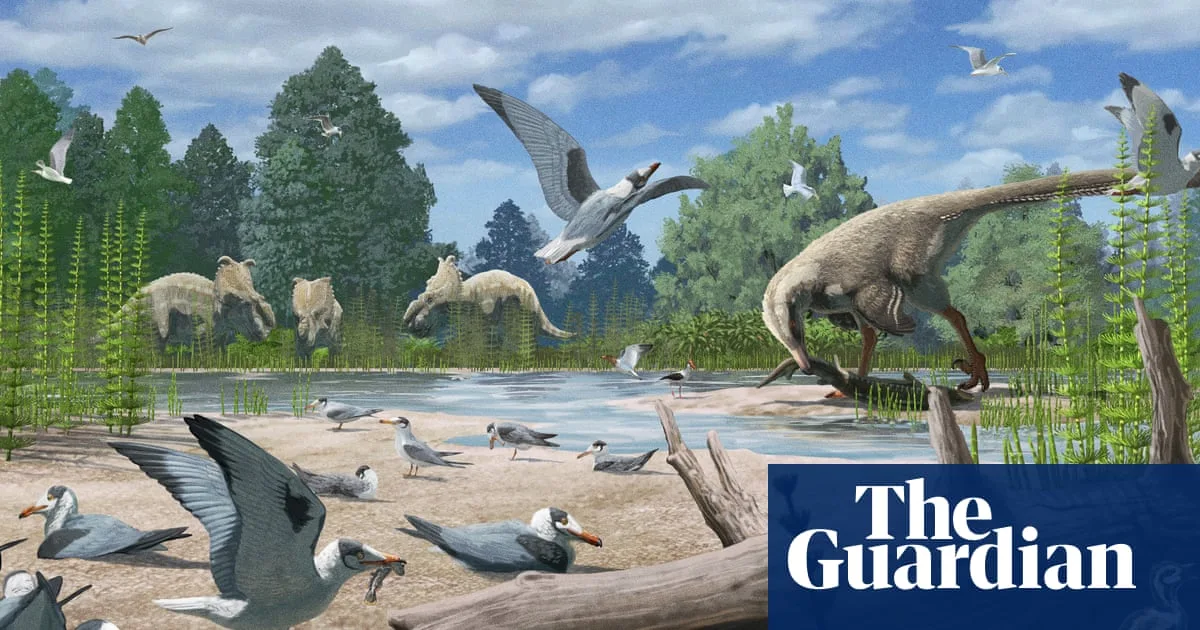
Scientists have discovered more than 50 bird fossils from the Prince Creek formation in Alaska, dating back 73 million years, making them the oldest evidence of birds nesting in polar regions. The findings push back the previous record by over 25 million years, which was a penguin colony from Antarctica about 46.5 million years ago.
The fossils, many from embryos or hatchlings, include species from extinct groups such as Ichthyornithes (toothed seagull-like birds) and Hesperornithes (diving birds with teeth). Toothless birds resembling ducks were also found, indicating close relatives of modern birds, known as Neornithes, were nesting in the Arctic during the age of dinosaurs.
Lead author Lauren Wilson from Princeton University noted that the Arctic of 73 million years ago experienced six months of continuous daylight in summer, with abundant greenery and food, but winters brought freezing temperatures, occasional snow, and four months of darkness. It remains unclear whether these birds migrated or stayed year-round.

Patrick Druckenmiller, co-author and director of the University of Alaska Museum of the North, described the excavation process as 'like panning for gold,' with many bones less than 2mm in size. The study, published in Science, fills a major gap in understanding bird evolution, according to the researchers.
Steve Brusatte, a palaeontologist at the University of Edinburgh not involved in the study, said the tiny fossils tell a huge story, showing that birds were integral to high-latitude ecosystems tens of millions of years ago, not a recent ecological innovation.