
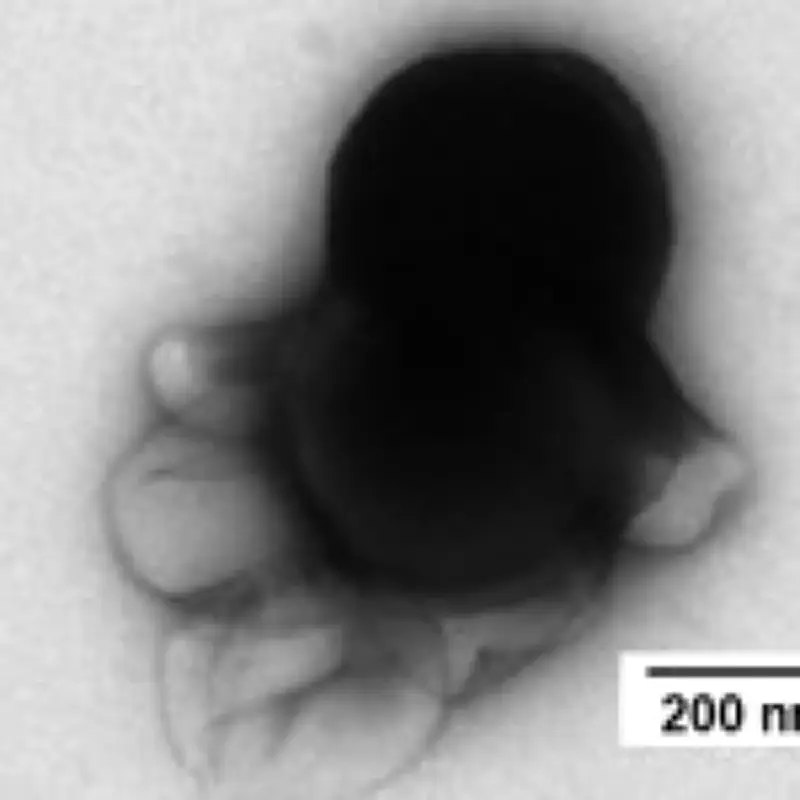
Researchers at the University of Basel in Switzerland have developed a modular nanorobot capable of killing cancer cells. The device, described in the journal Advanced Functional Materials, consists of a magnetic propulsion unit and a separate payload capsule that can transport therapeutic compounds or enzymes to targeted locations.
Modular Design Mimics Lunar Rocket
The nanorobot's structure is likened to a multi-stage lunar rocket, with a magnetic propulsion module enabling movement and a second module acting as a payload capsule. The payload capsule contains four tiny polymer vesicles loaded with enzymes, which process molecules entering through microscopic pores and release resulting products into the environment. Depending on configuration, the vesicles can also be selectively opened to release therapeutic substances.
According to lead researcher Professor Dr Cornelia Palivan, previous nanorobots are often designed for a single task. 'Our modular system, on the other hand, can be adapted to different applications,' she said. The two modules are joined using a DNA-based 'Velcro fastener,' where complementary DNA strands allow self-assembly and secure attachment. Additional biomolecules can help the nanorobot dock with specific cells.
Tests on Cancer Cells Show Promising Results
To test the technology, the team used HeLa cells, a widely used human cancer cell line. Nanorobots loaded with fluorescent molecules were observed accumulating on the surface of cancer cells under laboratory conditions. When equipped with appropriate enzymes, the nanorobots produced an anticancer drug that reduced HeLa cell viability to 16% within 72 hours.
'The drug can have a concentrated local effect if we use our nanorobot to specifically target it to the cancer cells,' explained Dr Voichita Mihali, the study's first author.
Reusability and Industrial Applications
Beyond healthcare, the technology has potential industrial applications. Because the propulsion module is magnetic, nanorobots can be recovered after completing their task and reused. The team successfully separated propulsion and payload modules, refilled payload capsules, and reassembled the system. Researchers believe this capability could prove useful in industrial processes such as catalysis, where reusable microscopic machines could perform chemical reactions more efficiently.
Although the use of such nanorobots in humans remains a long-term objective, researchers say the modular design allows relatively easy adaptation for different purposes by modifying the payload capsule. The study represents an important step towards more versatile nanorobots for medicine, environmental technology, and manufacturing.




