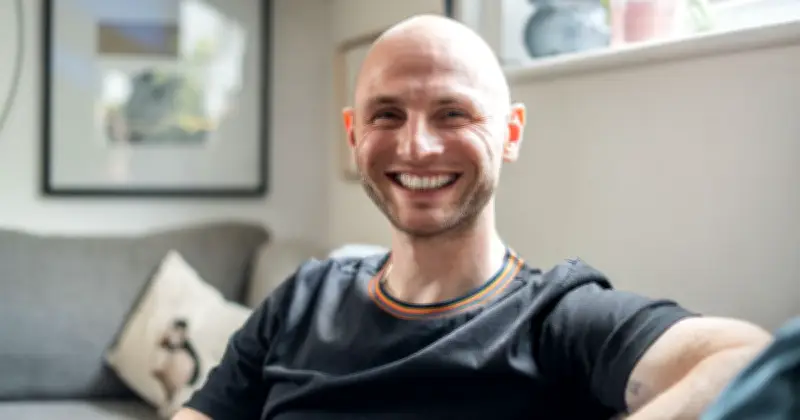
Dan Godley was 28 and running marathons when he was diagnosed with advanced pancreatic cancer and told he had at most 18 months to live. After drastic surgery unexpectedly saved his life, the now 33-year-old is campaigning for more people to join health research.
Dan, who lives with his wife Anna in south London, signed up to Our Future Health, the UK's biggest health research programme. The programme aims to recruit five million participants to share their genetic data and health information to help researchers discover new ways to prevent, detect and treat disease.
From symptoms to diagnosis
In early 2020, Dan started experiencing a strange tightening in his abdomen. His GP dismissed the pains as a food intolerance and then irritable bowel syndrome. After a year, a private consultant gave him a clean bill of health following an ultrasound.
Dan continued running six days a week. Over the next six months, the pain became harder to tolerate, he lost his appetite and began to lose weight. In September 2021, around 18 months after his symptoms began, Anna rushed him to A&E after he experienced agonising pain following dinner.
A duty doctor was concerned by his pain and jaundiced eyes, and Dan was sent to King's College Hospital for urgent tests. Over three weeks, the pain intensified. He was admitted to the ward for a week to receive intravenous fluids. Doctors initially thought he might have pancreatitis, a cyst on his pancreas or a form of slow-moving soft cell cancer. When he was called back for an urgent appointment a month later, he knew he was seriously unwell.
The bombshell news
Dan was told he had advanced pancreatic cancer and, at most, 18 months to live. He had already lost more than two stone in a couple of months. His response was to ask Anna to marry him. The couple had only been together a year but had discussed a future together.
Too ill to look after himself, Dan moved back to his parents' home in Crewe, Cheshire, where he started chemotherapy. Despite the diagnosis, he stayed busy with wedding planning and raised £8,000 for cancer charities. His five siblings gave him a dachshund called Lucy.
After seven months, the chemo hadn't worked and his only option was surgery. Dan spent 14 hours in surgery. The surgical team performed a total pancreatectomy, removing his pancreas, three-fifths of his large intestine, a bit of stomach, a bit of liver, his gallbladder and spleen. It took four days to bring his pain under control after surgery.
Recovery and new mission
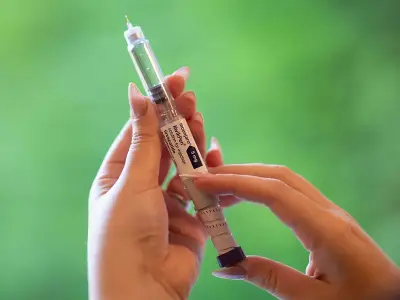
Dan is now clear of cancer, married to Anna, and competing in marathons again. But his cancer experience has left him with severe diabetes and a sense of chronic trauma, made worse when tests revealed he carries a mutation in the BRCA2 gene, which makes him more vulnerable to certain cancers. Shortly afterwards, his uncle died of pancreatic cancer just five weeks after being diagnosed.
Dr Raghib Ali, CEO of Our Future Health and an NHS consultant, said: "Experiences like Dan's remind us how important it is for researchers to learn more about diseases like pancreatic cancer, including understanding any clues that lie within our genetics. Our Future Health is the first ever study which is large enough to better understand why people develop pancreatic cancer – and how it could be prevented or detected earlier – and so save many lives from this devastating disease."
Taking part involves filling in a health questionnaire and visiting a clinic to provide a blood sample. Dan said: "It was so easy to sign up to Our Future Health, and it could make a real difference. If sharing my health information can save other people from going through the nightmare I experienced, then I'm happy to play my part."