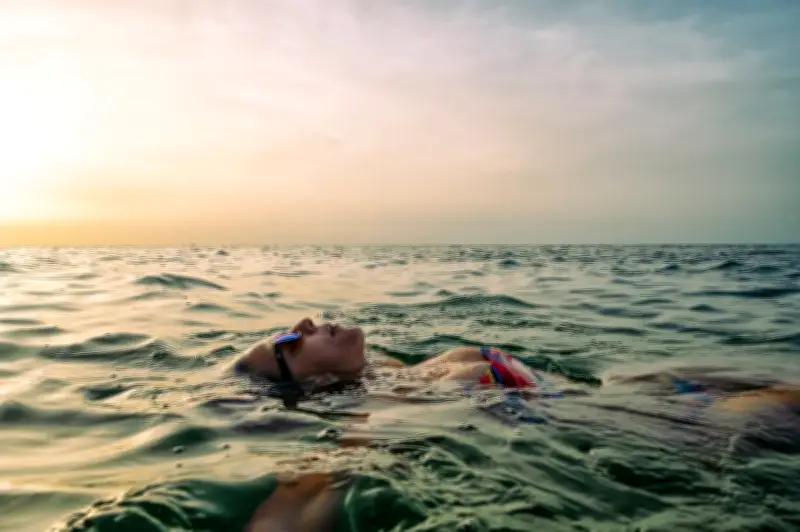
Research at Huntington Beach, California, found that every dip exposes the skin to billions of microorganisms, reshuffling the delicate community of bacteria, fungi and other microbes living on its surface. The same study found that after just 10 minutes in the ocean, swimmers emerged with noticeably altered skin microbiomes, with marine bacteria still detectable hours later.
So what is the sea actually doing to the skin — and should swimmers be worried? Not particularly, according to Professor Carsten Flohr, chair in dermatology and population health science at King's College London. “A sea swim can temporarily reshape the skin microbiome, but it doesn't simply 'wash all the good bacteria off,'” he says. “Think of it as a short-lived disturbance to a microbial ecosystem.”
What Happens Underwater
During a swim, waves, rubbing and immersion remove some surface microbes, oils and sweat while introducing microorganisms. Salt can also draw water from the outer layer of skin, leaving some swimmers dry, tight or irritated. However, most of the marine microbes that turn up afterwards are “transient passengers,” says Flohr, while resident bacteria survive partly in hair follicles and deeper layers of the outer skin. “The skin's oils, moisture, pH and immune system help the usual community recover.”
Dr Mehak Zahoor Khan, a bacterial immunologist in the US, compares the post-swim effect to people walking through the same dust storm and emerging covered in the same dust. “Exposure and infection are very different things,” she says. As microbiologist Dr Mario Hupfeld points out, a bacterium would still need to survive on the skin, breach its protective barrier and multiply before it could cause an infection.
Where Skin Is Vulnerable
For most healthy people, the risk of becoming ill from sea swimming is low. UKHSA's Dr Richard Pebody says any resulting illness is usually mild, although open water can contain bacteria capable of causing stomach, chest, skin, ear and eye infections. The bigger issue for skin, Flohr says, is not the temporary microbiome shake-up seawater can cause, but damage to its physical barrier. “If frequent swimming leaves your skin very dry or irritated, the altered barrier can make it easier for irritants and potentially pathogenic organisms to get in,” he says.
Cuts, grazes, blisters, cracked skin, fresh piercings or tattoos all offer bacteria an entry point, as can an active eczema flare-up. People with weakened immune systems, diabetes, chronic liver disease or poor circulation should take extra care. Rarely, seawater can transmit bacteria such as Vibrio, which can cause serious wound infections and is associated particularly with warmer coastal waters. Experts say to seek medical advice if a wound develops rapidly worsening redness, swelling or pain, blistering, discharge, skin discolouration or fever after a swim.
How to Protect Your Skin
First, check the water before getting in. UKHSA recommends the Environment Agency's Swimfo service, particularly after heavy rain or pollution incidents. Cover minor cuts with a secure waterproof dressing — and skip the swim if you have a significant open wound. Afterwards, fresh water is recommended. Flohr recommends a quick rinse, gentle soap if needed, patting rather than aggressively rubbing yourself dry and applying a plain moisturiser if your skin feels tight or irritated. Change out of wet swimwear promptly and clean any cuts with running water.
As for protecting the microbiome from the inside with probiotic or synbiotic supplements, Flohr says there is some evidence around preventing atopic dermatitis, although probiotics don't appear to help established eczema, and evidence around acne is limited. He adds there appears to be little additional benefit from synbiotics and says a diverse, fibre-rich diet has much stronger general-health evidence. Khan is similarly cautious: “For sea swimming, there is currently no direct evidence. We do not have clinical trials showing that a synbiotic can prevent or reduce the temporary microbiome changes caused by seawater.”