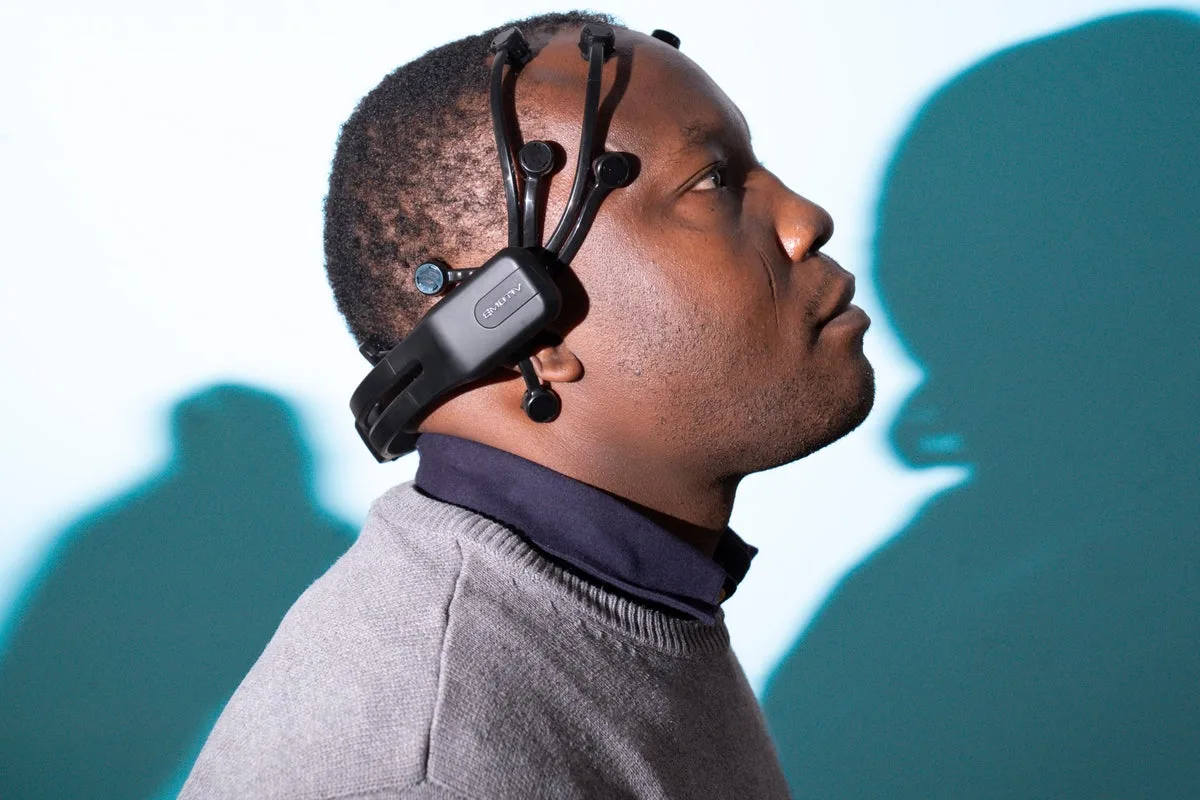
Scientists at Glasgow Caledonian University have developed a groundbreaking AI-powered headset that can predict epileptic seizures before they occur. The wearable device analyses brainwaves and heart functions to detect impending seizures, offering patients vital minutes to prepare and avoid injury.
Lead researcher Professor Hadi Larijani said the headset is “very unique” and aims to be discreet, wireless, and lightweight. “Providing even a few minutes’ warning could be life changing,” he added. “Our goal is to empower patients and families with time to act to stay safe and live more independently.”
The system was trained using thousands of hours of historical electroencephalography (EEG) and electrocardiography (ECG) recordings on a “phantom head” to simulate real use. The AI learned to identify electrical and physiological patterns that precede a seizure, achieving up to 95 per cent accuracy. It can also display its confidence levels, helping patients manage their condition.
The team hopes to eventually release the headset as a cap-like device suitable for children, but it is likely to be several years before it becomes widely available due to the need for regulatory approvals. Professor Larijani noted that medical devices are highly regulated and that they have completed initial feasibility testing. The research has received fresh support from UK Research and Innovation through its £9m Proof of Concept programme.
This development follows the creation of Meld Graph, an AI software by scientists at King’s College London and University College London, which helps detect brain abnormalities linked to epilepsy that are sometimes missed by radiologists.