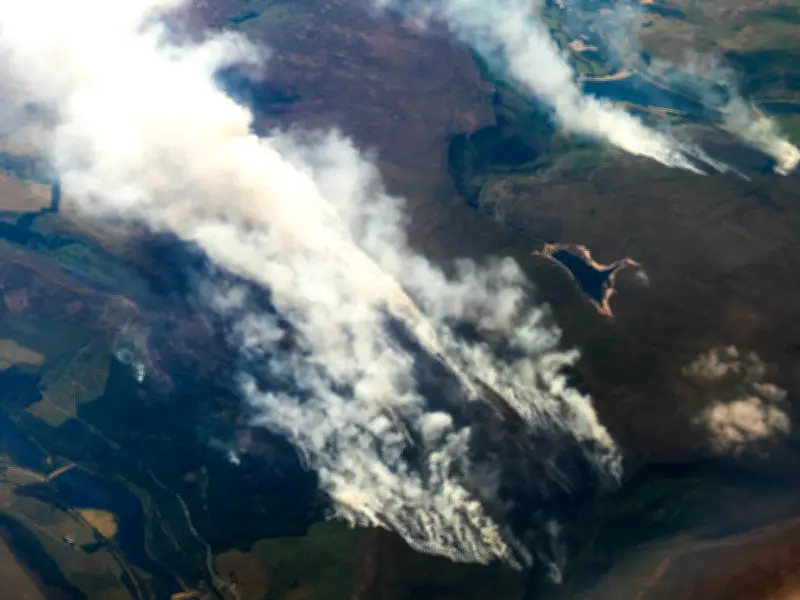
New data suggests that being indoors with windows closed does not completely protect people from smoke pollution caused by wildfires. Analysis of indoor air quality monitors in Greater Manchester during July's hot, dry weather—when wildfires were burning in the hills—also shows that opening windows during heat exacerbates air pollution in homes.
Moorland Fires Devastate Region
Firefighters spent almost six weeks battling a massive blaze on Tintwistle Moor after it broke out on June 24. Due to its size and the heatwave, a major incident was declared on July 12. Almost 1,500 acres of moorland—the equivalent of 900 football pitches—had been burned. A huge wildfire also ripped through Dovestone Reservoir, with the land ablaze for over three weeks.
Derbyshire Fire and Rescue Service announced that as of 2pm Monday (August 3), the major incident had been stood down, following 'significant progress' in bringing the blaze under control. Firefighters remained on the scene earlier this week. Shania Care-Slede, 20, of Market Street, Hyde, has been charged with arson in connection with the Dovestone fire and has been released on bail.
Indoor Air Quality Exceeds Guidelines
The University of Manchester's cystic fibrosis hub air quality research team looked at indoor air quality records from 23 homes between July 1 and 26 during two periods of moorland fires at Tintwistle and Dovestone. They found that every monitored home exceeded the World Health Organisation's 24-hour guidelines for fine particle pollution on July 17 when outdoor smoke levels peaked.
Overnight bedroom levels of PM2.5 soared from an average of 2.7 micrograms per cubic metre to 7.8 micrograms with windows closed and 11.8 with windows open.
Expert Insights on Health Risks
Professor Alex Horsley, one of the researchers from the University of Manchester, said: “These findings show the difficult challenges that people face during periods of wildfires and high environmental temperatures. Following the simple but often repeated instruction of going indoors and shutting the windows will only give you some protection from wildfire smoke, and keeps heat in the home. Both smoke and heat can make breathing worse for those with chronic lung conditions. During July’s fires, in every home we monitored we found the effects of smoke was present indoors at potentially harmful concentrations levels, especially during periods when the heat forced people to open windows. We saw this in homes up to 60km away from the wildfires on the moors outside Manchester.”
Dr Thomas Bannan, lead Environmental researcher for the group, said: “The findings support advice to close windows while smoke levels are high, but show that this cannot completely prevent smoke infiltration and may increase the risk of overheating.” He added: “We are now investigating practical measures, including air filtration and approaches to keeping homes cool, so that people – especially those with existing respiratory conditions – have better options during future extreme events such as these.”