
The World Health Organization (WHO) has listed several groups of people who may be more at risk of breast cancer, and it’s a good time to check the guidance, as well as the symptoms to look out for.
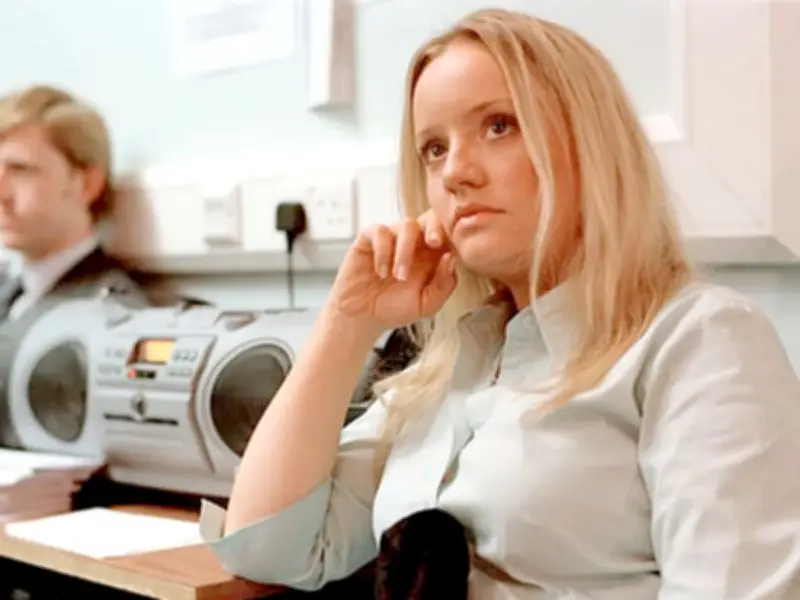
Recently, The Office UK star Lucy Davis revealed she has been diagnosed with “incurable” stage 4 breast cancer, saying it is “too late for chemo”. Lucy, 53, shared the news in a video showing her ringing a bell, commonly used to mark milestones in cancer treatment.
The actress, best known for playing Dawn Tinsley alongside Ricky Gervais and Martin Freeman in the BBC’s The Office and for appearing as Etta Candy in Wonder Woman, addressed fans in an Instagram post. She told followers: “I’m not scared of whatever comes next. I’m at peace with it.”
What is breast cancer?
The WHO explains: “Breast cancer is a disease in which abnormal cells in the breast grow out of control and form tumours. If left unchecked, the tumours can spread throughout the body and become fatal.
“Breast cancer cells begin inside the milk ducts and/or the milk-producing lobules of the breast. The earliest form (in situ) is not life-threatening and can be detected in early stages. Cancer cells can spread into nearby breast tissue (invasion). This creates tumours that cause lumps or thickening.”
The experts add that invasive cancers can spread to nearby lymph nodes or to other parts of the body. This spread (called metastasis) can be life-threatening. Treatment depends on the person, the type of cancer and how far it has spread. It may also include surgery, radiotherapy and medicines.
Who is at risk of breast cancer?
The United Nations agency, founded in 1948, notes that being female is the biggest risk factor for breast cancer. Around 99% of breast cancer cases are in women, while about 0.5–1% are in men.
The experts stress that certain factors increase the risk of breast cancer, including:
- increasing age
- obesity
- harmful use of alcohol
- family history of breast cancer
- history of radiation exposure
- reproductive history (such as age that menstrual periods began and age at first pregnancy)
- tobacco use and postmenopausal hormone therapy
WHO notes around 80% of breast cancers happen in women who don’t have any changeable risk factors, apart from being female and being over 40. It adds: “Family history of breast cancer increases the risk of breast cancer, but most women diagnosed with breast cancer do not have a known family history of the disease. However, absence of a known family history does not necessarily mean that a woman is at low risk.”
As well as these common risk factors, WHO states: “Certain inherited high penetrance gene mutations greatly increase breast cancer risk, the most dominant being mutations in the genes BRCA1, BRCA2 and PALB-2. Women found to have mutations in these major genes or at high risk may consider risk reduction strategies such as chemoprevention and/or surgical removal of both breasts.”
What are the signs of breast cancer?
Breast cancer can have combinations of symptoms, especially when it is more advanced. Symptoms of breast cancer can include:
- a breast lump or thickening, often without pain
- change in size, shape or appearance of the breast
- dimpling, redness, pitting or other changes in the skin
- change in nipple appearance or the skin surrounding the nipple (areola)
- abnormal or bloody fluid from the nipple
If you find an unusual breast lump, get medical advice - even if it doesn’t hurt. Most lumps aren’t cancer, but if a lump is cancerous, treatment is usually more successful when it’s found early, before it spreads to nearby lymph nodes.
Breast cancer can spread to other parts of the body and cause different symptoms. Often, the first place it spreads is to the lymph nodes under the arm, although it can spread there without any lumps that you can feel. Over time, cancer cells can spread to other organs, including the lungs, liver, brain and bones. When this happens, new symptoms can appear, such as bone pain or headaches.
Lucy says 'I almost didn’t bother getting it checked'
Lucy, who also appeared in The Chilling Adventures Of Sabrina as Hilda Spellman, recalled: “The initial lump that I felt wasn’t a ‘lump’ as such; rather a kind of hard spot. Really tiny. I almost didn’t bother getting it checked. So I guess I’m saying don’t ignore anything - get everything checked out.”




