
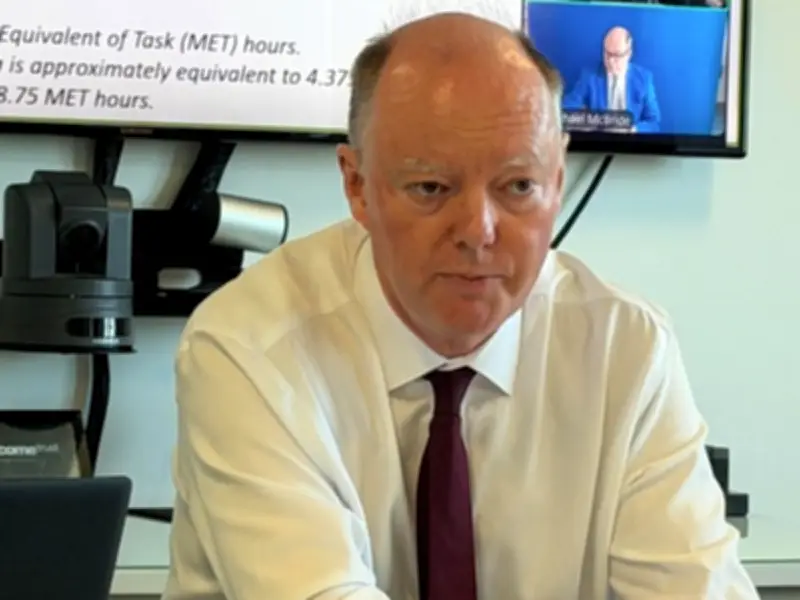
Sir Chris Whitty has warned that working from home is contributing to a more sedentary lifestyle, leaving Britons increasingly 'frail' as he presented new national exercise guidelines. England’s Chief Medical Officer unveiled the updated recommendations at a media briefing in central London, emphasizing the lifesaving impact of even small amounts of physical activity for those currently inactive.
Whitty, who cycles to work and enjoys kayaking in his spare time, called on the nation to 'find things you enjoy' and integrate movement into weekly routines. He highlighted societal shifts since 2019, including the rise of hybrid working and online shopping, which have reduced opportunities for incidental exercise.
New Guidelines Stress Strength and Balance
The updated guidance, compiled by the Chief Medical Officers of all UK nations, is the first revision in seven years. It stresses breaking up prolonged sitting and incorporating strength exercises—particularly for those on weight loss drugs—as well as balance activities. Whitty noted that muscle mass begins to decline around age 50, and maintaining strength through middle age can delay frailty in later years.
He said: 'Once you get to about 50 your muscle mass is decreasing. If you actually manage to get a good muscle mass—and keep it through late middle age—you will be in much better shape in old age with mobility, than if you allow it to essentially wither away.'
Societal Changes Reduce Activity
Whitty pointed to hybrid working and online shopping as key barriers. 'It means quite a lot of people could very easily do very little, other than be at their home,' he said. 'Whereas previously people would be routinely going to work and that often meant at least some physical activity.' He added that carrying a weekly shop home is a resistance activity now often replaced by delivery services.
Exercise Recommendations Unchanged
The guidelines confirm previous advice: adults should aim for 150 minutes of moderate exercise per week, or 75 minutes of vigorous activity, or a combination. Moderate exercise includes brisk walking or cycling, while vigorous activity leaves you too breathless to hold a conversation. The update emphasizes activities like walking to shops, taking stairs, dancing, gardening, and household tasks.
New evidence shows the greatest health gains—reduced risk of cancer and heart attacks—occur when inactive people start any level of activity. Whitty advised: 'One-off activity is very easy to start and then not continue but if it is enjoyable, useful, or you can build it in, people can maintain it over long periods.'
Whitty's Personal Routine
Whitty, who also works as a practising doctor at University College London Hospitals, shared his own habits: 'I'm much better at this when I'm working in the hospital because I cycle in… which is an ideal kind of thing to do. Day-to-day I walk whenever I can. In terms of leisure, I really enjoy walking, I sometimes go kayaking, walking in the hills is one of my things I enjoy. It's really to do with the things we enjoy most.'




