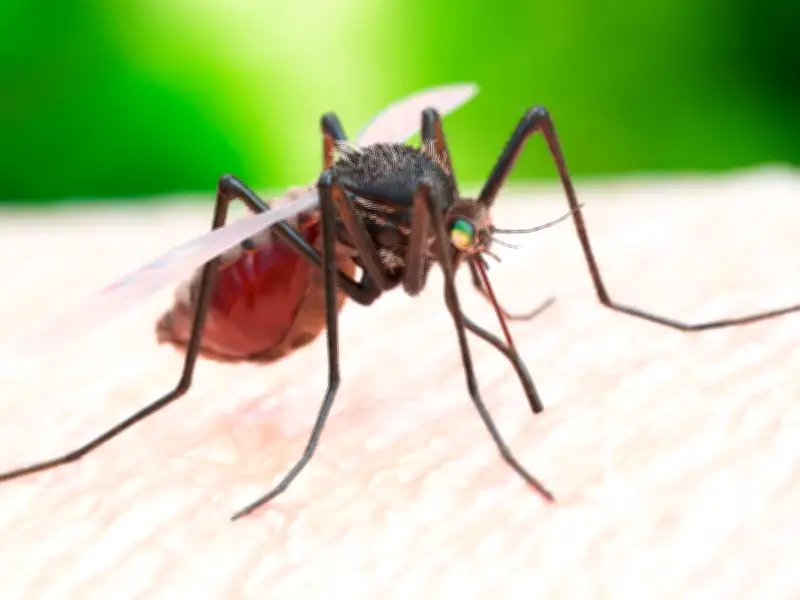
A 'potentially lethal' West Nile virus outbreak has been reported across 16 European countries, prompting warnings about preventative measures. Fresh figures from the Foreign Office-backed Travel Health Pro website reveal that six countries have seen significant numbers over the past month, including a number of fatalities.
What is West Nile virus?
West Nile virus (WNV) is a type of flavivirus, similar to dengue or Zika, that can cause a potentially serious infection in humans and is spread by mosquitoes. The majority of people infected with WNV do not experience any symptoms or suffer a very mild illness and make a full recovery.
When symptoms do occur, they are typically mild; a flu-like illness with fever, headache, muscle pain and a red, bumpy rash. However, approximately one in 150 people infected with WNV develop a more serious, potentially life-threatening illness, with a high fever, severe headache, neck stiffness, confusion, muscle weakness, trembling, convulsions and coma. Meningitis, encephalitis or acute flaccid paralysis can also develop.
Latest outbreaks in 2026
Up to 23 September, 4 locally acquired human cases of West Nile virus have been reported in Germany, with cases from Berlin, Leipzig Kreisfreie Stadt and Rhein-Pfalz-Kreis. In the Netherlands, 44 cases including 5 deaths have been reported, from South Holland, Utrecht, North Holland, North Brabant, Gelderland and Overijssel provinces.
France has recorded 117 cases in Provence-Alpes-Cote d'Azur, Occitanie, Ile-de-France, Auvergne-Rhone-Alpes, Nouvelle-Aquitaine, Pays de la Loire and Centre-Val de Loire. North Macedonia has seen 69 locally acquired human cases across 5 areas. Up to 23 September, 2 locally acquired human cases have been reported in Kosovo and 91 in Romania, across 22 areas.
Affected countries and prevention advice
The European Centre for Disease Prevention and Control's most recent update shows that 86 areas affected by West Nile virus have been identified across 16 countries: Italy, Greece, Romania, France, the Netherlands, Serbia, Spain, Croatia, North Macedonia, Belgium, Hungary, Austria, Germany, Kosovo, Albania and Cyprus.
Travel Health Pro said: "Some people, including older travellers, those with long term health problems and anyone with a weakened immune system (immunosuppression) are more at risk of getting seriously ill."
"There is no specific drug or treatment for WNV infection. Supportive care in a hospital is essential for people with severe WNV. While a bite from an infected mosquito is the commonest way to catch WNV, there are rare reports of non-mosquito spread, including during a blood transfusion or organ transplant."
The sole means of lowering the chances of contracting the virus is by taking every precaution possible to steer clear of mosquito bites. Key points to reduce insect and tick bites include avoiding areas of stagnant or standing water, keeping to footpaths and avoiding long grass, checking the body for ticks after outdoor activity, wearing loose-fitting clothing with long sleeves and trousers tucked into socks, and using insect repellents on exposed skin.
In areas with vector-borne diseases, use air conditioning where available or sleep in screened accommodation under a mosquito net impregnated with insecticide. Insecticide vaporisers can inhibit mosquito bites, and mosquito coils can be used outdoors (not recommended indoors). For those staying long-term in affected areas, reducing mosquito breeding sites around the home by removing pools of water in ditches, plant pots, gutters, drains and rubbish is possible.