
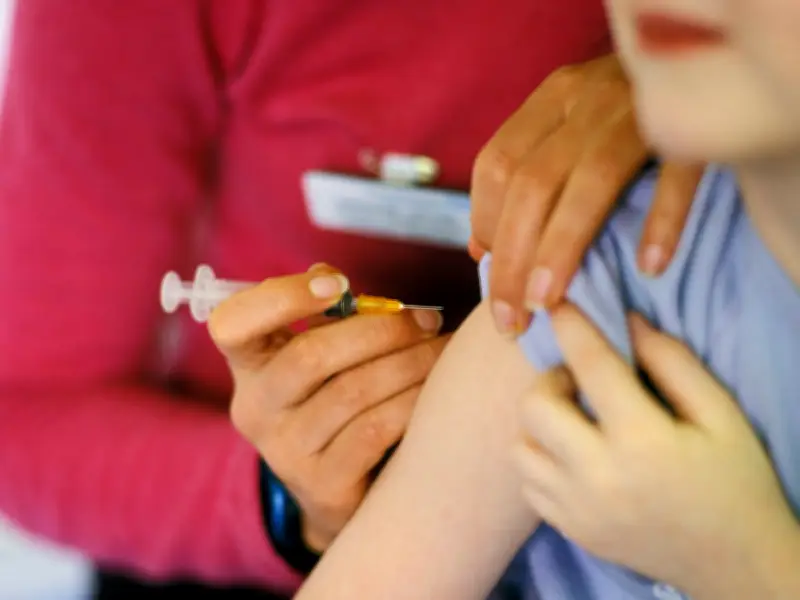
The UK Health Security Agency (UKHSA) is urging people to get vaccinated against measles, one of the most infectious diseases globally, as it spreads rapidly and can cause severe complications. The agency emphasizes that the MMR or MMRV vaccine provides the best protection for both adults and children.
Measles More Contagious Than Common Cold
According to the UKHSA, measles is nearly twice as contagious as the common cold and can be far more serious. Unlike colds, simple hygiene measures are insufficient to slow its spread. The agency stated: "Think the common cold spreads fast? Measles is nearly twice as contagious, and can be far more serious. Unlike the common cold, however, simple hygiene measures aren’t enough to slow its spread. The MMR/MMRV vaccine is your best protection."
One person with measles can infect 15 others, as the disease spreads easily through coughs and sneezes. However, high vaccination rates make it harder for the disease to propagate.
Serious Health Risks
Contracting measles can lead to severe health complications if the virus spreads to other parts of the body, such as the lungs or brain. While rare, these complications include pneumonia, meningitis, blindness, and seizures. The UKHSA stresses the importance of recognizing symptoms, especially in children.
Symptoms of Measles
Measles typically begins with cold-like symptoms, followed by a rash several days later. Some individuals may also develop small white spots inside the mouth.
Cold-like Symptoms
Initial symptoms include a high temperature, runny or blocked nose, sneezing, cough, and red, sore, watery eyes.
Spots in the Mouth
Tiny white spots may appear on the inside of the cheeks and on the back of the lips a few days after the first symptoms. These spots usually last for a few days.
Measles Rash
A rash typically develops a few days after the cold-like symptoms. It starts on the face and behind the ears before spreading to the rest of the body. The rash appears as pale red blotchy patches on the arms, chest, and stomach. The spots are occasionally raised and merge to form blotchy patches; they are not generally itchy. On white skin, the rash appears brown or red, but it may be harder to detect on brown and black skin.




