
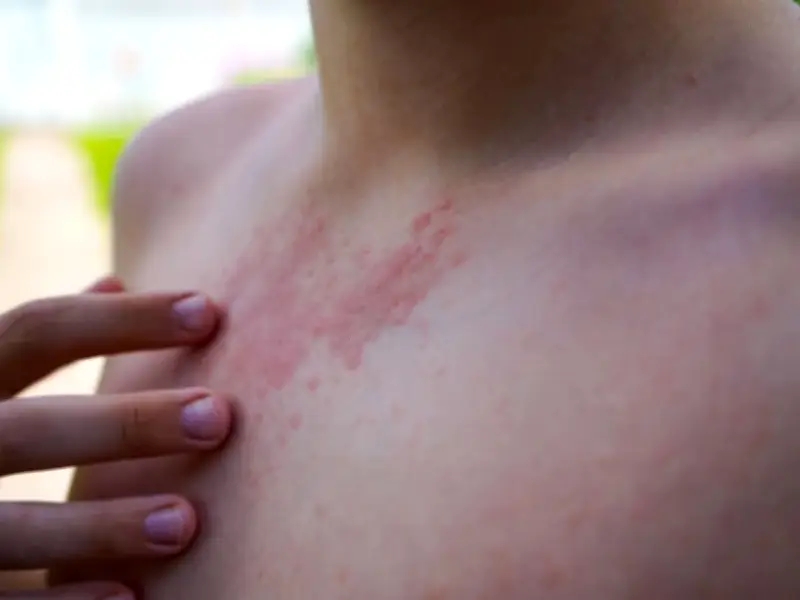
The UK Health Security Agency (UKHSA) has issued an alert over a “fairly common” illness that requires swift treatment with antibiotics.
The majority of cases (90%) affect children under 10 years old, with peak rates occurring in those aged two to eight. Outbreaks can emerge in nurseries and schools, where youngsters are in close proximity to one another.
What is scarlet fever?
Scarlet fever is a contagious disease triggered by Streptococcus pyogenes bacteria, also known as group A streptococci (GAS) – the same bacteria responsible for conditions including strep throat and impetigo, or in rare instances sepsis.
Scarlet fever is characterised by a distinctive rash, which develops as a response to toxins released by the bacteria. A recent post from UKHSA on X, formerly Twitter, reads: “Scarlet fever may feel like old news, but it remains fairly common in the UK. Watch out for a sore throat, fever, [and a] sandpaper-like rash. It's easily treated with antibiotics, but early action matters”.
Symptoms to watch for
Scarlet fever is most prevalent during winter and spring months. Scarlet fever is a notifiable disease, which means health professionals must alert local health protection teams about suspected cases.
Symptoms typically begin with a sore throat, fever, headache, nausea and vomiting. Within 12 to 48 hours, a characteristic rash generally emerges.
The rash has a rough texture, resembling sandpaper, and frequently begins on the chest or stomach before spreading further. It may be more difficult to detect on darker skin tones, though the sandpaper-like texture remains noticeable.
Other symptoms can include flushed cheeks, swollen glands in the neck and a white coating on the tongue that peels to reveal a red, swollen ‘strawberry tongue’. As the rash fades, the skin may peel, particularly on the fingertips and toes.
Treatment and recovery
If you suspect you or your child may have scarlet fever, get in touch with your GP surgery or NHS 111 straight away. Scarlet fever is typically identified based on symptoms, though a throat swab may be required.
Prompt treatment helps children recover more quickly and lowers the risk of serious complications. Scarlet fever is treated with antibiotics, normally prescribed as a 10-day course. Symptoms frequently improve within 24 hours, but it is vital to complete the full course to entirely eliminate the bacteria and safeguard others.
Children and adults diagnosed with scarlet fever should remain away from nursery, school or work for at least 24 hours after beginning antibiotics.




