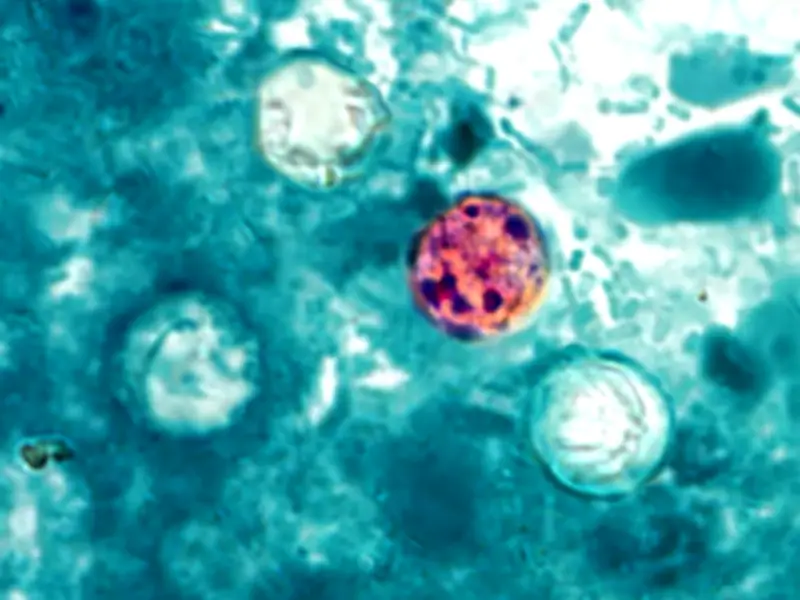
Health officials in the UK have reported a sharp rise in cyclospora infections among travellers returning from Mexico, as the US outbreak continues to spread. The UK Health Security Agency (UKHSA) has recorded 67 cases in returning travellers between April 30 and July 15, 2026, compared to an annual average of 93 cases between 2022 and 2025.
Details of the UK cases
Of the 67 cases, 30 were in England, 27 in Scotland, and 10 in Wales. Among the 51 cases with travel information available, 48 reported travel to Mexico, with one also reporting travel to the USA. One further case reported travel to the USA only, and one to Kenya.
The US Centers for Disease Control and Prevention (CDC) has confirmed nearly 7,000 cases across 45 states, including the first two deaths linked to cyclospora in Michigan. The parasite is spread through contaminated food or water.
Expert advice for travellers
Dr Brian Rice, Infectious Disease Epidemiologist at the University of Sheffield, urged people not to be "unnecessarily alarmed" by the outbreak. He explained that the infection is acquired by swallowing Cyclospora parasites in contaminated food or water, rather than through person-to-person contact.
"The key message is not that travel itself should be avoided, but that travellers should be aware of the infections they may encounter and take appropriate precautions," he said. "There is no current reason to suggest that people should avoid travel to the United States or Mexico, or avoid fresh fruit and vegetables altogether, provided they follow good food and water hygiene practices."
The US investigation has identified a possible association with iceberg lettuce supplied from Mexico, but this should not be interpreted as meaning that Mexican food or travel to Mexico is generally unsafe.
Symptoms and precautions
The UKHSA said common sources of outbreaks are contaminated foods such as herbs, salad, and soft fruit. Cyclospora does not naturally occur in the UK, and there is no risk of person-to-person spread.
Symptoms of infection can include frequent watery diarrhoea, abdominal cramping, bloating, nausea, flatulence, low-grade fever, loss of appetite, and weight loss.
Dr Philip Veal, Consultant in Travel Health at UKHSA, advised travellers to Mexico to follow good food and water hygiene measures, including drinking bottled water and eating thoroughly cooked food, even at high-end resorts. He also advised avoiding fresh uncooked berries, herbs, unpeeled fruit, and salad items.
"If you develop symptoms after returning from travel, such as watery diarrhoea, loss of appetite, weight loss, stomach cramps or pain, bloating, increased wind, nausea, fatigue or other flu-like symptoms, please seek medical attention and inform your healthcare professional of your travel history," he said.