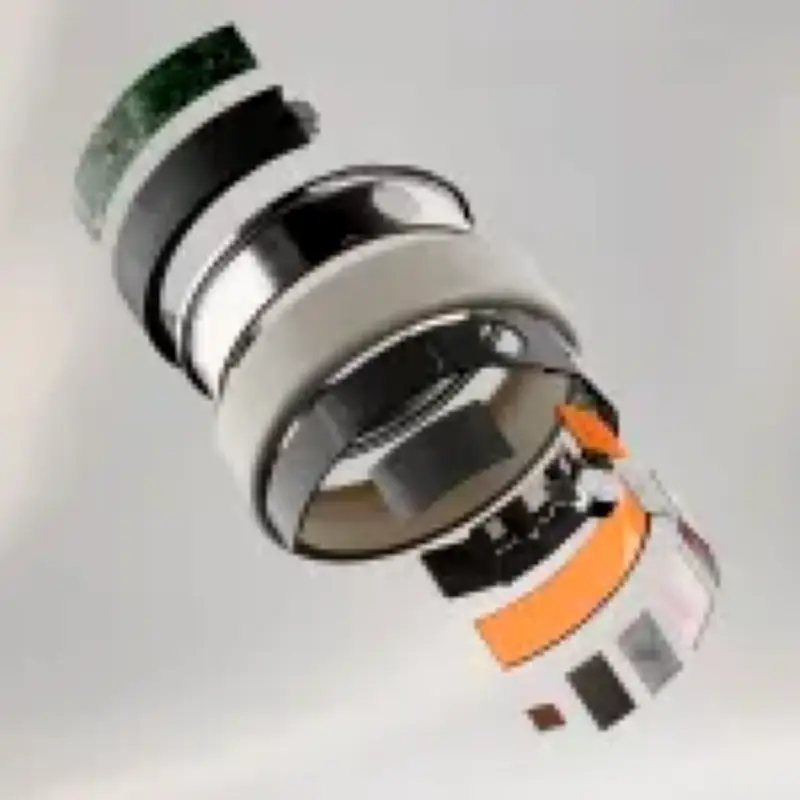
New adverts for the Natural Cycles ring, described as 'digital contraception,' have appeared across Victoria Station's hallways near the District and Circle Line entrances. The campaign promotes the device as a non-hormonal option, but questions remain about its reliability and regulatory history.
What is Natural Cycles?
Natural Cycles was founded in 2013 by Swedish physicists Dr Elina Berglund Scherwitzl and Dr Raoul Scherwitzl. The company started with an app that logs daily body temperature and combines it with cycle data to estimate fertility. The ring now advertised on the Tube network is offered as part of an annual plan costing £89.99 per year.
The product received EU approval in 2017, and the US Food and Drug Administration (FDA) followed in 2018. In the European Economic Area, it holds a CE mark for contraception, and in Great Britain it is registered with the Medicines and Healthcare products Regulatory Agency (MHRA), as required for medical devices entering the market post-Brexit.
Regulatory history and effectiveness
In 2018, the UK's Advertising Standards Authority (ASA) banned a Natural Cycles advert, ruling it 'misleading' for calling the product 'highly accurate' and claiming it was a 'clinically tested alternative to other birth control methods.' The ASA noted a 'significant difference' between effectiveness in 'perfect use' and 'typical use.'
Natural Cycles states that with typical use, the method is 93% effective in preventing pregnancy, rising to 98% with perfect use over a year. However, The College of Sexual and Reproductive Healthcare reports that among those using fertility awareness as their main method, up to 23 in 100 will typically get pregnant over a year, compared with fewer than 1 in 100 for hormonal coils, copper coils, or the implant.
The NHS does not officially recommend any fertility awareness apps or devices, stating: 'There are apps and fertility monitoring devices designed to help you track your fertile days, but none are officially recommended by the NHS.'
Expert concerns and user considerations
Dr Sarah Salkeld, deputy medical director at MSI Reproductive Choices UK, told Metro that app-based contraception 'can be the right choice for some people, but it relies on consistent use and accurate data, which can be challenging in everyday life.' She noted that 'illness, stress or disrupted sleep affect body temperature and menstrual cycles, all of which can reduce the reliability of this kind of method.'
A Natural Cycles spokesperson told Metro that the algorithm is designed to manage these variations, using heart-rate data from wearables when available and excluding unreliable readings. The company also highlighted research with scientists from Karolinska Institutet and the University of Oxford, which analysed more than 540,000 menstrual cycles and found that period-tracking methods carried up to 44 times higher predicted pregnancy risk per cycle than digital contraception.
The spokesperson added: 'Like any method of contraception, it is not 100% effective, and it does not protect against sexually transmitted infections.'
Why women are turning to digital options
A 2024 report by the British Pregnancy Advisory Service found that nearly half (49%) of women reported difficulties securing contraception appointments, long wait times, or financial hurdles. The same research found 84% of women have changed their contraceptive method at least once, and 28% said they have no main method.
The Tube adverts will run until mid-December, with similar versions available online and across the US and Sweden, adapted to 'local regulatory requirements and product availability.'