New data from Marie Curie, the UK's leading end-of-life charity, reveals that over the past three years one person has died in poverty every five minutes and in fuel poverty every four minutes. The charity warns that the Budget announcement of a one-off £100 energy payment for certain households “barely scratches the sides for terminally ill people”.
Record deaths in fuel poverty
Marie Curie found that since 2023, a total of 394,000 people have died in fuel poverty. In 2025 alone, 93,000 people died in poverty and 141,000 in fuel poverty in the UK, representing 15% and 23% respectively of all people who died.
London and the North East had the highest numbers of deaths in fuel poverty last year at 29% and 27% respectively. The South East and South West had the lowest, both at 19%.
Families share their stories
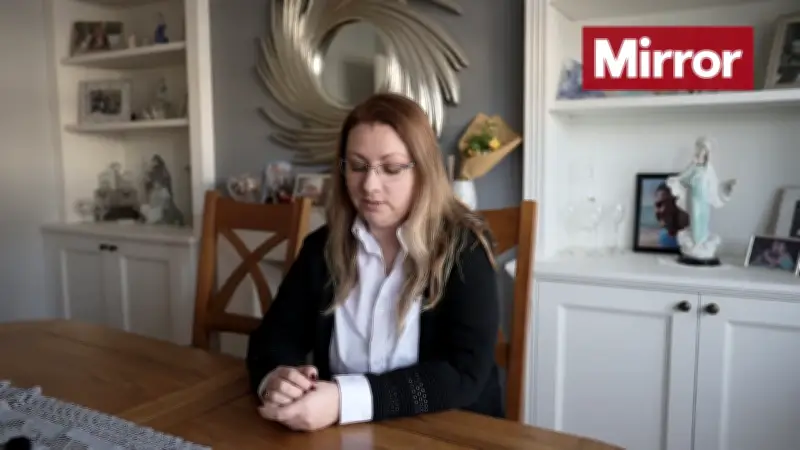
Widow Simona Pappalardo, 46, from Enfield, told how her husband David, 47, died in June 2024 from glioblastoma, a stage four terminal cancer, six months after he was diagnosed. “We went through hell,” she told The Mirror, explaining how his condition left David constantly cold, so the heating had to be on 24 hours a day. They also needed medical equipment which increased their “monumental” energy bills.
The mum, with children who were then aged 15 and 17, explained how in December 2023 her husband started experiencing problems with his balance. She recalled: “It came out of nowhere. Our life changed in the space of a few hours. We went to A&E and he had a CT scan and we were told he had a mass in the deepest part of his brain. He became paralysed almost immediately.”
A month later they were told he had the “most terrible fast growing cancer” and had six to 12 months to live. He was forced to stop work as a photographer immediately, Simona said, adding: “We had to close the company and that’s when our nightmare started, we lost two incomes, we had to rely heavily on the system.”
They ended up living on £2,000 a month, which was mostly taken up by huge energy bills, taxis to and from hospitals and specialist equipment. Simona said: “The amount of expenses we had to sustain were horrendous, the list is endless. Bills started piling up. His body temperature dropped massively as soon as he started chemo, he was shivering a lot. So we got in touch with the energy company, we faced the whole winter with someone who was constantly cold, and they sent us a one off £200 contribution and an eclectic blanket.
“I took a deep breath every time I switched it on, a sense of heaviness on my shoulders. Lights were a big thing for him as he would eventually lose his sight. He didn’t want to be in the dark and he’d say ‘Please leave the light on because I have enough darkness in my life and I need to see your face, I need to see my children’s face’.”
She explained they could not afford a stairlift, so had to convert their living room into David’s bedroom. And when David was on oxygen towards the end of his life, Simona was told by the installers of the machine she would be refunded for the cost of running it - but later she had a cheque through the post for just £13. David’s hospital mattress that had a pump to change his position and help to avoid bed sores also needed to be on day and night.
“When my husband passed away, I was sitting down a few weeks later, with all the bills in front of me on the table thinking ‘this is not right’. I can’t be left with bills to pay for equipment that shouldn’t be a luxury; they were an absolute necessity,” she said. “So when the Government is talking about a one off payment of £100, what is this? Families like ours are struggling with monumental costs, they have no idea. It felt like a slap in my face.”
She was unable to share the burden with her husband, who she shielded from their money worries. And after he died she had no time to grieve. Simona recalled: “I couldn’t afford to cry because I needed to find a job to cope with the bills I was left with. I started job searching three days after he passed away and had an interview two days before his funeral. Debt collectors should not be part of my bereavement.”
“I remember that day I got a call for the interview and told myself ‘you've been through hell, you can do this, wipe your tears. I got the job,” she said. As the weather got colder a week ago, widow Simona went to find the electric blanket her husband had used. She said: “I felt a punch in my stomach as I thought about how much it would cost to plug it in.
“It made me realise just how deeply the experience of constantly worrying about energy costs has affected me. The trauma of having to worry about the cost of something as basic as an electric blanket is still a vivid memory. I felt sick to the stomach so I put it back in the drawer. That's the kind of trauma it leaves you with!”
Call for urgent action
Senior Policy Manager at Marie Curie, Becca Stacey, told the Mirror their latest findings paint a “really bleak picture” and urges the UK Government to “act now” by introducing a social tariff for energy - cutting bills for terminally ill by 50 per cent. The charity found that someone of working age is almost twice as likely to die in poverty than someone of pension age. While 36% of working age Black people die in poverty, compared to 14% of white people.
And a working age couple including someone with a terminal illness can receive over £500 a month less in benefits than a pension age couple. Becca Stacey added: "So many people and families are petrified by costs, bills and expenses as they are already carrying the enormous emotional weight of terminal illness. There is no single fix for poverty but urgent action is needed, terminally ill people and their families are counting on it."
Widow Audrey Buckham, 65, from Sunderland, tears up as she recalls her devastation at having to tell her dying husband she had to go bankrupt. Car part delivery driver Eddie had to stop working and his wife, an NHS admin worker, had to cut her hours during the two years she spent caring for him. He passed away from pancreatic cancer aged 64 on Father’s Day in 2022.
She too had tried to protect her husband from their cash worries but when the bank closed her account down, she needed her husband to sign a form to keep it going just in his name. She recalled: “I didn’t want to worry but because I was filing for bankruptcy I had to tell him. I said Eddie, I need to talk to you. ‘I’m really sorry but we’re having problems with money, and I’m going to have to declare myself bankrupt because I don’t have enough money any more to cope’. He said to me ‘Audrey, I’m really sorry I’ve put you through all this’ I said 'it is not your fault, you haven’t done this!'. We both cried together.
"It was hard to make ends meet because the bills were huge. He was like a skeleton, we needed the heating on all the time because he was so cold and he lost his appetite and I would buy different foods to try and get him to eat,” she explained. “I was worried about buying more food so I would not have as much. In the winter months the heating was on full blast.”
Her husband received Personal Independence Payment (PIP) and Employment and Support Allowance, and both he and Audrey applied for Universal Credit. However, because Audrey was working, they took her wages off what Eddie was getting, so he only received £39 a month. Audrey ended up having to use credit cards, to pay for emergency bills such as the washing machine breaking down.
“It’s horrific watching someone you love dying and you shouldn’t have to worry about money too. You should be helped, you should be able to make memories together instead,” she said.
A DWP spokesperson said: "We're committed to providing financial support for people at any age who need it.
“We’re making the rules clearer and more consistent so people facing a terminal illness can access their pension savings with greater certainty, and people may also be able to access a serious ill-health lump sum from an occupational pension scheme at any age, subject to medical evidence and scheme rules.
“We are also tackling the cost-of-living pressures through a number of measures including taking £150 off energy bills and launching a new £1bn Crisis and Resilience Fund which will act as a genuine safety net for those in crisis.”