
Jack Taylor, a 17-year-old basketball player, suffered a cardiac arrest after mistaking a 'buzzing' feeling for the effect of an energy drink, rather than a warning sign. He collapsed on the court and was given a "very low chance" of survival, spending 35 days on life support.
Collapse during basketball game
Jack, now 20, had experienced dizzy spells in the weeks leading up to the incident in February 2024. Having drunk an energy drink beforehand, he thought his racing heart was "normal" until he collapsed. A first aid trained person performed CPR, saving his life, and he was rushed to hospital.
“I had experienced dizzy spells in the weeks before and my mum was taking me to get this checked within a few days, but we didn’t make it, obviously,” said Jack, a software engineering student from Nottingham.
Diagnosis and family impact
Doctors discovered the cause of his cardiac arrest was hypertrophic cardiomyopathy, a rare inherited heart condition for which there is currently no cure. Genetic testing found his dad, Rick, and twin brother, Max, also carry the same gene variant.
“When I think back to the night of the basketball, I do recall feeling my heart was racing and I felt very ‘buzzy’ but that was normal for me after having energy drink before sport. I wasn’t too worried,” Jack said.
Recovery and future hope
Recovery took many months, including open heart surgery. Jack now lives with an implantable cardioverter defibrillator that can monitor and treat abnormal heart rhythms. He also experiences dysarthria, which slows his speech, and memory issues.
“There’s so much I can’t remember about what happened and lots of what I can remember is quite scary – or was at the time. I’m so thankful to all of the staff who saved my life and looked after me so well,” he said.
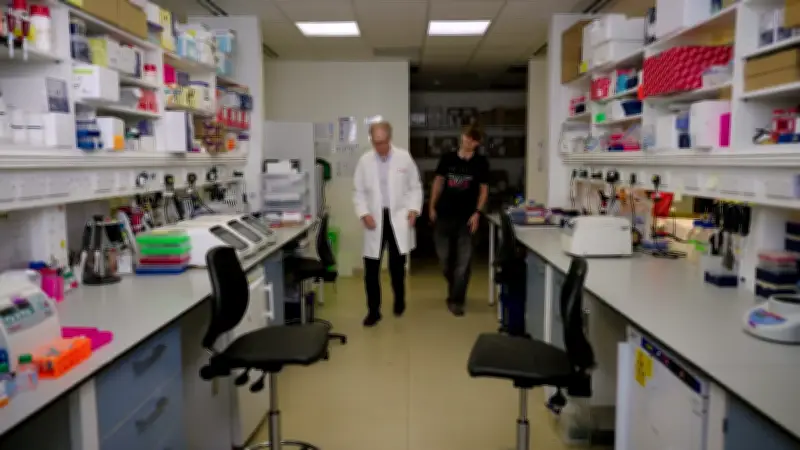
Professor Hugh Watkins of the British Heart Foundation and Harvard University professor Christine Seidman were awarded £30 million for their CureHeart project to find cures for inherited heart muscle diseases. Jack met Professor Watkins at the University of Oxford, who discovered the MYBPC3 gene that causes Jack’s condition.
“Your mum thought it would be helpful for me to see the gene change you have. I did a double take, because it’s very close to home to me as a scientist. [The gene] is one that I discovered when I was early in my research career in 1995,” Professor Watkins told Jack.
“Hearing about this research has made me not only grateful but also hopeful. Hopefully one day I’ll be cured of this, but more importantly, the next generation. Hopefully they won’t have to go through what I’ve gone through,” Jack said, reflecting on his future.




