
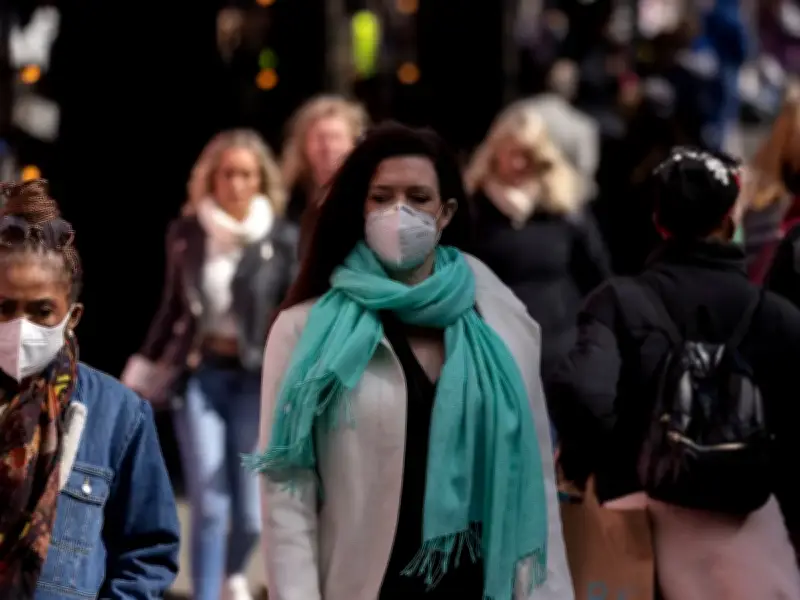
The UK Health Security Agency (UKHSA) has urged people with Covid symptoms to stay at home as cases rise across the UK. Positive Covid tests rose to around seven per cent in September, while hospital admission rates increased by approximately 50 per cent. Cases also rose by 35 per cent in the last week of September, climbing from 477 to 1,857 reported positive tests.
Newer strain becomes common
It comes as a newer strain dubbed 'American Covid' has become one of the most common variants reported across the country. The health agency said the recent spike in cases was likely linked to colder weather, causing people to spend more time indoors, and immunity from previous infections and vaccinations waning.
However, the UKHSA said there was currently no evidence that the variants circulating, including the so-called 'American Covid' strain, were causing more severe illness than previous strains.
Official advice for those with symptoms
In a blog post published on October 8, the UKHSA said people with symptoms of a respiratory infection, including Covid, should stay at home if possible if they have a high temperature or do not feel well enough to go to work or carry out normal activities. For those who cannot stay at home, officials advised wearing a well-fitting face covering, avoiding crowded or poorly ventilated places and exercising outdoors where possible.
People are also urged to cover their mouth and nose when coughing or sneezing, wash their hands frequently and avoid touching their face.
What is 'American Covid'?
The XFG variant, also known as Stratus, remains the most common Covid variant currently circulating, according to the UKHSA. However, officials stressed it is not a new strain and has been circulating in the UK and other countries for around a year. The 'Stratus' strain was declared a "variant under monitoring" by the World Health Organisation (WHO) in June 2025 after it was first reported in January of that year.
The UKHSA said another variant, BA.3.2 - or the 'Cicada' variant - has also been declared a "variant under monitoring" by the WHO. However, the global health agency currently assesses the public health risk as low, with no evidence of increased severity, hospitalisation or mortality.
Symptoms and vaccination
Covid symptoms can include a high temperature or chills, a new continuous cough, a loss or change to your sense of smell or taste, shortness of breath, feeling tired or exhausted, an aching body or a headache, a sore throat, blocked or runny nose, loss of appetite, feeling sick or being sick, and diarrhoea.
Health officials say vaccination remains one of the main ways to reduce the risk of serious illness and hospitalisation from Covid. Those who are eligible are being encouraged by the NHS to take up the offer to protect themselves against severe illness this winter. Current eligibility includes people aged 75 and over, those with weakened immune systems and people living in care homes for older adults.




