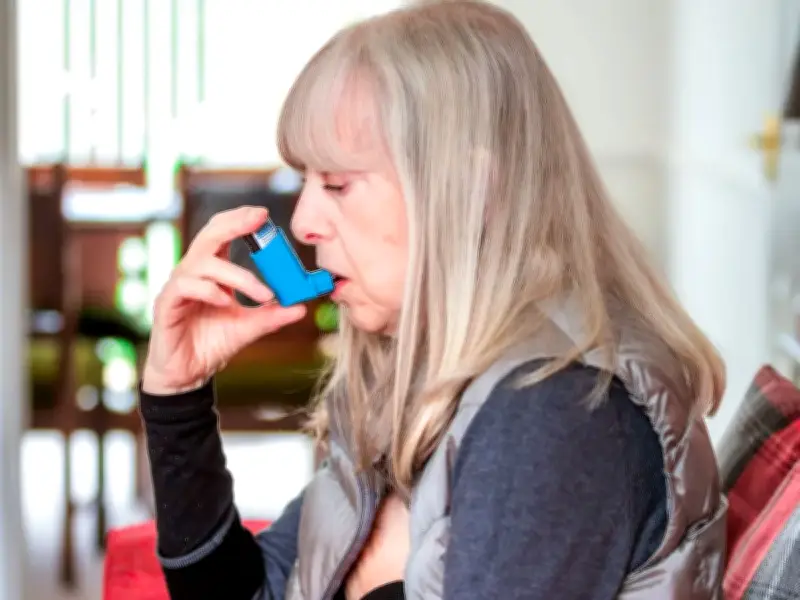
A pharmacist is warning asthma sufferers that relying solely on a blue inhaler this winter is a "serious red flag" and is advising them to consult their GP. Blue inhalers, clinically known as short-acting beta2 agonists (SABAs), have long been a lifeline for millions with respiratory conditions.
The 'reliever' device contains salbutamol (such as Ventolin) and provides instant relief when breathing becomes difficult. It works by rapidly dilating airways and easing muscle tension during asthma episodes, wheezing, coughing, or chest constriction triggered by asthma or COPD.
However, current guidelines indicate that those depending solely on the blue inhaler are no longer receiving the most appropriate care for their condition. Pharmacist Raj R Patel, who shares advice on TikTok as Pharmacist Health Raj, is alerting users of the device that they may need to take steps.
Pharmacist's warning on blue inhalers
Patel clarifies: "If you're still using your blue inhaler on its own during the winter, that's now a red flag. I've been telling you this for ages as a pharmacist - blue inhalers like salbutamol work really fast. They open up your airwaves."
"But most of you don't ever get told this. They don't treat the inflammation caused by your asthma, so you might feel better in the short term, but underneath, your asthma could be getting worse."
He adds: "New Nice guidance links overuse with more hospital admissions, more attacks, and higher risk of death. If you need it more regularly, that's not normal asthma. That's full control."
"Ask your doctor about combination inhaler, one that relieves the symptoms and one that treats the inflammation. Whatever you do, don't throw your inhaler away, but don't rely on it either."
Understanding asthma and current guidance
Asthma is a chronic lung condition affecting the airways that transport air into and out of the lungs, causing them to become inflamed and swollen. This narrows the airways, restricting airflow in both directions.
Around 7.2 million people across the UK are living with asthma, according to Asthma + Lung UK, equating to roughly eight in every 100 people. Symptoms include wheezing, breathlessness, coughing, or chest tightness. Occasionally symptoms can deteriorate rapidly, constituting an asthma attack, which can be provoked by factors including allergens, physical activity, or weather fluctuations.
NICE, the National Institute for Health and Care Excellence, advises that patients move away from the conventional blue inhaler, which it says "masks the problem without fixing it". Instead, it recommends combination inhalers that alleviate symptoms and address the underlying inflammation responsible for attacks.
Under existing guidelines, those aged 12 and over who are newly diagnosed or require step-up treatment are expected to transition to combination inhalers, which incorporate an inhaled steroid alongside a long-acting beta2 agonist (LABA) medication called formoterol within a single device. These treat inflammation and prevent flare-ups while also delivering immediate relief.
NICE stated that those who have their condition well under control should rarely require their reliever - or rescue - inhaler and should be capable of leading normal lives with minimal or no symptoms. It also warns that overuse of the blue inhaler "is linked to a higher risk of attacks, hospital admissions and death".
Statistics show cause for concern
Statistics reveal that almost half of all blue inhaler users in England (48%) were prescribed more than two in 2024-2025. Specialists describe this as a cause for concern.
Dr Amina Al-Yassin, a GP and clinical lead for children and young people's services at Brent Integrated Care Partnership, said: "They make people feel better, but only briefly. We now know that over time, they are likely to make asthma worse. Seeing a blue inhaler used alone is now a dangerous sign to me."