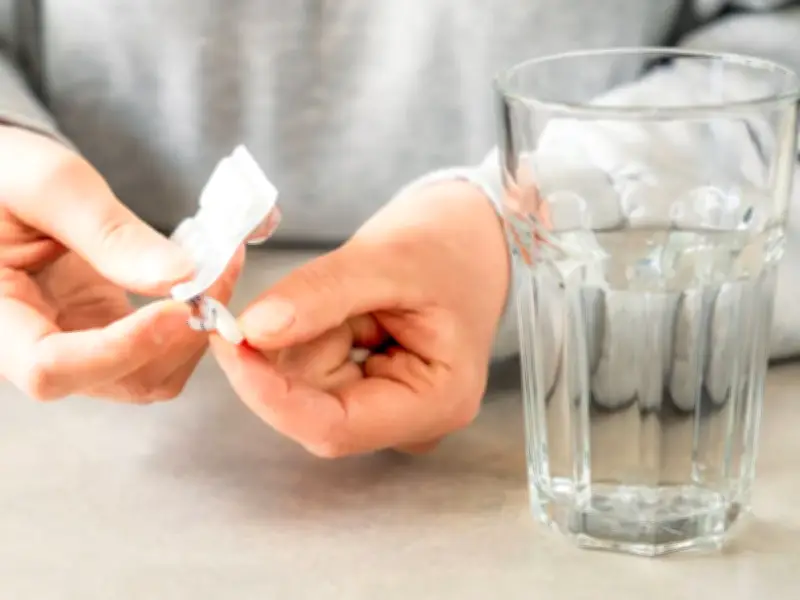
A pharmacist has warned patients taking regular NHS prescriptions to order repeat prescriptions at least seven working days before running out, as part of the Government's Be Ready campaign which encourages households to prepare for potential disruption from cyberattacks and other emergencies.
Duncan Reid, Deputy Superintendent Pharmacist at Pharmacy2U, said people should keep an adequate supply of their regular medicines and order repeat prescriptions at least a week in advance. However, he stressed that while some people may be stockpiling food, the same approach should not be taken with medication.
Serious health consequences of running out
Running out of medication can have a serious impact on a person's health, particularly for those managing long-term conditions. Reid explained that ordering repeat prescriptions at least seven working days before running out allows time for GP approval, dispensing and delivery, helping to avoid an unnecessary last-minute emergency.
He said: "For people managing long-term conditions, suddenly running out of medication can have serious health consequences. Patients should always aim to have an adequate supply of their regular medication and order repeat prescriptions at least seven working days before running out."
Don't stockpile
Reid urged people to buy only what they will use and to check with a pharmacist if they are unsure what is safe for them or their family. He said: "This is about sensible preparation, not stockpiling. People should buy only what they are likely to use, keep medicines in their original packaging, follow the instructions and check expiry dates regularly."
He added that over-the-counter medicines are not suitable for everyone, particularly children, people who are pregnant, those with certain health conditions or anyone taking other medicines.
Well-stocked medicine cabinet
Reid recommended keeping a well-stocked medicine cabinet with items such as paracetamol and, where suitable, ibuprofen, an antihistamine, indigestion relief, oral rehydration salts and anti-diarrhoeal treatment where appropriate. A basic first-aid kit and digital thermometer are also sensible additions.
He also advised checking practical health and hygiene essentials, such as toothpaste, period or continence products, contact lens solution, an up-to-date pair of glasses, sunscreen and any dressings, testing equipment or other medical supplies used regularly by someone in the household. For contact lens wearers, he recommended keeping an up-to-date pair of glasses available as a backup, noting that water or saliva should never be used as a substitute for contact lens solution.
Reid warned that many combination cold and flu remedies already contain paracetamol, so taking them alongside another paracetamol-containing medicine could result in someone taking more than the recommended dose.
New NHS England figures reveal that more than one in four NHS 111 Online sessions are now for urgent repeat prescriptions, suggesting that a significant number of patients are already finding themselves in situations where they urgently need access to their regular medication.