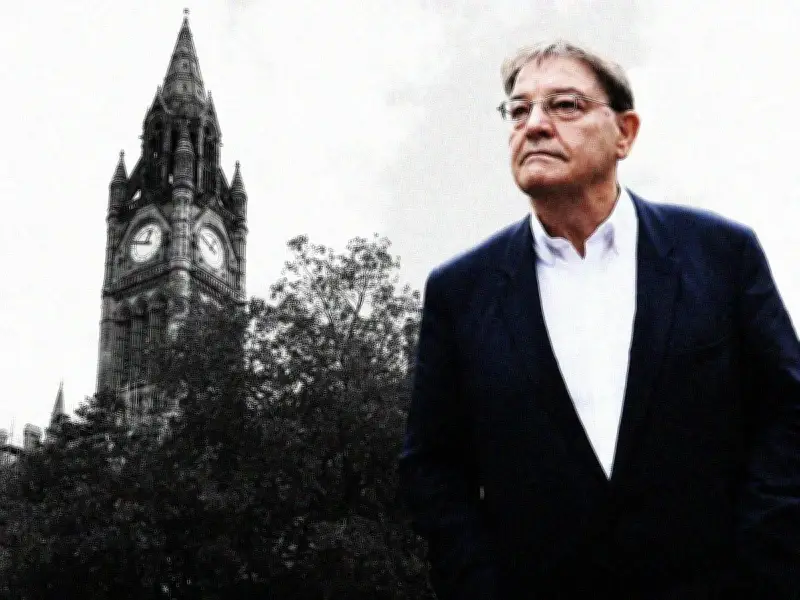
Pat Karney, the veteran Manchester councillor who died earlier this month aged 78, was the driving force behind the campaign to make his adopted city smoke-free, a movement that helped pave the way for England's nationwide ban on smoking in enclosed public spaces in 2007.
His determination was rooted in a personal tragedy: his mother, Mary, died of a smoking-related illness. Karney believed she had been drawn into addiction by images of glamorous Hollywood stars smoking on screen. In 2004, he resolved to tackle a public health crisis that was hitting Manchester harder than anywhere else in the country.
A Campaign Born from Personal Loss
Karney had tried smoking himself while studying for a BSc in politics and economics at the London School of Economics, and even tried a joint on a trip to Amsterdam, but disliked it immediately. He admitted he "couldn't deal with having a fire in my mouth."
By 2004, figures published by the Health Development Agency revealed that smoking killed more people in Greater Manchester than anywhere else, estimating it accounted for 5,400 lost lives every year. Professor John Ashton, the then regional director of public health, said: "We are in the grip of a smoking epidemic."
Leading the Smoke Free Greater Manchester Group
Karney, by then known for his 1990s plans to turn Manchester into a "24-hour city," became director of the campaign group Smoke Free Greater Manchester. The aim was to follow the Republic of Ireland, which in 2004 became the first country in the world to ban smoking in the workplace.
At the campaign's launch, he said: "We have a public health crisis on our doorstep. There are 750,000 smokers across Greater Manchester, and as a direct result we have the worst health record in the country. In the Manchester city council area, men on average die 10 years earlier than their counterparts elsewhere, and for women it's eight years."
He added: "I am going to lead a huge coalition involving all 14 primary healthcare trusts, local government, the community sector, residents, everyone. The situation is so bad now that seven and eight-year-olds are taking up smoking."
A Long Road to the 2007 Ban
The journey to an outright ban was long and complicated. By April 2004, civic leaders in Manchester, Liverpool and Stockport considered going it alone. By October 2004, Manchester Council leaders backed a strategy that could see its 25,000 employees face disciplinary action for taking cigarette breaks, as part of an ambition to make Manchester Britain's first smoke-free city. The draft policy stated that "council employees who wish to smoke may only do so in their own time."
Karney was quoted in the Manchester Evening News saying: "This is the most important public health decision since we introduced clean water in the city. It will help save thousands of lives." By August 2005, smoking was banned outside most hospitals in Greater Manchester, including The Christie cancer care hospital.
In November 2004, Health Secretary John Reid announced exemptions for pubs that didn't sell food and shelved plans to allow local authorities to instigate their own bans. Karney told the MEN: "We will continue to seek a total ban. It is disappointing that a minority of pubs will escape the ban, but they are on last orders. This is a historic decision that will trigger a revolution in smoking behaviour by the public."
He also urged the other nine boroughs of Greater Manchester to back his campaign to ensure the ban covered all licensed premises, saying: "We want every person to grow up in a smoke-free Manchester." He was behind the "fresh as a daisy" campaign, backed by the MEN and Key 103, which included 12ft-high daisies placed around the city centre.
Impact and Legacy
England's ban on smoking in enclosed public spaces and workplaces came into force on July 1, 2007. A 2011 review by the Department of Health highlighted a fall in respiratory illness reported by bar workers immediately after the ban. It also flagged research showing hospital admissions for heart attacks fell by 2.4 per cent, a reduction that saw 1,200 fewer heart attacks a year.
Phil Burke, former spokesman of the Manchester Pub and Club Network, recalled a fact-finding trip with Karney to Dublin to see the ban in practice. "There's no doubt it was a fantastic success and most of it is due to Pat. It's now a much nicer experience in a pub. You don't leave stinking of smoke. People were worried it would mean fewer people going to pubs and bars but in our experience it was the opposite. More people were coming in because it was a much nicer experience," he said.